
In Conversation #5
Cole Pulice
My CAMP mix for 11th May 2025 was dedicated to effects-driven horn music, in honor of my friend Cole Pulice’s new record, Land’s End Eternal on LEAVING records. This post pairs my review of that record with this mix. Additionally, the full transcript of our conversation is available for paid subscribers below the paywall. Thanks for Listening!
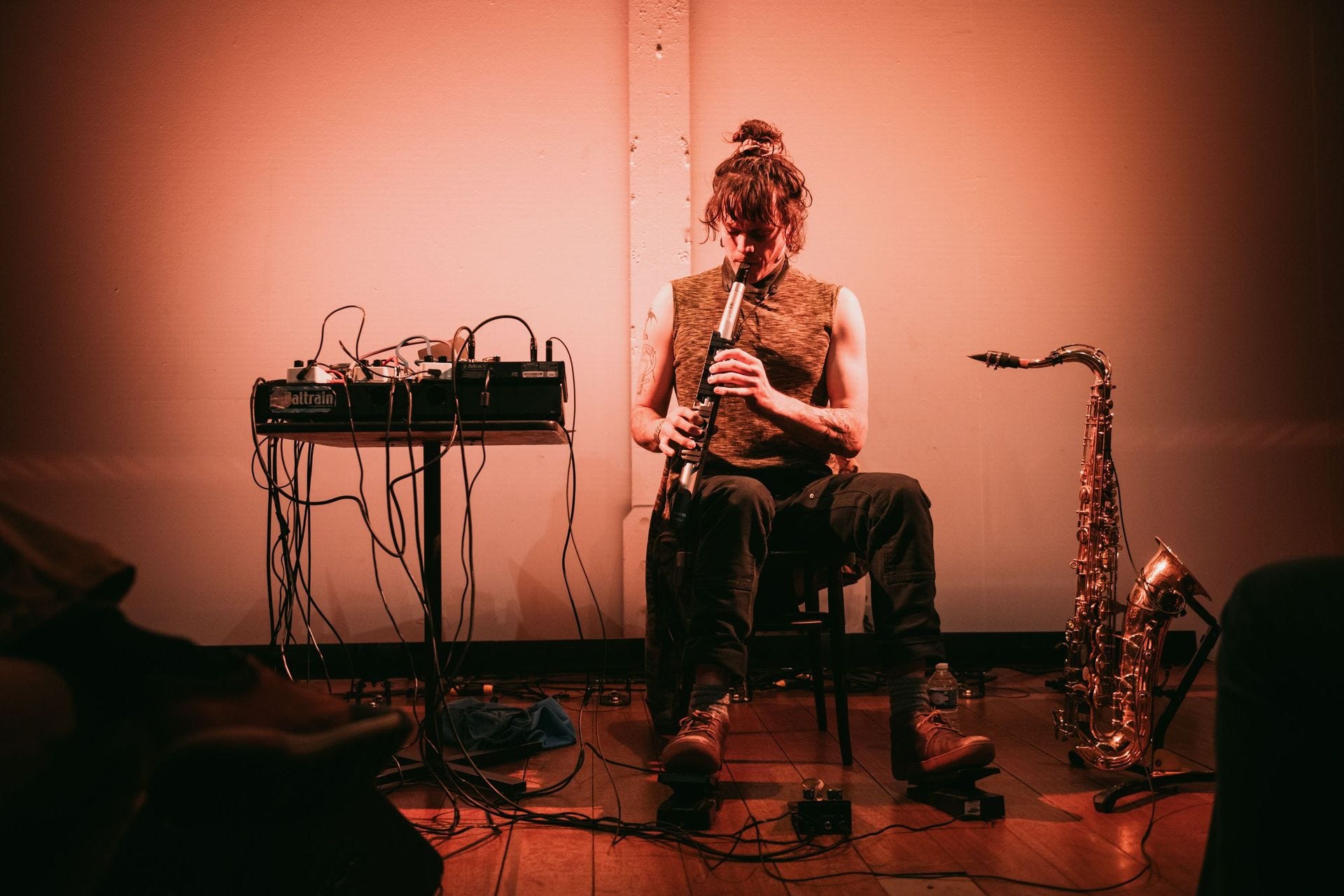
I first met Cole Pulice in Minneapolis back in 2014, and it’s been a pleasure watching their work evolve over the last decade. On the eve of the release of Land’s End Eternal (2025), their lovely new record for LEAVING, we sat down to discuss their career trajectory thus far.
Since that time, Cole has been announced as among the inaugural trio of artists taking part in Residence, the latest endeavor from Longform Edition’s Andrew Khedoori—a fitting next step for an artist whose practice has long been defined by deep listening, collaborative exchange, and the patient reworking of core ideas.
As Cole shared when we spoke, they resonate deeply with an Adorno concept relayed by a former professor: that the most compelling thinkers often have only one or two ideas they spend their entire careers exploring, reworking, and placing in new contexts. For Cole, those enduring fascinations include tight harmonic clusters, the spaces between notes, and a quality of “floating” that feels “surreal or a little uncanny.”
That sensibility was forged in unlikely settings, including arranging for R&B legend Sonny Knight & The Lakers and the nine-piece Afrobeat band Black Market Brass, where Cole was always drawn to “really tight clusters of harmonies” for the horn section. Cole would later translate those explorations into the electroacoustic drone of their Longform Editions piece, If I Don’t See You in the Future, I’ll See You in the Pasture (2023), which brought greater attention to their solo compositions.
But Cole’s sound in recent years has also been shaped by a rich network of collaborators: Chuck Johnson, who became a close friend after Cole cold-emailed him upon moving to Oakland and who went on to mix and master the new record; Lynn Avery, whose guitar sparked an entire album’s worth of new directions and whose shared aesthetic with Cole occupies a fertile middle ground between composition and improvisation; and the Red Hot organization, for whom Cole produced two stunning tracks, one featuring Hunter Schafer reading a poem by Eileen Myles, another a Charles Lloyd cover (originally with vocals by the Beach Boys) with Robin Pecknold of Fleet Foxes.
For Residence, Cole is joined by whait, the duo of Wendy Eisenberg and more eaze (mari maurice rubio). The pairing makes intuitive sense, and speaks to a lesser appreciated aspect of Andrew Kherdoori’s work as curator. I first interviewed the Longform co-founder in 2011 to discuss the Circa series of his previous label, Preservation, later documenting the early days of Longform in this 2019 conversation (From the Archives #16). There’s certainly a through-line with Residence—in terms of the overall aesthetic and the artists involved—but the the process is very different.
As Andrew explains in the Residence newsletter:
Residence reinterprets the artist-in-residence model for the digital space. It provides a focused environment for artists to experiment, engage, exchange ideas and concentrate on new work.
We’ll be looking forward to watching the process unfold, which has already begun to bear fruit. The first song, “Over and Over,” was recently released, which mari describes as feeling like “a sort of retro-futurist re-imagining of where people thought bossa nova and instrumental music might be going circa 1999.” The collaboration finds Cole contributing saxophone and spoken word, with mari on pedal steel and Rhodes melody, and Eisenberg adding minimal vocals. “Cole’s brilliant use of text provided a jumping off point,” mari notes. For Cole, the process opened a new channel: “The spoken word part at the end came to me sort of impulsively. I have never really added vocal or spoken word to any of my work, but I felt an impulse to channel something à la Lovely Music Ltd.” It’s a small but telling expansion of a practice that has always thrived at the intersection of intention and impulse.
Last spring, as Cole was preparing for the release of Land’s End Eternal and a series of live dates with a small band—a first—we spoke about the guitar, the legacy of West Coast electroacoustic music, and what it means to keep reworking the same ideas until they feel like new.

Cole Pulice ~ Land’s End Eternal
There are moments on Cole Pulice’s Land’s End Eternal where you might find yourself asking what, exactly, you’re listening to, and that’s by design. The saxophonist and composer has spent the better part of a decade cultivating a signal processing setup—expression pedals controlling pitch shifters, a sustain pedal for freeze effects—that allows them to push their primary instrument into uncanny territory: stacks of live saxophone that behave like synthesizers, glissandos that slide into the “in-between spaces” of notes, harmonies that feel at once organic and otherworldly. But on this, their first album fully recorded in the Bay Area since relocating from Minneapolis, and their first for LEAVING Records, Pulice introduces a new variable: the electric guitar.
The guitar arrived by happenstance. Collaborator Lynn Avery (Iceblink) left hers at Pulice’s house when she moved to New York, and Pulice—who doesn’t consider themself a guitarist—felt it “calling.” Picking it up absentmindedly, they discovered an instrument with “no baggage,” offering a “fresh perspective” at a moment of creative crossroads. After the Longform Editions piece If I Don’t See You in the Future, I’ll See You in the Pasture (2023), Pulice felt they had made “the most complete statement” of their previous sonic ideas. The guitar, along with deep dives into the Lovely Music catalog (Pauline Oliveros, Alvin Lucier, “Blue” Gene Tyranny) and quirky improv guitarists like Loren Connors and Daisuke Miyatani, provided an answer.
The resulting album finds Pulice playing nearly everything themselves—guitar and saxophone, with occasional piano and wind synth—while pursuing a specific feeling: music that is “out of time but really together,” floating as one unit in a way that feels “surreal or a little uncanny.” That quality is evident throughout, from the triptych “In a Hidden Nook Between Worlds”—whose core melody Pulice had played on sax for years before rediscovering it on guitar—to the gorgeous closer “After the Rain,” originally written for a choir and the first thing Pulice ever “really wrote on guitar.” The latter attempts to approximate the feeling of Bennie Maupin’s “Ensenada” (the opening track on the classic The Jewel in the Lotus), with a repetitive root figure and floating chords; here, Pulice is joined by a group of Bay Area guitarists, two brass players, and a vocalist, building to a stirring climax over nine minutes.
Throughout, Pulice’s enduring fascinations remain audible: tight harmonic clusters inherited from their years arranging for the nine-piece Afrobeat band Black Market Brass, now rendered even denser through expression pedal control; a love of the “minutia of spaces between the notes”; and a commitment to process that avoids the obvious crutch of looping pedals in favor of tools that “expand the expression” of what’s being played. The Yamaha WX5 wind synth, a late ‘80s rig Pulice learned about from a friend, adds further textural range, sending both audio and MIDI for a “kaleidoscopic use” of data and sound sources.
Land’s End Eternal arrives with impeccable West Coast credentials: mixed and mastered by Chuck Johnson, released on Matthewdavid’s LEAVING label, and steeped in the legacy of Mills College electroacoustic experimentation. But it’s also very much its own thing—a record about starting over with an unfamiliar instrument, about letting old melodies find new lives, about the creative potential of baggage-free play. For an artist who has spent years reworking the same core ideas, it feels like both a continuation and a departure: Pulice’s California guitar record, and something more. (Joseph Sannicandro)

MIX
Tracklist
Jon Hassell, Clairvoyance
Cole Pulice, Lymns
Sam Gendel, Transparent Background
Fleet Foxes + Cole Pulice + Lynn Avery, TM
Dickie Landry “15 Saxophones”
Cole at Spiros 24 July 2019
Cole Somnolence
Cole Pulice, Bone Prisms
Jon Hassell, Darbari Extension II
Powers / Pulice / Rolin, “Hidden Nook”
Cole Pulice, “In a Hidden Nook Between Worlds III”
Sam Gendel, Eternal loop
Yara Asmar, “there are easier ways to disappear (but i'm only good at this one)”
yara asmar, “i liked it better when we lived on see saw hill”
Cole Pulice, “Glitterdark”
Cole Pulice + Hunter Schafer, “Under the Shadow of Another Moon (Dark Night)”
Jon Hassell, “Chor Moiré”
Sam Gendel (with Carlos Niño), “Wwaasshh”
Cole Pulice, “After the Rain”
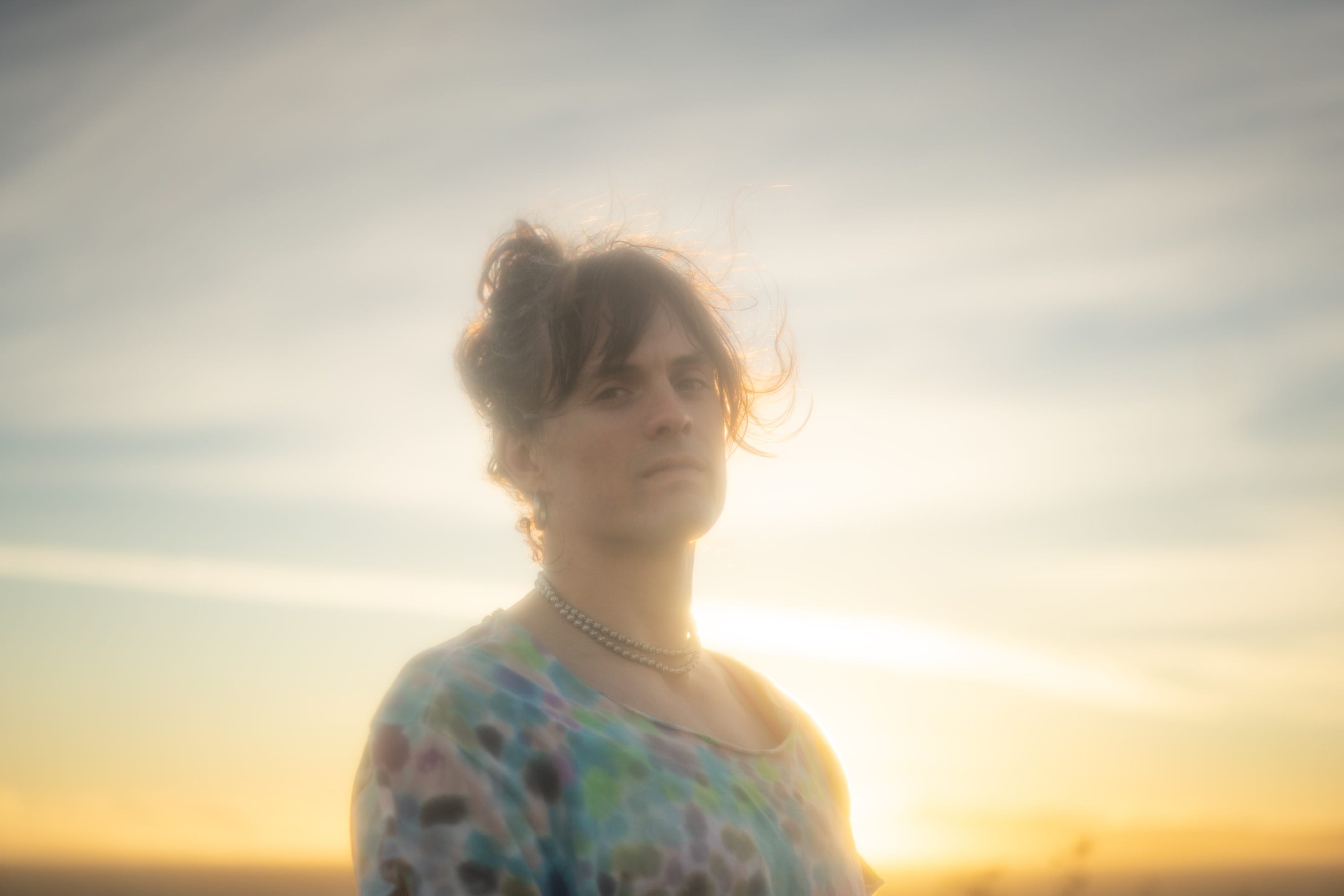
Below is the full transcript of my interview with Cole Pulice, available for paid subscribers. Thank you for your support.
