
From the Archives #31
Vladislav Delay
One of my hobbyhorses I love to beat—likely familiar to longtime readers—is that percussionists often make the most interesting composers: Steve Reich, Egisto Macchi, Iannis Xenakis, Edgar Varése, John Cage, Lou Harrison, Karlheinz Stockhausen, Art Blakey, Max Roach, Paul Motian, Jack DeJohnette, Milford Graves, Susie Ibarra, Valentina Magaletti… I could go on and on. Rhythm is one of the ways we structure time, and in this percussionists seem to think differently about the architecture of music in unique ways. Attack, resonance, and duration dominate their vocabulary, while pitch and harmony are often less centered.
It was Steve Reich who first inspired this intuition in me, but I first articulated it as such when I learned that Sasu Ripatti (best known as Vladislav Delay) was trained as a drummer. As he explained to Fifteen Questions,
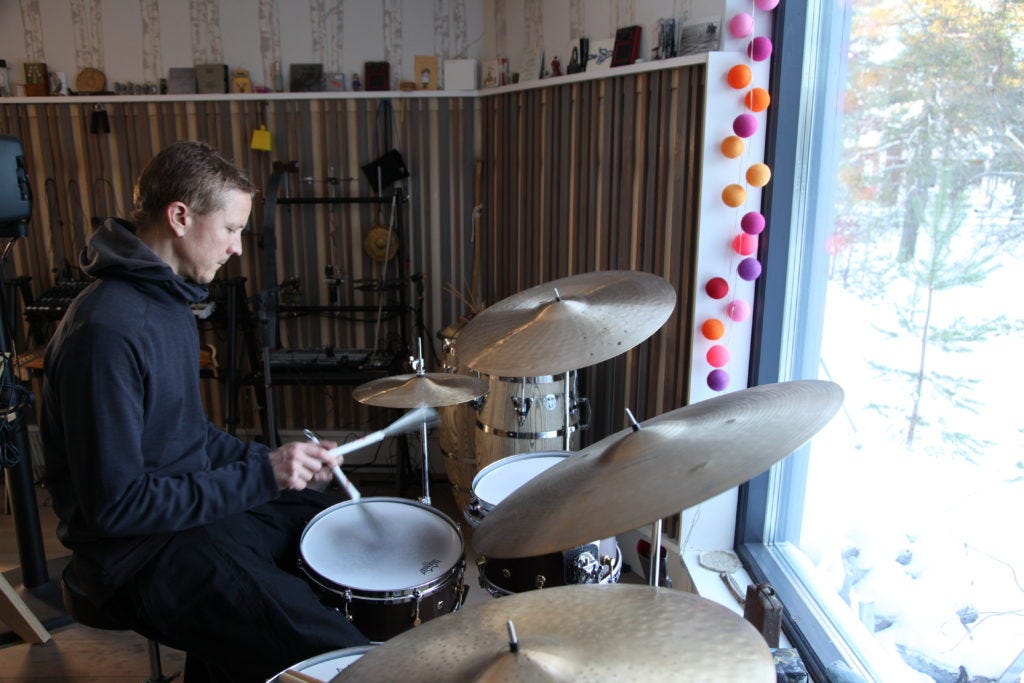
I started at the age of 5 with classical percussion and drums, jazz later on, death metal in between. I switched from sticks to electronic equipment and music production at about the age of 20, in '96, and released my first productions in '97.
The off-kilter rhythms of Vladislav Delay are rooted in part in jazz, and even the relatively dance friendly music of Luomo, Ripatti’s deep house project (see 2000’s beloved masterpiece Vocalcity), makes more sense in this light. But this influence seemed to be a formative one, the roots, rather than a window into Ripatti’s creative process. As Vladislav Delay, Ripatti is granted the freedom to pursue whatever, while Luomo operates within the form of a relatively codified dance music genre of microhouse. Ripatti has occasionally wheeled out other monikers to pursue other directions, for instance footwork and juke through his Ripatti series, and later happy hardcore as Ripatti Deluxe on his newly minted Rajaton imprint (see 2022’s Speed Demon).
There’s something surprisingly captivating about much of this later, frenetic, high tempo work, although in truth it often makes me feel much too anxious for the era we’ve been living in. But even when a particular record or style doesn’t land with me, it still reveals something about the artist that helps unlock aspects of his other records. Like the Blues, innovation isn’t occurring on the level of form but of expression. Having the contrast of the free form persona allows us to better hear the artist’s style manifest from the limited gestures available within the conventions of the genre.
It was the release of Whistleblower (2007) that transformed me into a committed fan, with earlier records including Multila (2000), Anima (2001), and The Four Quarters (2005) becoming some of my favorite records of all time. But it was Tummaa (2009) that changed how I thought about Ripatti’s process. Ripatti and his partner AGF had left Berlin, relocating their family to a remote Finnish island in the Baltic Sea, where they still live, and Tummaa feels like a rebirth worthy of this change. That record features Lucio Capece on bass clarinet and soprano sax and Craig Armstrong on Rhodes piano, with Ripatti playing percussion and shaping the results as a producer and composer. For whatever reason, Tummaa seems to get lost in the (admittedly excellent and crowded) discography, but I’ve increasingly come to see it as a missing link between classic VD records and the ensembles he would later work with.
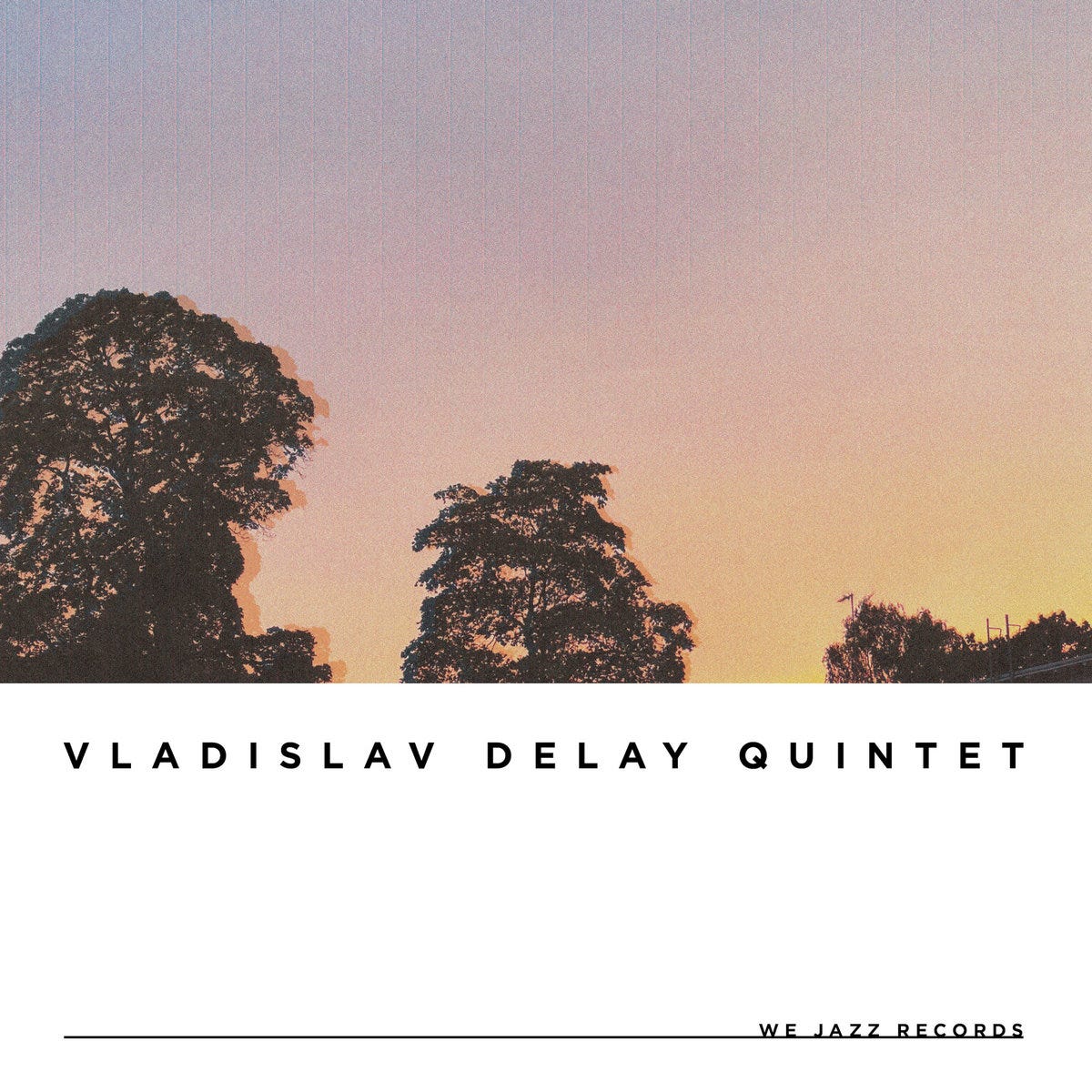
Sasu Ripatti has been quietly releasing new VD and Luomo material since late last year, and just last month released the surprisingly acoustic vd5 on Finland’s We Jazz label. In our spring preview earlier this year, Rich wrote that “Vladislav Delay is now a quintet.” In fact, we had heard a preview in 2020 in the form of a live video, but unless you were a subscriber (or there for the live show at Teatro do Bairro Alto in Lisbon), this probably went under the radar. That Bandcamp subscriber exclusive also noted that “there will be an album eventually with the group,” and that time has finally arrived.
Fifteen years earlier, Vladislav Delay had already become the Vladislav Delay Quartet, consisting of Derek Shirley on acoustic bass, Lucio Capece on reeds and effects, Mika Vainio on electronics and live processing, and Delay on drums and percussion and postproduction. I love the physicality and ambiguous electroacoustic timbres of this record, and had hoped for more, perhaps even a live set at Mutek, but of course, the tragic death of Mika Vainio in 2017 put an end to that. And Vainio is impossible to replace, so expanding further into a quintet is a logical move.
In addition to the returning Derek Shirley and Lucio Capece, Ripatti is joined by Maria Bertel on trombone, and frequent collaborator Max Loderbauer, who played Buchla on the 2020 recording and perhaps most surprisingly here contributes piano. Ripatti and Loderbauer rounded out the Moritz von Oswald Trio, who I vaguely recall seeing at Mutek in 2010(?), but I was much more blown away by a bill that included Delay, Tim Hecker, Ben Frost, and CM von Hausswolff. I mean, come on!
I was discovering the Basic Channel and Rhythm and Sound catalogues at this point, but the Trio never resonated deeply with me. Maybe von Oswald is just one of those artists who is better on record. And in fact, even when I saw von Oswald in a duo with Juan Atkins at Mutek 2013, I found myself largely underwhelmed. The minimal techno pioneer had suffered a stroke in 2008, and these tours felt like they were driven by financial concerns rather than artistic pursuits. I could be wrong about that, but that’s my intuition.
Delay, however, stubbornly continues chasing his own vision with little concern for the market. Even if I rarely revisit the Trio records, I did appreciate seeing Ripatti in the context of a live band, playing acoustic instruments with analog effects, strongly signaling a gesturality that is harder to perceive in his electronic works. Shortly after the release of the Quartet record, Ripatti and Loderbauer left von Oswald’s trio (they both appear on 2012’s Fetch), and the two would continue to work together as Heisenberg. Some years later, Ripatti emerged from a quiet period, contributing percussion and electronics to Nils Petter Molvær’s aptly titled Nordub (2018), which also involved Eivind Aarset on guitar and Sly & Robbie holding down the rhythm section.
A very nice project, but a bit restrained, perhaps, clearly aimed for bourgeois audiences in refined theatres rather than dank basements and hazy bedrooms. The experience must have been a dream for Ripatti, however, who would later fly to Kingston to further collaborate with the reggae legends, sessions that resulted in 500-Push-Up (2020), distilling the group dynamic to raw rhythm section excursions. (Both Sly and Robbie, too, have sadly passed on in the years since.)
Sasu Ripatti is never one to get too comfortable, preferring to take the more difficult road, reinventing himself time and again. Perhaps this is what has lead him to so many collaborations. In addition to those ensembles previously mentioned, we should mention records with his partner Antye Greie as AGF / Delay and RyJ, Sensate Focus with Mark Fell, and most recently ZWAARD, with Antipop MC Beans. But as much as I love a good duo, there is something magical about an ensemble, and vd5 is a record I’m looking forward to spending much more time with.
Sasu Ripatti is probably my favorite artist about whom I’ve written the least, so this ostensible “From the Archives” post has turned into a rather more rambling primer than I intended. But I do have a special treat that I’ve dug up from the vaults (Waybach Machine):
INTERVIEW
The following interview was conducted by Nikki Benson by email in September 2009, based on questions largely drafted by myself, Joseph Sannicandro. It was originally published by The Site Before, where Nikki compiled and edited Sasu’s responses. At the time, I was surprised (and a little irritated) at how little my questions were altered, enough so that part of me felt like the byline should have been changed. But Nikki was new at this, and we went on to collaborate on her blog SSG Music as she expanded to cities beyond Seattle. I reached out to Sasu some years later about doing a proper Sound Propositions deep dive, but I never quite made it work, somewhat intimidated and wanting to find the Perfect Moment™ to conduct our chat. (When the Sound Propositions book is finally published, I do intend to include Ripatti, Tim Hecker, and Dakim, the triumvirate of procrastinated interviews). So, for now, enjoy this short interview from the better part of two decades ago!
Interview: Vladislav Delay
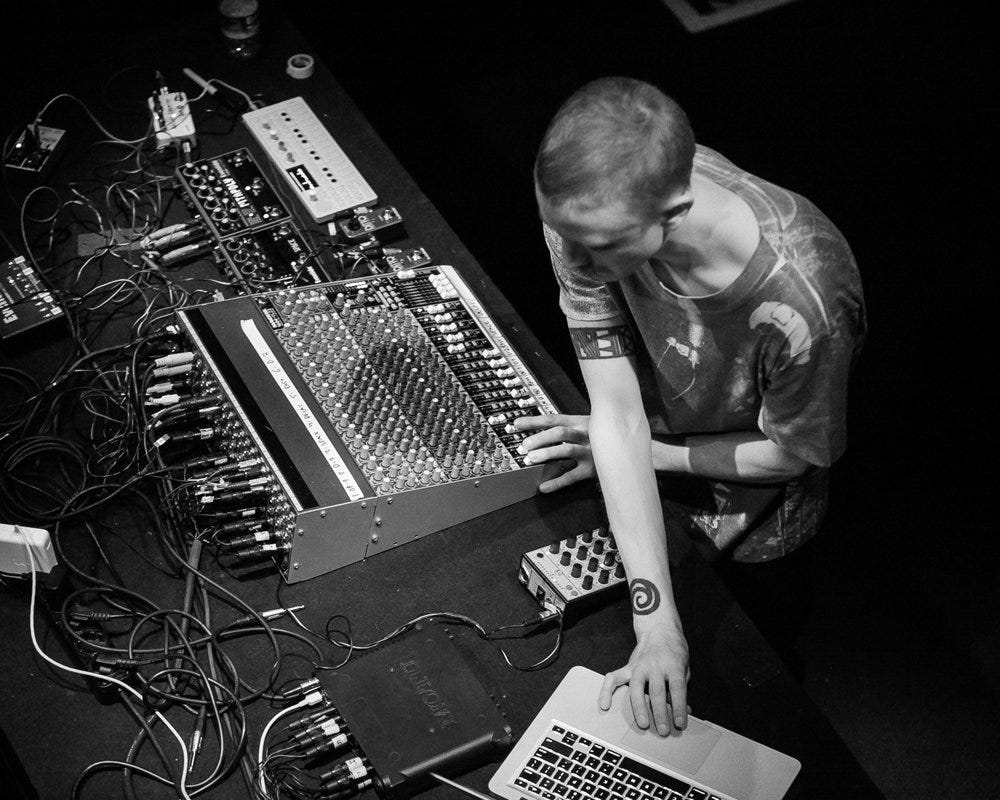
Finnish musician Sasu Ripatti has a host of alter egos, but is best known to TSB as Vladislav Delay, who came 4th in our list of the top 50 albums of 2007.
Joseph: May I ask what is the significance of the name Vladislav Delay?
There’s no particular significance, I just came up with it more than 10 years ago and have found it suitable enough to describe my music. It was an accident actually, how the name came up.
Joseph: How has the city of Berlin shaped your music?
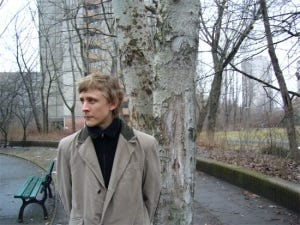
It did probably in positive and negative ways but it’s too close, and there’s too much emotion to see clearly what really happened. I have been living away from Berlin for one year now, and have realized the influence wasn’t all that good; I’m happy to be out of there. The good sides are still a bit difficult for me to see. It shaped me more than it shaped my music, that’s for sure.
Joseph: Being a place with broad and diverse audiences, and known for impromptu parties and great electronic music, does Berlin bring out a different side of you musically?
Actually, I never went to Berlin for music and what it had to offer, but rather, I went for my relationship. But like I said, it didn’t affect my music too much; it’s well guarded.
Joseph: The album was produced on a “small island on the Baltic” according to your press. How might this have shaped your approach?
Well, the surroundings where I’m currently living are quite special. They actually did influence my process somewhat with the album. The influence was slight, but present. It was inspiring to see nature seriously and to struggle with snow and minus degrees without much light at all.
Nikki: What has been your experience working with major labels?
Not very good, to put it lightly.
Nikki: Do you feel that you have shunned the limelight? If so, how so?
I have some issues with popularity and even just having lots of people around me, so it never was possible for me to go the route of popular whatever. I like pop music and all, but to be a face and having to face the entertainment issues and all is not an option for me. I found that out with little try outs as Luomo years ago.
Joseph: I would imagine that Luomo draws very different crowds than VD, or at least the crowd interacts in a different way. Is there something more satisfying in making people dance?
Actually, I make music for people to sit down and listen to. Music is more important for me than having a good time or dancing, even though that is important as well. Maybe I’m not that good at giving people what they want and need, so it happens naturally.
Joseph: Since VD isn’t music to dance to, then, does this fact have any bearing on your decision to work with contact mics and create a more organic, live expression of your music?
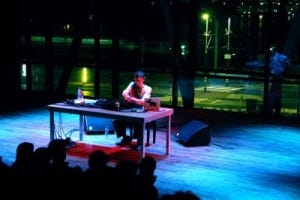
VD project is totally for me to discover and search for music that doesn’t exist in the main, and a very personal search as well. I use and do anything and everything to get where I need to, such as with contact mics. Also, when I perform live I look for ways to go more organic with life-like presentation. Then again, I try to do more or less the same when I play as Luomo making people (somehow) dance.
Joseph: How has the inclusion of live musicians played out in your live set?
It gives it another dimension and possibility for a real interaction between people. You can’t get that with just machines, of course.
Joseph: I suppose we’ll just have to see for ourselves, but I’m wondering if these new tactics (contact mics, live musicians) have helped overcome the frustration / alienation from the body that many electronic musicians feel, and that you seemed to be describing in your Wire interview two years ago (#288). Particularly as a percussionist, I would think that the physicality of beating an instrument, or the act of dancing, would play an important role in your approach towards music. What are your thoughts on this?
I totally agree with you. A more frustrating thing with electronics is the lack of direct anything, even turning a knob on a synth isn’t immediate and it needs to be converted etc etc. Having a stick in my hand and hitting what and when and how I feel like gives me more satisfaction than any programming ever could. It’s about expanding though, not choosing one way over another.
Joseph: Has this new phase for Vladislav Delay altered your other musical personalities in any way?
Not really, as far as I have so far noticed! There are new plans to do more acoustic stuff than ever with Vladislav Delay Quartet where I play drums, but also there are some new club oriented things that are more rigid than before and so forth. All over the place I guess.
Joseph: Can we expect more records from Luomo, Uusitalo, and so on?
We will have to see. I’m not working on any Luomo or Uusitalo record right now. Music won’t stop though!
The Silent Ballet would like to thank Sasu Ripatti for the interview.
……………………..
And lastly, here is my review of the return of Ripatti’s lesser-known Sistol persona, originally published in January 2010.
(Vladislav Delay as) Sistol- On the Bright Side
Halo Cyan | Phthalo Records
Sasu Ripatti can apparently do no wrong, though it is a bit surprising to see him reactivate this long dormant persona after almost eleven years. Why would a successful producer revive a one-off, nearly forgotten project from over a decade ago? This multifaceted Finnish musician has consistently impressed us with his versatility, from the grooving sophisticated house of his Luomo persona to his more abstract and minimal tinkering as the much-lauded Vladislav Delay. Following his debut The Kind of Blue EP in 1997, Ripatti offered his first deviation from Delay with the self-titled Sistol LP in 1999. Looking back at that record, with its cold tones, steady dance rhythms, and subdued bass, it stood out as something of an oddity in Ripatti’s corpus, especially contrasted against the tremendous output of Luomo, Uusitalo, Delay, and the various other projects over the next decade. The return to the Sistol persona therefore comes as something of a surprise, since the project seemed more of a transitional workspace than a fully formed persona. Surely Ripatti already has enough on his plate, with forthcoming Vladislav Delay Quartet, and the Moritz Von Oswald Trio (with Moritz Von Oswald of Basic Channel fame) occupying his time, just to name just a few.
With On the Bright Side, Ripatti returns to Sistol, yet the result bears little resemblance to that first incarnation. Instead, Bright Side is almost an inversion of the vibe on that debut, closer to his Uusitalo persona but with none of the warmth. The beats and basslines are far more pronounced than their muffled and buried counterparts, and the knob-twiddling and effects-processing are now sophisticated enough to hold the listeners’ attention. That first Sistol record reveals a future master in his infancy, tentatively exploring his influences at the time, a sort of playful, idiosyncratic take on the UK-rave and IDM scene. That self-titled record was re-released recently, remastered and repackaged as (Vladislav Delay as) Sistol, and accompanied by a disc of remixes by a variety of interesting producers. While I won’t offer a full review of that release here, it is worth pointing out that the remaster of the s/t album is a phenomenal improvement. The depth and space of the sound are so much fuller, more dynamic, and more nuanced that the record is almost completely transformed by the process. The remixes push the material in various directions, exploring the potential that was initially buried. One suspects that the experience of remixing those old tracks must have inspired Ripatti to write music as Sistol again. Perhaps it is the distance that made it an appropriate time to return to the idea of Sistol.
On the Bright Side puts the beats and bass front and center, eschewing the house-grooves of Luomo for a very different side of Ripatti. Despite the floor-ready rhythms and cautious melodies, Ripatti presents a record that feels mostly cold and industrial. Pitch-shifting synths, bouncing drum loops, and melodic bleeps-and-bloops take artificial tones as far as they’ll go. The abstract and attentive sound design of Vladislav Delay peers through at moments, but mostly we have a record that looks forward by looking back.
Every track is an interesting exploration in its own right, but certainly some tracks shine much brighter than others. The opening three tracks revolve around strophic dance beats, the narrative of each certainly appropriate for the dancefloor. “On the Bright Side” is the last of these three, and winds itself down to a gradual standstill, marking a turning point. “A Better Shore,” which falls right in the middle, is a definite highlight, with its memorable melody and pyramid structure. The sustained bass oscillation is gradually layered on, with less emphasis on the rhythmic elements compared to the intersections between the multiplicity of elements. Fragments that may have formed a percussive component will often slowly morph into a melodic role, while bass frequencies are shifted until they are suddenly perceived as lead riffs. This twisting and turning within a seemingly established set of conventions and parameters is what makes this edition of Sistol so effective and sophisticated. Songs like “Fucked-Up Novelty” and “Contaminate Her” recall Luomo in the way rhythmic elements are interestingly layered and loop together to create fascinating interplay. “Glowing and So Spread” and album-closer “Funseeker” are the most fun and bouncy: Sistol at its most elastic.
Both the past and present versions of Sistol feature a sort of writhing tonality, an emphasis more on synthetic textures and shifting parameters. Working within the confines of lo-fi tones and looping sequences, the wavering quality of this music, combined with the contrasting minimal, repetitive structures is downright endearing, not unlike Four Tet. And if all this isn’t enough, a two-volume remix set entitled On the Brighter Side has also been released to accompany this record, pushing the material even further.
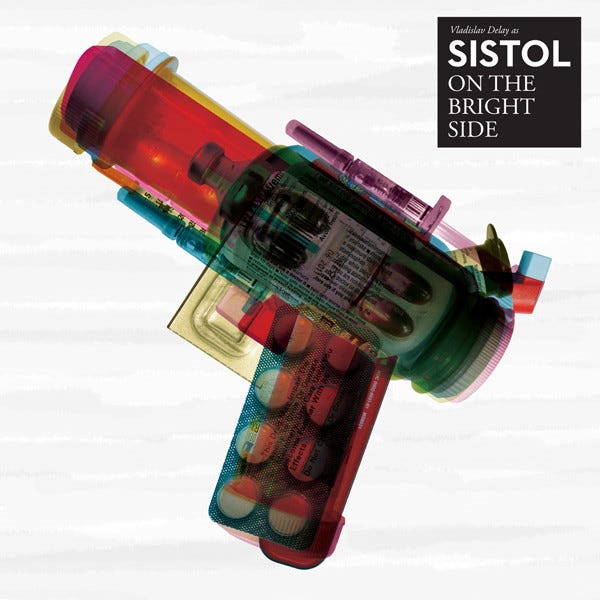
The cover art seems telling as well, as with most of Ripatti’s work. The first Sistol record was just blank white with small text in the corner. On the Bright Side’s cover features what appears to be a raygun set against a white background. At closer inspection it is a series of drugs and pills imposed over one another in the shape of a gun. This strikes me as an apt representation for the entire project, particularly compared to the warmth and organic qualities of Vladislav Delay: comprised of totally synthetic components designed for recreation, everything isn’t as it first appears.