
Dear Listeners, Joseph here with another regular edition of the ACL newsletter. I intended to share the latest OUT OF THE BOX installment last week, but end-of-semester business derailed me and I’m still working on it. (Big Ears edition of the Sound Propositions podcast in the works as well.) Hopefully those two interviews and latest from Ukraine we sent out last week were enough to tide you over. So, expect more on Kate Carr’s SD card here next week, but for now we’re back with a regular edition.
I am much more into lists than I am grading music, though I concede that the real point is The Discourse, and the New York Times’ recent list of the 30 greatest living American songwriters has predictably generated no shortage of takes. I’m still perplexed by the inclusion of Thugger (no shade, but really!?), and there are many absences that feel deliberate. In fact, the Times has since published a list of 11 additional songwriters that includes Billy Joel, whose omission has probably resulted in the most heated debate. For instance, take jazz pianist and composer Brad Mehldau’s “Jon Caramanica is a bad cliché,” which offers a spirited defense of The Piano Man.
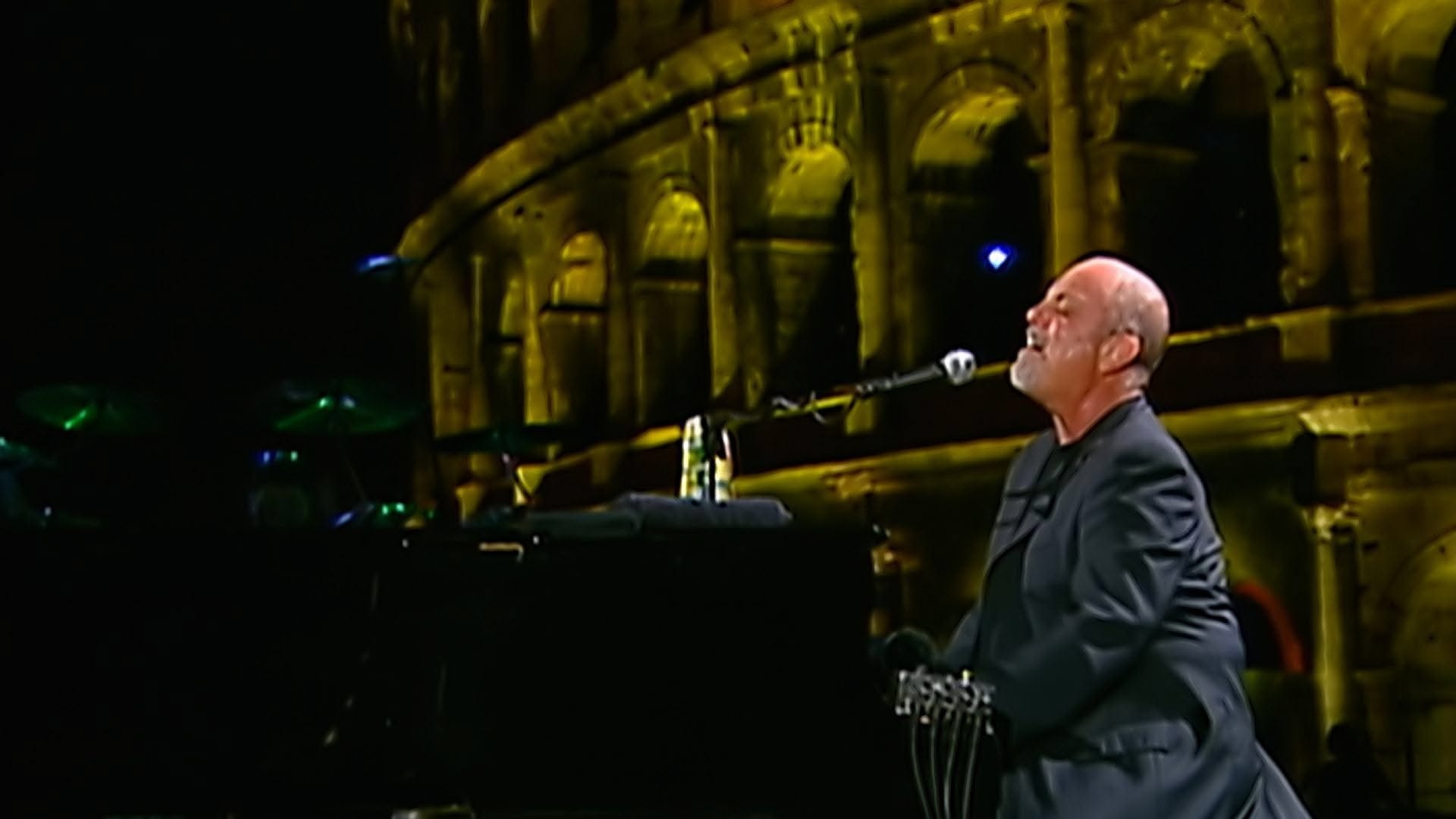
I grew up with the music of Billy Joel, which I’ve found resonates more strongly for those who also grew up in the Tri-State Area, or in other words those who might be said to have a “New York State of Mind.” 52nd Street is one of the first LPs I remember asking my parents to put on the turntable as a small child in the late ‘80s (along with Slippery When Wet, Thriller, and Goodbye Yellow Brick Road). I’ve only seen Joel live once, along with a million or so others in Rome for a memorable performance with the Colosseum as a backdrop, during the summer of 2006. Joel’s music is woven into the fabric of my life in so many ways, tied to specific memories and celebrations and tragedies.
Considering the type of music we focus on here, this all may come as a surprise, particularly as I’m usually quite far from bring a “poptimist.” But I’m certainly not alone in the experimental scene in my appreciation for Joel’s music. Keith Fullerton Whitman is a decade older than me, but we seem to have a similar recollections of the music of the 1980s based on the tracklist of Greatest Hits (2003), a 160 track pay-what-you-want album documenting the synthesist’s take on chopped and screwed pop hits made on the occasion of his 30th birthday. I included his reworking of Joel’s “The Stranger” in my Secret Thirteen mix, and the record kicks off with this permutation of “It’s Still Rock and Roll To Me.”
Speaking of old mixes, I dug this Czech/Slovak experimental mix by Jára Tarnovski up for a friend recently. Check it out, and dig up part two if it hits the spot.
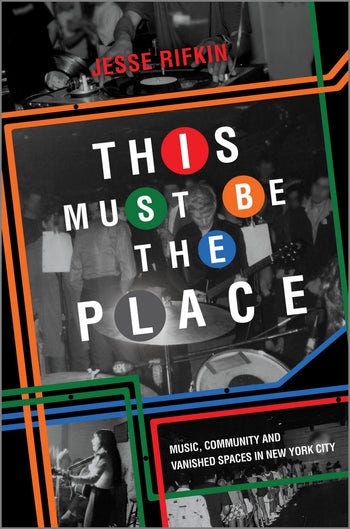
I recommended a couple books last edition, so let me also add Jesse Rifkin’s This Must Be The Place: Music, Community and Vanished Spaces in New York City (2023) to your to-read pile. As I’ve mentioned before, my dad is from the Bronx and I grew up in southern Westchester, so by the time I was a teenager I was going to (and playing) shows in the city and around the Tri-State. So many places we used to frequent—CBGBs, the Continental, Coney Island High, C Squat, Brownies, Tonic, The Knitting Factory, and on and on—are long gone. (I do recommend you visit the Museum of Reclaimed Urban Space in the former site of C Squat.) But NYC has always been like that, right? The force of the present overpowers the past, often physically. Even standing on stage at CBs in 2001 I was very aware of the weight of the past, and all the clubs we missed out on. I have vivid memories of the first time I read the plaque outside Charlie Parker’s apartment on Avenue B, or trying to figure out where Max’s Kansas City was, or the Filmore, The Paladium, or the original location of The Kitchen.
Jesse Rifkin (@walkonthewildsidenyc) is known for Walk On The Wild Side Tours NYC, which has built a walking tour around visiting such sites that were significant to New York’s underground rock, glam, and punk scenes from 1965 to 1977. Rifkin’s book shares some features with Ronen Givony’s book I wrote about two weeks ago, which looked back on the Brooklyn scene of 2000s, as both draw on extensive interviews with key participants. Interestingly—and unsurprisingly, given his expertise as a tour guide—Rifkin’s book anchors its story in bricks and mortar, tracing exactly which buildings housed which scenes, then showing how rising property values and zoning laws tore them down or turned them into condos. Where music history often celebrates artistic genius, Rifkin focuses on the unglamorous machinery of urban change: tax abatements, landlord decisions, mayoral policies, and the steady displacement of both poor residents and the musicians who once relied on neglected spaces. The ghost venues that haunt New York aren’t just casualties of time, but victims of specific political and economic forces. What emerges is a political and physical archaeology of New York, each lost club a lesson in how the city’s boom-and-bust cycles first subsidize counterculture, then monetize it, and finally powerwash away the evidence.

A happy 750th week to Marc Weidenbaum’s Disquiet Junto project! Weidenbaum founded Disquiet back in 1996, and the weekly Junto community composition prompts have been sent out weekly without fail since 2012. Truly a remarkable accomplishment, and a lovely community that Weidenbaum has cultivated. I became an occasional participant with the 319th edition, and in fact the theme to the Sound Propositions podcast started off as my contribution to 320. The pandemic knocked me out of the routine, but there’s never any pressure to contribute, and I hope to dip back in soon. Each week is an exercise in creativity in the face of tight time constraints. Please subscribe and join in when you can.

I’ve also been an occasional contributor to the Cities and Memory project—the world’s largest soundmap—who have just launched Cities and Memories Radio, a whole new way to experience their archive of thousands of field recordings and compositions. Check it out!
Below, this edition of ACL Weekly includes our usual selection of reviews, along with a baker’s dozen of fresh recommendations. But first…
We were deeply saddened to hear of the passing of Cris Derksen, an indigenous cellist and composer from Northern Alberta, and Ryan Porter, a jazz trombonist from LA, both of whom were killed in automobile crashes, and both gone far, far too soon. It’s a strange thing to grieve people we’ve never met, yet music is such an effective means of communicating feelings that it makes sense. And music—both listening to and writing—can also help us to process our grief.
Three recent compositions that I’ve spent time with recently all developed out of the process of grieving: Alessandro Brivio’s 2.25, made in tribute to a lost friend; Neti-Neti’s Echo of Being / Grace in Rot, an improvised mediation of grief, personal and collective; and Jessica Roch’s “Par,” written for her late father.

Jessica Roch ~ Par
Roch, a multi-instrumentalist and member of the London Ambient Orchestra, composed “Par” on the evening of her father’s funeral. “While it emerged from grief,” she writes, “it isn’t meant to feel heavy or sorrowful, but reflective and cathartic. Staying up to write it helped me process what I couldn’t yet put into words.” (“Music and Grief”) “Par” opens with a soft tonal cloud, then the first clear piano note emerging after fourteen seconds, creating a quiet tension between strong attack and shimmering sustain. Halfway through the composition, a brief melody recalls the civil rights anthem “Freedom Day,” and while this quote seems unintentional it serves as a powerful moment of dissolution and return, as if a wave of acceptance were taking aural form. Violin stabs shine brightly, chords emerge triumphant, restating without apprehension the theme only implied by the piano’s first tentative notes. And then it fades into a beautiful vapor of an ending, leaving behind not sorrow but the strange, quiet grace of having processed the unprocessable. That’s what music can do for grief—not erase it, but give it shape, and in that shape, a little room to breathe.
Recommendations
a baker’s dozen of new releases in my to-listen pile
Booker Stardrum Evan Shornstein ~ OOPS!
groove scientists at work: melodic percussion, bubbling synths, and zero wasted motion
Concepción Huerta ~ No Queda Nada Todo Resuena / Nothing Remains Everything Resonates
magnetic tape as living memory, signals wearing away and duplicating themselves between body and machine
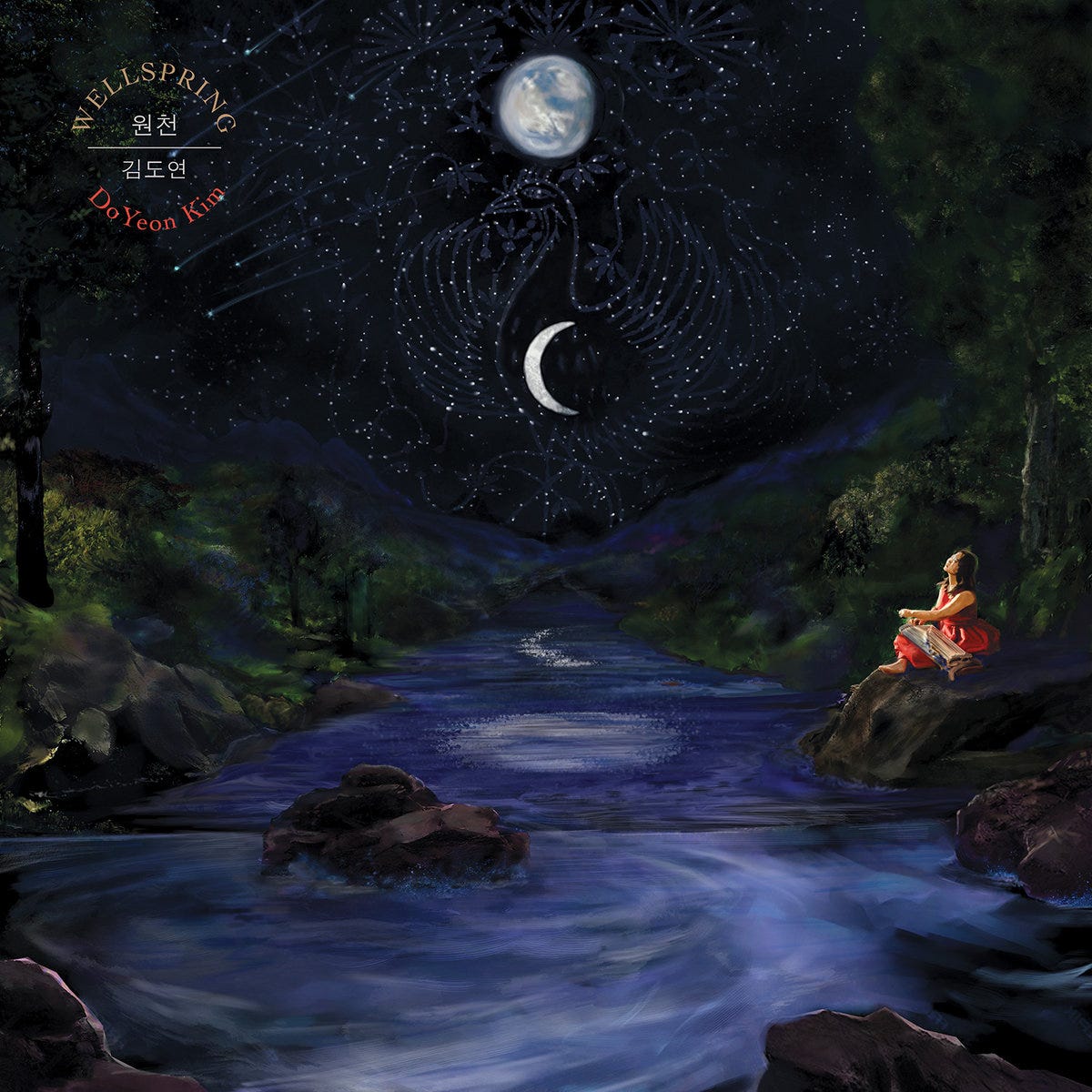
DoYeon Kim ~ Wellspring
gayageum virtuosity meets downtown firepower — Korean lullabies, No Wave brashness, and a call for society to come together make this a must-hear
Drew Wesely / Laura Cocks / Camilo Ángeles / Lester St. Louis / Carlo Costa ~ A Fine Chance for Permanence
following five solo tapes these formidable improvisors join forces—asymmetrical pulses, floating timbres, and the virtuosity of restraint
Kalia Vandever ~ Mana
trombone, reverb, and the divine power of ancestry
Matthewdavid ~ Rare Music
vault-scavenged beats, lost tracks, and various heat, from Leaving founder
Olivier Alary ~ Vestiges
amplified lap steel séance, unearthed sounds carrying the grime of time
ọmọlolú ~ the only way is thr(u)
black queer time bending through guitar and creek water, seeking a now that can breed futures
Play Time ~ Magic Object
not a Ben Vida, Booker Stardrum, and Will Epstein record
Ryan J Raffa & Sam Prekop / Wavefiler ~ Area Flood
a split 7” born from a thousand-year storm — synth communities rising to meet the rain
Seefeel ~ Sol. Hz
building on 2024 mini-album, Seefeel’s first new full-length in fifteen years is their dub album—bass clouds perception and solid melts into air
Sulk Rooms ~ Songs of Soil
luminescent electronica meets the majesty of worms—field recordings from an allotment, shaped into bliss
Wild Up ~ Julius Eastman, Vol. 5: Gay Guerrilla
without blood, no cause—Eastman’s queer manifesto queered Lutheran hymnals, the latest to be given new life by Wild Up
RECENT REVIEWS
Reviews are at the heart of ACL. Here are selections from a few of my favorite reviews we posted on the blog in the last few weeks.
Aho Ssan ~ The Sun Turned Black
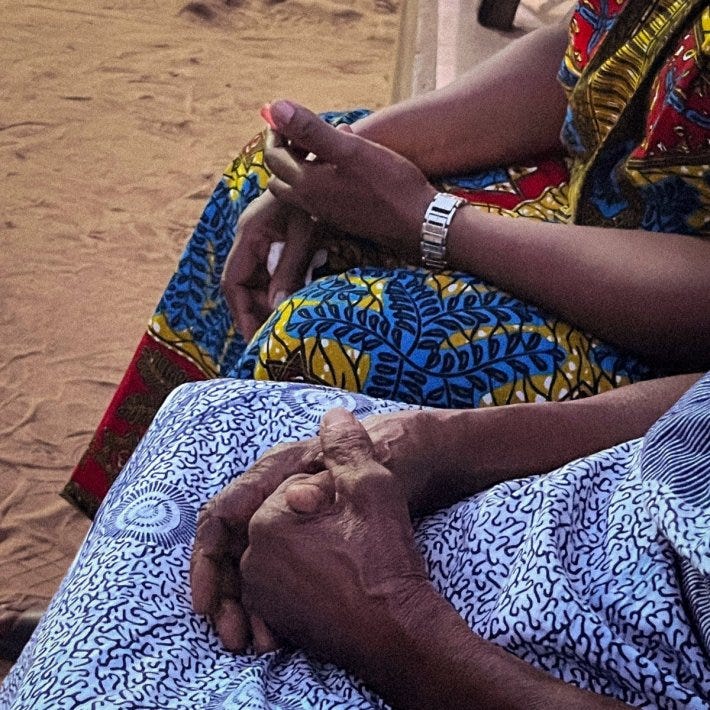
You can’t go home again, writes Thomas C. Wolfe in Look Homeward, Angel. Paris-based artist Aho Ssan (Niamké Désiré) experienced this feeling of disconnection when he visited Ghana, his ancestral home. The friction between home and homeland led to The Sun Turned Black, an intense and visceral LP characterized by the physicality of sound. One can hear him working through dissonance, sculpting impressions as if they were cascades of sound. At no point in the album does the listener feel safe, settled, reconciled or at home. The restless nature of the set reflects the spirit of the artist, to whom neither birth home nor ancestral home feels authentic. Giving voice to this “state of “diasporic in-betweenness,” Désiré – whose name in this context seems poignant – reflects the feelings of immigrants and the displaced, who discover that the home for which they yearn may only exist in the mind.
Hammock ~ The Second Coming Was A Moonrise
What would happen if one were to mix LSD with fundamentalist Christianity? Hammock‘s Marc Byrd learned the answer when watching the moonrise and mistaking it for the apocalypse. Looking back, Byrd writes of “letting go of toxic shame and bad religion, while holding onto what is good, beautiful and true.” Rather than lamenting the delayed rapture, he writes, “Seeing and experiencing a moonrise is a miracle in itself.” The Second Coming Was a Moonrise reimagines Christianity as a religion of seeking and sometimes finding, in which beauty possesses more power than dogma. The fact that Byrd references Philippians 4:8 in his description – and that by adding ten guests, he and Andrew Thompson end up with a group the same size as the twelve disciples – demonstrates the manner in which faith follows the duo, even when unintended.
HWXXNG ~ K-Core
What is K-Core? In the hands of DJ HWXXNG (Jaeho Hwang), K-Core deconstructs traditional Korean music and refits it for the modern era. The visual element is important as well, a way to demonstrate that the past has a way of haunting the present, while the present continues to reevaluate the past. Consider for example the bonkers teaser videos for Shift Key and “2045 Apocalypse.” “Shift Key” is an anime nightmare of malevolent demons who look to have descended from dragons. The closing piece – as well as the videos – thrust the question even further, as A.I. further muddies the waters. Might A.I. be able to regenerate ancient compositions, or compose its own in similar style? If so, would this be seen as authentic or inauthentic? Will A.I. eventually become a sonic Ship of Theseus? Is there spirituality in the machine?
Kreng ~ Wormhole
Eleven years have passed since The Summoner was released, long enough for us to wonder if we’d ever hear from Kreng again. Over the past decade, the artist has been composing for theatre and cinema, which is a perfect pivot given his penchant for dark and moody atmospheres. Works for Abattoir Férme 2007 – 2011 appeared on our very first collection of Music for Haunted Houses, and everything Kreng composes sounds like October. Wormhole represents a slight shift towards sci-fi, with the tagline, “What does a trip toward another world sound like?” We prefer this to “In space, no one can hear you play,” but the first Alien is a clear reference point. The album unfolds like a film score, building tension and unease until the closing tracks, when the tension topples into terror. Because this is Kreng, we know from the opening notes that this trip, no matter how benign its origins or objectives, will eventually go off the rails.
Lawrence English / Werner Dafeldecker ~ Fathom Tides
Fathom Tides is an LP of incremental change. Best heard as a single, slowly-developing piece, the album reflects the pace of nature over that of humanity. The earth is in no hurry; the trees are not multi-tasking; the streams do have somewhere to go, but save for times of torrent, they are in no rush. More than anything, Fathom Tides is simply a lovely composition, one that may lead listeners to surrender to the flow of time, putting aside distractions to focus on the biophony. In the closing minutes, the electronics recede, producing the same sort of peace one might feel beside a stream: until the final seconds, when the sounds pitch down and end like a record whose plug has been pulled. Scientists warn we may be pulling the plug on nature; in time, it may be the other way around.
Matteo Stella ~ Radeche Fonne
Matteo Stella’s Radeche Fonne resists the pastoral temptation that often shadows music rooted in place. While deeply embedded in the geography and traditions of the Marche region, the album refuses nostalgia, instead exposing the tensions that underlie rural life—its frictions, silences and coded forms of conflict. The opening “Cagnara Muta” sets the tone: a reference to silent quarrels conducted through gestures and objects rather than words, here translated into sound as an uneasy interplay between cello and electric guitar with the pipe organ mediating. Nothing resolves; everything coexists in a state of stubborn attrition. Radeche Fonne ultimately operates as both sonic map and residue, tracing the persistence of memory within a territory while acknowledging its instability. Contrast here does not erupt but accumulates, organised into signs and textures that linger. It is an album of quiet resistance—where the land speaks, but never plainly. (Interview here)
Metastasis ~ Dineba
Metastasis move through sound as if traversing an unstable dimension, where compositions emerge as temporary formations within a larger sonic flow. On Dineba—a title translating loosely as “flow” or “current”—the Georgian electroacoustic ensemble construct an environment in constant mutation, shaped through improvisation, field recordings and live transformation. Emerging from Tbilisi’s electroacoustic scene, the quartet—Kuji Davituliani, Alexander Khkhiashvili, Nasi Chavchavadze and David Dkikabidze—treat all sonic material as fluid, endlessly reorganised through intuition. Dineba never aims to provide closure. For Metastasis, these tracks are only fragments of a much larger sonic dimension—an endless flow where samples, improvisation and electronic processing continue to mutate beyond the album itself. Released through Bassiani’s experimental Zenaari imprint, the record also feels inseparable from the atmosphere surrounding it: a Georgian underground scene navigating repression and exile. (Interview here)
Ptastvo ~ The Grit
The Grit is one of the most striking documents to emerge from Ukraine this year. Written from the perspective of a veteran who is now part of a large volunteer force providing support and supplies to active members of the Ukrainian armed forces, the album attempts to process the unprocessable, using music as a backdrop to trauma while emphasizing ~ and in some cases even generating ~ “the energy to go on.” Recording as Ptastvo (Ukrainian for “birdlife” or “all the birds”), Volodymyr Ponikarovskyi bares his soul to the audience, riding a wave of emotion that continues to grow as the album unfurls. To listen to The Grit is to experience the inner life of a soldier: all the doubts and fears, all the hopes and dreams. As Ponikarovskyi presses forward physically and emotionally, the listener does also, plowing through the debris to higher ground, knowing that each victory may last only a moment. Making art in a time of war is a rare gift; making art as a warrior is rarer still.
SHHE ~ THALASSA
THALASSA begins and ends with the sound of breath. The Greek goddess for whom the album is named is the literal personification of the sea, and SHHE (Su Shaw) traces her footsteps across the Mediterranean Sea, channeling her spirit and voice. Inhalations and exhalations become the rhythm of the waves; subtle shifts become currents; recurring patterns become tides; and when the electronics foam and surge, they become the storm, both literal and ecological. In the end, the album returns to breath, beautiful breath, a reminder of Thalassa herself, whose breath formed and shaped the earth, who gave every species life, and who may one day reclaim the land for herself, insisting on balance if the creatures of clay do not. The cyclical nature of the album imitates not only the sea, but the potential impact of time.
Wild Orchestras of Garden of Star / Abbé Brémond Ensemble / Ká ~ Fraternity / Gutwasser II / Letters Without Words
Field recordings are often presented for their own sake, but on a trio of new recordings under a variety of aliases, Ká offers field recordings as a reaction to current events: on his latest set, as Letters Without Words. His travels through Bohemian forests have produced a sense of peace that the artist shares as both solace and encouragement. Adding a musical tone to the latter, he also connects past and present, allowing its lessons to be heard. We begin with the 12-minute Fraternity, recorded as Wild Orchestras of Garden of Star. There is indeed a sense of fraternity in the woods, or as the artist writes, consonance: the voices are in balance, each occupying its own sonic niche. Despite the food chain, there is equilibrium. Next is the slightly longer Gutwasser II, recorded as Abbé Brémond Ensemble. The sounds of “Die Quelle guten Wassers erinnert sich” were captured at a “pilgrimage site near the Czech-German border,” a second parable. And now the latest release, much longer at seventy-three minutes, presented as Ká. These ten tracks are presented as Letters Without Words, to be sent around the world in digital form to any who need what they have to offer.
UPCOMING RELEASES
(complete list with Bandcamp links here)
As summer approaches, the berries are ripening on the trees and the music schedule is bursting with volume, variety and flavor. There’s something for everyone on the vine and on the stands. May you find your next favorite album right here!
Arovane & Taylor Deupree ~ Enth (LAAPS, 21 May)
Christof Migone ~ oo (squint press, 21 May)
Aho Ssan ~ The Sun Turned Black (Subtext, 22 May)
anthéne ~ Air Signs (Dronarivum, 22 May)
Anthony Lyons ~ Signals (22 May)
BAG ~ This House is a Body (Phantom Limb, 22 May)
Boduf Songs ~ Selected Instrumental Works (Bluesanct, 22 May)
Brunhild Ferrari, Eiko Ishibashi, Jim O’Rourke ~ L’oreille Voleuse (Persistence of Sound, 22 May)
Chris Lippincott ~ Angel in a Jetstream (22 May)
Ekmeles ~ Nonsong (New Focus, 22 May)
Etienne Nillesen ~ TWEE (Sofa, 22 May)
Federico Durand ~ La Manzana Mágica (12k, 22 May)
FLOCKS ~ Lagoon (Karlrecords, 22 May)
Fugue State ~ After Nothing Comes (Switch Hit, 22 May)
gamut inc ~ radiating (Aggregate Editions, 22 May)
Hannah Peel ~ The Endless Dance (Real World, 22 May)
I’A’V ~ Volatile Poem (Discrepant, 22 May)
Ivo Perelman and Damon Smith ~ Duologue: Core of Existence (Squid Note, 22 May)
Joshua Mastel & Alec Goldfarb ~ Firmament (Gold Bolus, 22 May)
Justina Repečkaitė ~ Tapestries (miclithuania, 22 May)
Lua Jungck ~ Chase (~OUS, 22 May)
Magic Tuber Stringband ~ Heavy Water (Thrill Jockey, 22 May)
Peach ~ Soak Vol. 1 (Mood Hut, 22 May)
Peggy Lee, Julien Wilson, Theo Carbo, Dylan Van Der Schyff ~ Waiting Music (Earshift Music, 22 May)
remst8 ~ Coalescence (Bluesanct, 22 May)
Richard Pike ~ Redemption Suite I-IX: For Pianos and Textures (22 May)
Sotolo ~ Chateau (ineffable, 22 May)
Studio HC Orchestra ~ Pakachume (22 May)
Tegh & Adel Poursamadi ~ Bayal بیل. (Injazero, 22 May)
Tewksbury ~ rust/wave (Imaginary North, 22 May)
Tim Aldric ~ Interdimensional Field Recordings: Sanctuary, the Heat Death of the Universe (22 May)
Visible Cloaks ~ Paradessence (RVNG Intl., 22 May)
Zela Margossian Quintet ~ Remedy (Ropeadope, 22 May)
Jäverling ◇ von Euler ~ Spektrum (Flora & Fauna, 27 May)
Sept ~ Bridge to Your Heart (OPUS, 27 May)
Akira Uchida ~ Nusa (IIKKI, 28 May)
Various Artists ~ Moss and Melee I – Old Growth (Lost Tribe Sound, 28 May)
Amelia Ya’el ~ Voices I (Signbearer, 29 May)
Chloe Luna ~ Hidden Reverse (Syntax, 29 May)
Columbia Icefield ~ A Silence Opens (Out of Your Head, 29 May)
David Torn ~ now i imagine a place not the same (Kou, 29 May)
Emi Fe Ensemble ~ Tales of the Realm of Wishes (Iepetus, 29 May)
Federico Perotti ~ Quadro (Feral Note, 29 May)
Feon ~ Darkness Within Darkness (Invisible, Inc., 29 May)
Friday Night Plans ~ Blue Hour (Modern Obscure Music, 29 May)
Gigi Masin ~ Movement (Sacred Bones, 29 May)
The Hands Free ~ Unturned Cup (New Amsterdam, 29 May)
Hanry ~ What Came From Silence (Pelagic, 29 May)
James Wengrow ~ Emissary (Endectomorph, 29 May)
Kikù Hibino & Merzbow ~ Rococo ∞ Echomatter (Superpang, 29 May)
Kris Toner & Cathlene Pineda ~ Sung (Orenda, 29 May)
Laurence Pike ~ Possible Utopias for Jazz Quintet (Lapsus, 29 May)
Morgan Evans-Weiler & J.P.A. Falzone ~ Grid and Gradient (kuyin, 29 May)
Moses Yoofee Trio ~ CHASING LIGHT (LEITER, 29 May)
Robin Katz ~ Hypnos (Gearbox, 29 May)
Seamus O’Muineachain ~ Island of Flowers (29 May)
Vilhelm Bromander and Fredrik Rasten ~ Astral Twins (Fönstret, 29 May)
VOLTIJ ~ states (29 May)
You, Me, + the Whales Sextet ~ You Are in a Kitchen Filled with Plants as the Sun Streams Inward (29 May)
Giorgio Fazer ~ Duchy przodków (Ubocze, 30 May)
Blight ~ Phantoms (31 May)
Susana Santos Silva, Vasco Trilla ~ Mushin (defkaz, 1 June)
Various Artists ~ Moss and Melee II – Controlled Burn (Lost Tribe Sound, 1 June)
Modern Silent Cinema ~ Passages XXXIII-XLIII (for Piano, Guitar, and Bass) (1 June)
Machinedrum ~ BL00MS (IAMSIAM, 2 June)
Musica Mosaica ~ Clock In, Clock Out (Futura Resistenza, 2 June)
Alex Dowling ~ Breathers (Little Magic, 5 June)
algorhythms ~ surging descent (5 June)
American Cream Band ~ Twin (Quindi, 5 June)
Ángeles Rojas~ Open the windows and let the spirits in and out (Warm Winters Ltd., 5 June)
Auscultation ~ IV (100% Silk, 5 June)
Beatrice M. ~ Sinking (Tectonic Recordings, 5 June)
Beatriz Ferreyra ~ A Distracted God (Room40, 5 June)
Big Space ~ The Pendulum Effect (5 June)
Cinna Peyghamy ~ Music for Tombak & Synth (Other People, 5 June)
Drew Wesely, Camilo Ángeles, Laura Cocks, Lester St. Louis, and Carlo Costa ~ A Fine Chance for Permanence (Dinzu Artefacts, 5 June)
Dutch Elm ~ S/T (5 June)
Eric Demuro ~ Simulalcra (Bastard Jazz, 5 June)
Galán | Spieth | Guentner ~ Obreel (Affin, 5 June)
Jake Muir ~ Pareidolia (enmossed, 5 June)
Jim O’Rourke & Jos Smolders ~ Albumin (Moving Furniture, 5 June)
Jolly Mare ~ La Luce dell’Alba (42 Records, 5 June)
Lifted ~ Movie (Outside Time, 5 June)
Manja Ristić ~ Devet (Flung, 5 June)
Maya Dunietz & Solistenensemble Kaleidoskop ~ The Sound of Difference and Connection (Orthodox, 5 June)
Mike Cooper ~ The Dream Island of Birds (Discrepant, 5 June)
Mike Lorenz ~ I’m Not There (5 June)
Nolan Hildebrand ~ Noise Trip Explosion (Redshift Music, 5 June)
Olivier Alary ~ Vestiges (LINE, 5 June)
Sylvain Chauveau ~ The Complexity of the Simple (FatCat, 5 June)
Teiku ~ Klang (Ginkgo, 5 June)
Tyler Sabbag ~ Novella (5 June)
JOHN 3:16 ~ The Beast (Alrealon Musique, 6 June)
Savina Yannatou, Gonçalo Almeida, and Costis Drygianakis ~ Independent / Interdependent (defkaz, 7 June)
Oren Ambarchi & Will Guthrie ~ Cold Shoulder (Futura Resistenza, 9 June)
Nam-Khar ~ Antimon (Cyclic Law, 11 June)
Sutekh Hexen & Hissing ~ SH:HS (Cyclic Law, 11 June)
Alexander Noice ~ Perpetually and Forever (Orenda, 12 June)
Berndt / Schmidt ~ Cloud Machines (Thrill Jockey, 12 June)
BIG BRAVE ~ in grief or in hope (Thrill Jockey, 12 June)
Chaz Underriner ~ Flicker (12 June)
Cloud Circuit ~ Cloud Circuit (Watch That Ends the Night, 12 June)
Controtempo ~ Fixed Points (12 June)
Debit ~ Potpourri (N.A.A.F.I., 12 June)
Driftwood ~ Maps (Room40, 12 June)
Earth Trax ~ Everlasting Flame (Lapsus, 12 June)
Guy Shepard ~ December (wadi, 12 June)
Horse Lords ~ Demand to Be Taken to Heaven Alive! (RVNG Intl., 12 June)
Kalia Vendever ~ Mana (International Anthem, 12 June)
Lagoss ~ Música para Plátanos (Discrepant, 12 June)
Lucie Antunes ~ Silence (Bell, 12 June)
Micha Acher ~ Henry and the Ghosts Songbook (Alien Transistor, 12 June)
Modis ~ Capsule (Latinambient, 12 June)
Mukqs ~ Juckport (Hausu Mountain, 12 June)
Niblock Hooker Soldier First ~ Paiva River Songs (Gold Bolus, 12 June)
Olaf Rupp ~ Fuzzy Logic (Palilalia, 12 June)
Puce Moment ~ O.R.G. II (odd doo, 12 June)
Robert Aiki Aubrey Lowe ~ Manifestations in the Shadow of an Unknown Land (Kou, 12 June)
Rone ~ Megaptera (InFiné, 12 June)
Starlings ~ Friend, Thank You (Machine Records, 12 June)
Terror/Cactus ~ Colapso (Share It Music, 12 June)
Tujiko Noriko ~ PON (Editions Mego, 12 June)
Ai Yamamoto ~ Seasons (Someone Good, 19 June)
Alex Zhang Hungtai ~ Orion/Mother (American Dreams, 19 June)
Burial Cake ~ Small Steps (Somewherecold, 19 June)
Daniël Jolan ~ Sublime Lenteur (Lost Tribe Sound, 19 June)
Forest Factory ~ HOLZWEG (auto.archives, 19 June)
Mark Barrott ~ The Exit Diaries (Anujachill, 19 June)
Micah Thomas ~ Lucid (19 June)
Michael F. Hunt ~ Passage of Time: The Music of Michael F. Hunt (Phantom Limb, 19 June)
Ocoeur ~ Greener Grass, Clearer Water (n5MD, 19 June)
Petra Hermanova ~ Lapilli (Original Film Score) (42far, 19 June)
qrauer ~ Embodied Memories (19 June)
Seabuckthorn ~ Never the Same River (Lost Tribe Sound, 19 June)
Spyros Polychronopoulos + Nikos Veliotis ~ Position (Room40, 19 June)
Steve Rachmad ~ 3-6-9 (Dekmantel, 19 June)
Various Artists ~ Nailbiters Volume 1 (Intrepid Skin, 19 June)
Wild Up, Christopher Rountree, Julius Eastman ~ Julius Eastman, Vol. 5: Gay Guerrilla (New Amsterdam, 19 June)
Bipolar Explorer ~ Last Lights (Slugg, 21 June)
Marla Hlady & Christof Migone ~ On And On And Off (Crónica, 23 June)
Nathan Harper ~ Hymns for Animatronic Dinosaurs (Jollies, 25 June)
Aliya Ultan ~ Looks Far Woman (Kou, 26 June)
Abul Mogard & Rafael Anton Irisarri ~ Where Light Pauses in the Silence of the Sun (Black Knoll, 26 June)
Akiid ~ Skeffu (HAKUNA KULANA, 26 June)
Alden Hellmuth ~ Tether (LEITER, 26 June)
Embryoroom ~ ABDUCTOR (Stock Grazing, 26 June)
Helen Svoboda ~ Headwater (Room40, 26 June)
Luca Young ~ Infinite Lovers, Pt. I (Lōʻihi, 26 June)
M. Geddes Gengras ~ Guest List (Hausu Mountain, 26 June)
Onilu ~ Jakuta’s Dance (577 Records, 26 June)
pdqb ~ DER TRANSIENTE ZEUGE (Synaptic Cliffs, 26 June)
Phil Coy ~ 60bpm 33 rpm (Flaming Pines, 26 June)
Push for Night ~ That Porous Line (Room40, 26 June)
Taiga Ultan ~ Shade Zero (Kou, 26 June)
Various Artists ~ Plants Can Dance (A State of Flo, 26 June)
Zacc Harris ~ American Reckoning (Shifting Paradigm, 26 June)
Paul Beaudoin ~ spores.dat (Audiobulb, 27 June)
Elias Windisch ~ ROOM (29 June)
Netherworld ~ The Hermit (Glacial Movements, 29 June)
Batu & Donato Dozzy ~ Exhale (!K7, 30 June)
Conception Huerta ~ No Queda Nada Todo Resuena / Nothing Remains Everything Resonates (Signal Noise, 3 July)
Function ~ Aeternum (Existenz) (Tresor, 3 July)
Phase Fatale ~ Off Desire (Dekmantel, 3 July)
Play Time ~ Magic Object (Lapsus, 3 July)
Rie Mitsutake ~ Petals and Marbles (Someone Good, 3 July)
Various Artists ~ Kuboraum Sound Residency Vol. 2 (Kuboraum, 3 July)
Randy Trubitt Quartet ~ Peace Is Not An Awful Lot To Ask (Signbearer, 4 July)
Gloorp ~ Gloorp Life (Jolt Music, 10 July)
Kassel Jaeger ~ Sub Re (Shelter Press, 10 July)
Michael Cloud Duguay ~ Kingdom Come, Kingdom Go (Watch That Ends the Night, 10 July)
Milton Michaeli / Asaf Shchori / Amid Drake ~ Universal Butterfly (577 Records, 10 July)
Agile Experiments ~ Havana (None More, 17 July)
Anton Anishchanka ~ Hłybokaje / Čarbamysła (Shatkavalka, 17 July)
Kate Carr ~ Vertical London (New Year’s Day) (Persistence of Sound, 17 July)
Stereo Minus One ~ The Acid Tape (Original Soundtrack) (Machine Records, 17 July)
Various Artists ~ veneration for the sacred action (Life Is Beautiful, 17 July)
Hourloupe ~ Last Lost Word (31 July)
Lawrence English ~ The Rest Is My Ghost (Room40, 7 August)
Tyondai Braxon ~ Splayed Werks (Erased Tapes, 21 August)
Great to know a publication like this one, interested on instrumental music, exists. Like I said before, musicians keep emerging from under the rocks and good music will always find ears and senses of people eager to listen
thanks for the shout out!