
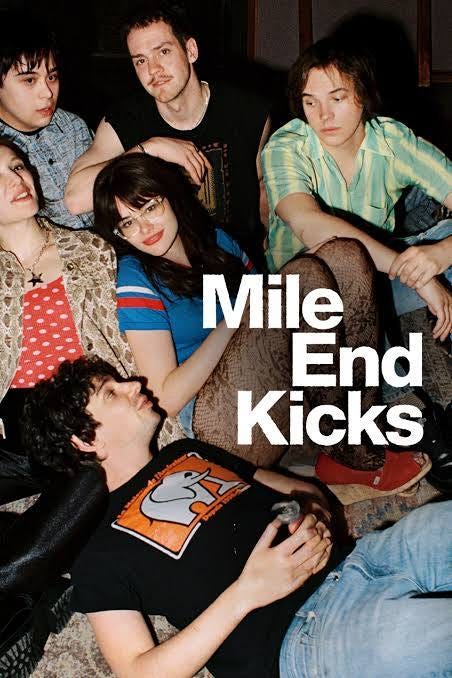
I have yet to see Chandler Levack’s Montréal indie rock romantic comedy, Mile End Kicks, but I’ve been enjoying all the takes. The very premise of the film seems designed to froth people like me into a nostalgic rage. I was a music critic, grad student, and bedroom musician living in the Mile End in 2011—where and when the film is set—and like so many others who had similar experiences of the city during that post-Arcade Fire boom, it’s odd to see another’s vision of one’s youth portrayed on screen. Of course, that filmic representation of early 2010’s Mile End is going to ring hollow to those of us who were actually there, but is there enough there to hook audiences who don’t have the personal nostalgia?
In “Main Character Syndrome” Rollie Pemberton (aka Cadence Weapon) reflects on how the city’s legendary cheap rent made it possible for so many of us broke aspiring artists and DIY lifers to cluster in the small, conveniently located neighbourhood of the Mile End.
As a fellow outsider inspired by the dream logic of an unbelievably inspiring city, I believe that Chandler did our particular scene justice from her perspective. Grace Pine's intentionally myopic view of the Mile End as a mere cinematic backdrop for her romantic misadventures, while largely ignoring the Jewish, Francophone and other diverse communities of the neighbourhood, is likely an accurate depiction of how a self-absorbed young Torontonian might see things.
Anyone still in Montréal will bristle a bit at seeing this Toronto-fied version of our city on the big screen, but as Rollie concludes, the Montreal experience is varied. In “I got few kicks from Mile End Kicks,” still-Montréal-based writer Erin MacLeod feels similarly, judgeing the film to be
an undeniably accurate portrayal of the Mile End art scene from the main character’s perspective, but it is a very specific, anglophone, Torontonian perspective that romanticizes elements of the city while marginalizing francophone and allophone contexts almost completely.
And worse, MacLeod finds that Levack “trivialize(s) the art scene at best and make it look performative and silly at worst.” The relatively low rents are easy to romanticize, especially with post housing crisis hindsight, but that doesn’t mean life in the city was ever easy. Some folks have done well with grants while others not so much, and others just get burnt out or chewed up, or become another wasted talent sacrified on the city’s altar. Like MacLeod, Rollie recognized something true in Mile End Kicks while also wishing for a better version, a representation of the city that comes closer to capturing its complexities: “The curious thing about the city is that it means something different to everyone, but simultaneously has an undeniably distinct feel that might be more clearly articulated by native Montrealers.”
I came in 2009 and left and came and left and came again, getting sucked in. Others did their stint and left, moving to Toronto or New York or back wherever they came from. Yara El-Souiedi has spent her entire life in Montreal, and in “The Death of the Mile End”, she writes from a perspective absent from the film, while also contributing crucial materialist analysis.
And so, when the movie glamorizes the $400 rent, it overlooks the social and cultural context of Québec and Montréal as a whole. These rents are inherited by a post-colonial system. One that closely resembles the one that existed in Ireland. If things were cheap in Québec, it is because francophones were often regarded as cheap labour. These cheap rents were a legacy of that time. Already, in 2011, the affordability of the Mile End had disappeared. Rent was close to $950 for one- or two-bedroom units, well over the market price — in 2011, a one-bedroom in Montréal was $643/month.
At the time, my partner and I split a one-bedroom on Av du Parc next to the Dairy Queen for $540 CAD, on the very edge of the Mile End neighbourhood and just a few minutes walk from Parc Jean-Mance and the mountain. I was very much on the tail end of old Montreal. I used to come and visit during college, usually popping up to see a show after visiting a friend in Burlington, and one of the things I love about the city was that it felt like it never changed.
I left for Minneapolis in 2014 to start my doctoral studies, and when I returned in 2019, I’d found the city had changed much more than I had expected, in ways I was barely able to take it in before the pandemic hit. Rents had skyrocketed, new industries were taking hold and international corporations were coming to take advantage of the cheap electricity, and yet local wages remained stagnant. Parc-Extension became my hood, far further north in the city than I could have imagined in the Mile End days. Let’s not even mention the so-called Mile-Ex, but I’m sure we can expect an Our Lady of Parc-Ex film in another decade or two.
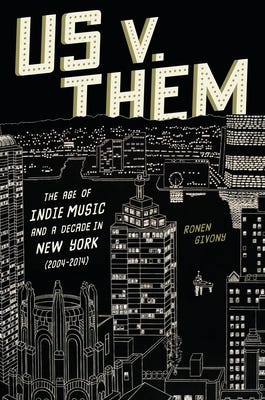
Speaking of weighing in on media about scenes I was a part of, I’ve been meaning to read Ronen Givony’s new book, Us V. Them: The Age of Indie Music and a Decade in New York (2004-2014). I’ve yet to get my hands on a copy, but the press for the book has got me nostalgic. I started playing in New York area bands as a teenager in the late 90s, attending, booking, and sometimes performing in DIY shows in teen centers, community spaces, VFW Halls, and bars I had no business being in. Through that local punk/ska/hardcore/metal scene, I discovered the Bronx Underground and a network of promoters in Yonkers, and shortly the wider network of DIY spots in Westchester, Queens, Brooklyn, Long Island and New Jersey, with occasional Chinatown bus trips to Boston or Philly, and the occasional road trip to see Fugazi in DC. My first tour was with some friends’ band around the north east in 2002.
Perhaps it was just my age, but by 2004 it felt like everything was in transition. The East Village punk/hardcore scene of my teen years was shifting across the river to Williamsburg. Instrumental groups were on the rise, both post-rock groups influenced by Godspeed, Mogwai, and Explosions in the Sky, but also some sort of “A Scene Without a Name,” as Will Robin would later describe the ‘indie classical’ phenomenon. It was at the intersections of these developments when I encountered Ronen Givony’s Wordless Music series, through which I saw many remarkable performances, including a Stars of the Lid performance in a church on my birthday, for which I volunteered, and Rhys Chatham’s Crimson Grail for 200 Guitars at Lincoln Center, in which I participated. But interestingly Givony’s cultural history cum memoir eschews the story of Wordless Music (for now?) instead focusing on integral but often forgotten artists and aspects of the Brooklyn “indie” scene. I look forward to eventually finding time to dig in.
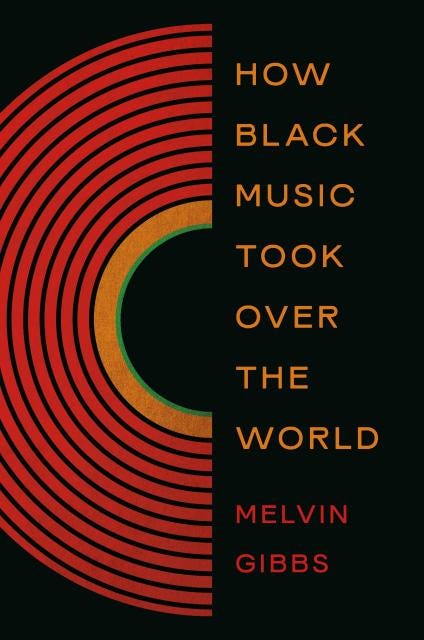
I have recently begun reading Melvin Gibbs’ How Black Music Took Over the World, which reframes Black music not as a mere genre canon but as a scientific, social, and civilizational force. As a musician, Gibbs is known for his long associations with Sonny Sharrock, the Rollins Band, and especially his deep collaborator Arto Lindsay. With his book, Gibbs is doing exactly what I found missing in Mile End Kicks: he’s building a materialist history that doesn’t romanticize the cheap rent (or the low pay, or the stolen wages) but instead shows how constraint and erasure produced some of the most innovative sound-making on earth. It’s a useful antidote to nostalgia-addled scene reports like the ones I’ve been writing above—and a reminder that the ‘indie classical’ and DIY punk worlds I haunted in the aughts were standing on foundations laid long before we showed up. Check out this review in the Brooklyn Rail.
I also recently wrote about Harriet Tubman—Gibb’s long‑running trio with guitarist Brandon Ross and drummer J.T. Lewis—who performed at Big Ears with vocalist and producer Georgia Anne Muldrow as Electrical Field of Love. I found that the trio, who have been a force in psychedelic jazz-rock for decades, benefited from Muldrow’s cosmic soul vocals, call-and-response as deeply spiritual practice. I also found last year’s Amasia: Anamibia Sessions 2, released by the great Hausu Mountain, to be a “genre-fluid exploration with politically charged undercurrent from the acclaimed bassist.”
Speaking of the importance of Black music, congratulations of LaMont Hamilton on being named a 2026 Guggenheim Fellow! As I’ve mentioned previously, I’m an avid listener to his Ear Expansion podcast, which
provides deeper context and asks more sophisticated questions than just about anyone I can think of, I started listening over the summer when he featured HxX (whose debut LP will probably make a reappearance on our site soon enough), and have since enjoyed wonderful conversations with GENG, William Parker, Qasim Naqvi, Vijay Iyer, Laraaji, Gabriel Jermaine Vanlandingham-Dunn, and more. Highly recommended, and since I’m still not sure when my Sound Propositions will return, definitely Tap in! (#94)
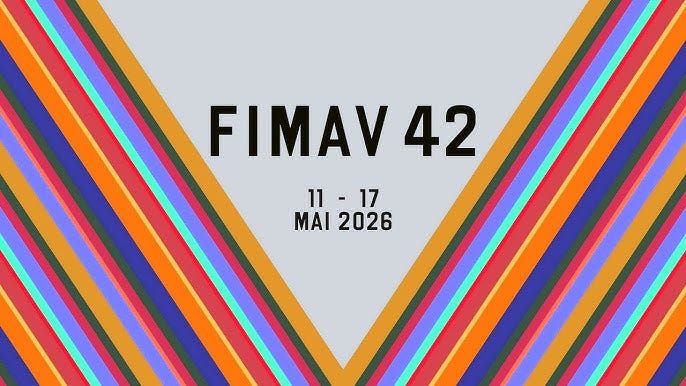
I mentioned it last week, but again, the Festival International de Musique Actuelle de Victoriaville (FIMAV) runs from 11-17 May. I’m not going to be able to make it to Victo this year but the schedule looks great, including performances by Amirtha Kidambi’s Elder Ones, Darius Jones, John Oswald, Rafael Toral, أحمد [Ahmed], and many more, in addition to programs of experimental cinema and various sound installations. I mentioned in one of my Big Ear’s posts recently that Victo, which has been running since 1983 in this small town in rural Quebec, feels very much like a kindred spirit and potential influence on the Knoxville festival. See my 2013 review of Victo for Cult MTL.
Out of the Box has returned as a monthly series exploring unconventional physical release formats, and next week will feature an SD card. In that spirit, I’d like to recommend Francisco Meirino & SEC_’s Uneven Geometry, now available in a limited edition of 27 reel-to-reel tapes, from AKHET Editions in Napoli, the label that brought us these lovely hand forged bronze tuning forks not too long ago. Comprised of recordings made from meetings in 2014 and reworked 2018-2020, this is European electroacoustic research at the edge of noise. Grab a reel while they last.
I’ve already gone much too long with this, but finally my usual reminder that the ACL internet radio show on CAMP airs bi-weekly on Sundays at 6pm CET (and available on their Mixcloud soon after). This week features my second live cassette mix, focusing on ambient and experimental tapes. This was super fun to produce, and I think I’ll be doing more live mixes in the future, to continue to explore my collection of physical media in new ways.
So, this edition we’ve got five (5!) interviews from Gianmarco Del Re, all outside of his usual Ukraine beat. If he keeps this up, I may have to start putting them together under separate cover. For now, they’ve got their own section below, along with 13 recent album recommendations, and seven recent reviews. Happy Listening!
Recommendations
a baker’s dozen of new releases in my to-listen pile
Actress and Suzanne Ciani - Concrète Waves London
a meeting of generations and aesthetics
Ana Roxanna ~ Poem 1
the reinvention of a singer-songwriter, voice naked and vulnerable
BIG BRAVE ~ in grief or in hope
heavy guitar tides against unwavering vocal, electro-acoustic distortions and devastating beauty
Converge ~ Hum of Hurt
metalcore titans return with their second LP of 2026
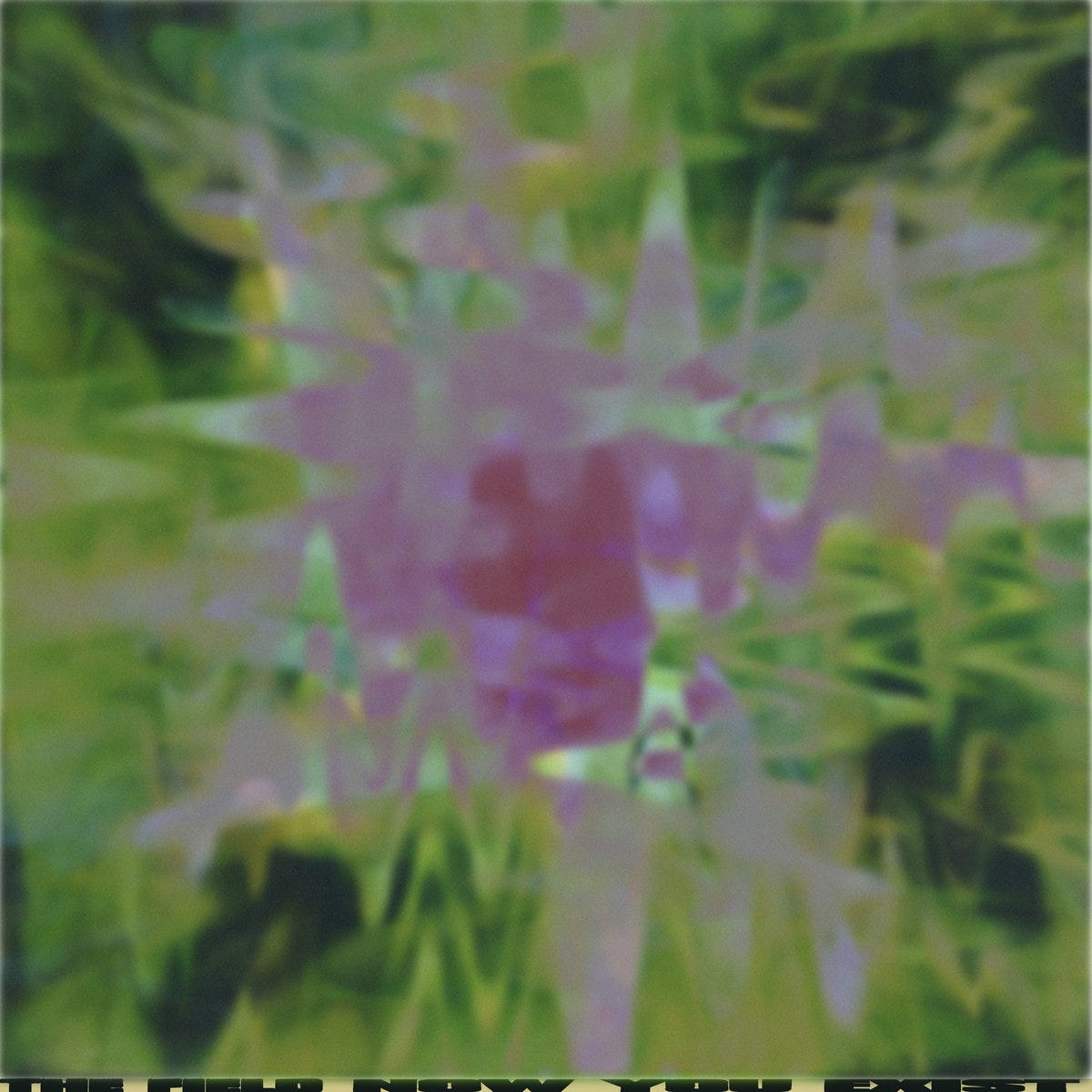
The Field ~ Now You Exist
the beloved Swedish producer’s first solo release in eight years
Jake Muir ~ Pareidolia
ambient and extreme metal converse, riffs stretched into weightless, drifting forms
Lee “Scratch” Perry & Mouse on Mars ~ Spatial, No Problem.
the dub pioneer’s final album, a story of spaces mixing and cultures morphing in a Berlin studio encounter
Manja Ristić ~ Lisboa
field recording as civic listening, the Serbian sound artist tracing Lisbon’s living archive without predetermined paths
Neurosis ~ An Undying Love For A Burning World
Aaron Turner (Isis, Sumac) joins the long running post-metal band on vocals and guitar
Nico Muhly x The Tallis Scholars, Peter Phillips ~ No Resting Place
world premiere recordings of a decade-long collaboration, austere counterpoint and unstable harmonies drawn from Lamentations and Captain Scott’s diary
Rapoon ~ Grain Of Light
the post-industrial and ambient pioneer’s latest reaches sandy, swampy depths, evoking ritual and dream, memory and mirage
RL Huber ~ Sea Legs
orchestral ambient drifts slowly reaching equilibrium
Russell Haswell ~ LET IT GO
kinetic drive, disorienting rupture, raw aggression, and tentative hope woven into fractured generative territories
INTERVIEWS
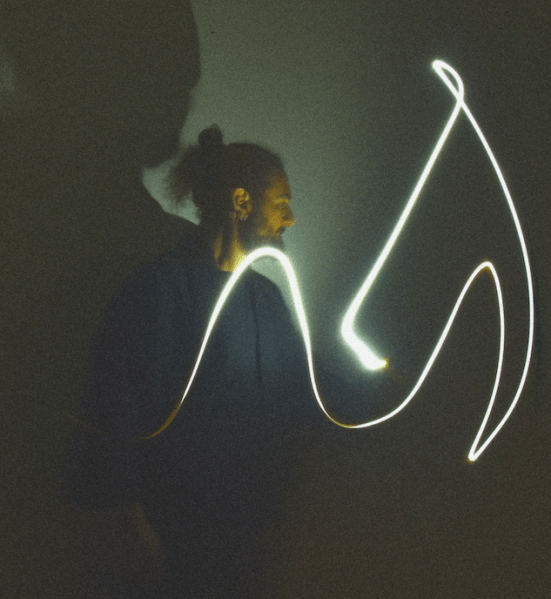
Francesco Pellegrino ~ Wartime Monk
Francesco Pellegrino’s Wartime Monk emerges from a space where abstraction can no longer remain insulated from reality. Framed by the return of war as both lived condition and conceptual rupture, the album translates this pressure into a physical language: sound shaped not just electronically, but through the body itself. Performed entirely via self-built controllers, the work collapses the distance between gesture and composition, allowing movement to sculpt pitch, density and form in real time. What might otherwise risk remaining cerebral becomes insistently embodied.
Pellegrino moves through calculated distancing, even when creating alluring gestural sounds. There is a purposeful imbalance between precision and instability, between silence and clamour, or contemplation and rapture. Opposing forces are at play as if continuity itself were under strain. Time “creaks,” to borrow his own description. This instability becomes expressive rather than chaotic: the body, placed at the centre of a field of sonic forces, attempts to guide, absorb, or at times simply endure them.
The ritual form is what the monk can offer to his community: the proposal of a practice through which silenced themes can be brought back into the shared space of a social group. It becomes a way of sharing a concealed suffering that, once ritualized, can take on a cathartic dimension—bringing a deeper awareness to a despair that might otherwise dissolve into a muted nihilism.
Ritual allows for something beyond simply informing the listener: it makes it possible, in a single gesture, to share a situation together with the emotional state it generates, to give back a movement of the soul shaped by external shocks. If the ritual works—if it finds resonance among those who take part—it carries a force capable of moving not only ideas, but actions as well.
Your work often explores listening as a temporal practice. How does Wartime Monk engage with time—does the presence of war alter how time is experienced or structured in the music?
The theme of war has certainly led to a construction of time that is unstable, trembling—one that, each time it begins to establish a sense of continuity, creaks under a weight it cannot sustain. Time, and also how we might wish it to be structured, is central to conveying certain tensions: to fracture temporal continuity, to create situations of uncertainty and inconsistency within the flow of time, produces a form of destabilization—perhaps even frustration.
But I didn’t want to stop there: it is within this destabilized landscape that I can place narrative elements, which gain strength precisely because they endure within a hostile space—like a monk in wartime.
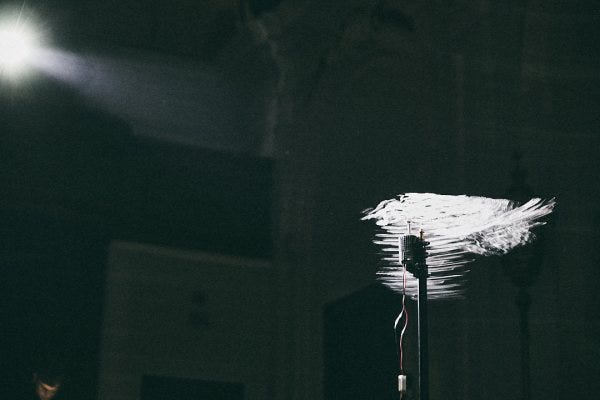
Filippo Lilli and Ludovica Manzo ~ Abisso
Tackling seminal works can be either brave or reckless, especially when it comes to something as towering as Quartet for the End of Time. Neither an act of quiet courage nor a calculated risk, Filippo Lilli and Ludovica Manzo’s Abisso points to a third path: one of absorption.
Freely inspired by Olivier Messiaen’s wartime composition—written between 1940 and 1941 in a concentration camp and rooted in the apocalyptic suspension of chronological time—the duo re-centres their work on Abîme des oiseaux, its most exposed and fragile movement.
Abisso draws from Olivier Messiaen’s Quartet for the End of Time, yet avoids direct quotation. How did you approach “absorbing” such a monumental work while maintaining your own sonic language?
Abisso was created on the occasion of Concerto per la fine del tempo, a project curated by Esposizione a Sud Est in December 2025. It therefore emerged from an invitation, from a curatorial suggestion that led us to engage with the work of Olivier Messiaen.
Almost instinctively, we chose to focus on the third movement, Abîme des oiseaux.
Despite the reverence we feel toward this work, we decided to listen to it again—and to keep searching. In my view, this is the most effective way of assimilation: to expose oneself to the sound, to let it pass through us, to let it resonate within us, to allow it to act upon us.
At a certain point, it became clear to us what we wanted to convey.

Ludovica, your voice enters as something both embodied and almost instrumental, moving between intimacy and openness. How did you shape this balance between the corporeal presence of the voice and its integration into the surrounding sonic environment?
The shift from instrumental sound to vocal sound always requires a number of steps. The first phase is imitation—Olivier Messiaen wrote specifically for this instrument, so the music already carries certain characteristic elements of the clarinet. Here, I tried to follow the exact progression of the writing and of the instrument itself, approaching the musical material from a technical and vocal perspective while trying to understand its sonic meaning.
It then became necessary for me to arrive at a kind of embodiment of this material, insofar as my voice and my person bring different qualities compared to the original instrument. By altering the exact duration of the notes, while maintaining the melodic and dynamic contour, and by introducing the articulation of phonemes that evoke language, I tried to give it a more personal interpretation.
It is not an easy melody—it requires a great deal of concentration, especially when the other voices, generated through Filippo’s electronic processing, overlap unpredictably, creating harmonies that can easily shift points of reference. Each time, it’s a beautiful dive into the abyss!
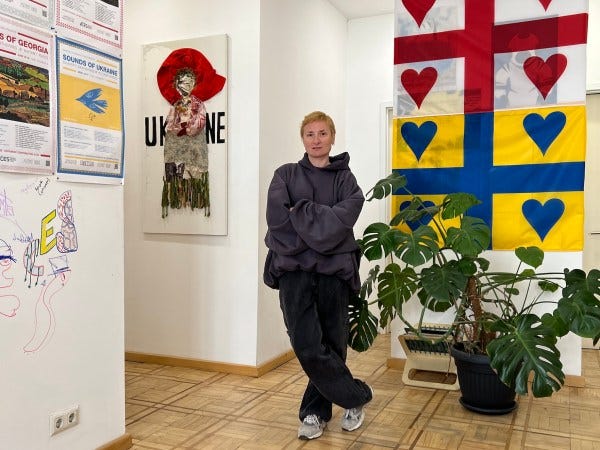
If Strangers ~ Kookooland – with an interview with sTia [CES Records]
The fourth iteration of the If Strangers project continues to refine a methodology that has, since its inception during pandemic lockdown pedagogy at the CES school in Tbilisi, treated collaboration less as dialogue than as circulation. Tracks are not so much co-authored as passed along, accumulating residues of decision-making — gestures layered, eroded, reconfigured. If earlier releases such as Dust (2020) and No Signal (2022) foregrounded the conditions of their making — remote exchange, imposed collectivity — Kookooland feels more assured in its internal logic: a system now self-generating.
Curated by Nika Machaidze (Nikakoi) and Natalie Beridze, the collective here expands to eleven contributors drawn from across Georgia’s electronic and experimental scenes. The premise remains deceptively simple: unlikely pairings, short timeframes, distributed authorship. Yet the resulting 21-track sequence resists the fragmentation such constraints might imply. Instead, Kookooland unfolds as a porous continuum, where distinctions between ambient, downtempo, and fractured electronics dissolve into a mutable, often unstable sonic field.
So [the school] was really vital…
Yes. When we started 14 years ago, our very first course was sound engineering. We also had graphic design, music production, and a DJ course. Many people who came were 40+, already in the industry, but with gaps in their knowledge because they had never been taught—we were all self-taught, because there was no place like this before.
CES became really popular straight away, and lots of people came. Thanks to those first 15 students who trusted us, we are now a big music community, 14 years later.
I don’t know if the situation is similar or comparable to what happened in Ukraine… Do you have any relationship with the conservatoire here in Georgia?
Yes, it was actually two years after that they opened the department of New Music Technology, as I believe it is called. And yes, they are trying. There is a very amazing musician who runs the department, and most of their teachers are CES graduates, to be honest. They could be doing much better than they are doing, but still, there is progress. At present, it might not be a department to be proud of, but it is a step forward.
Could you talk about the label now?
We have 16 releases on CES Records so far. The very first release was back in 2019—it was Sleepers, Poets, Scientists. I can show you.
The idea came when Natalie and Nikakoi had their course with amazing women somehow. We always get amazing girls, but this time it was just so obvious—the group was full of girls, and the music was fantastic. Natalie knew I was starting a label and said, “What a fantastic concept—most of my students are girls, they are all amazing, let’s do an album with only female artists.”
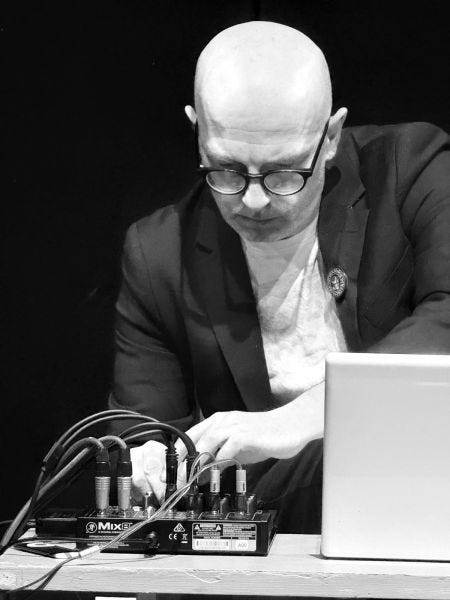
Luigi Turra (Scores by Sylvain Chauveau) ~ Diastima
In Diastima, Luigi Turra delivers what could be labelled “the Chauveau variations”—not because he takes a foundational musical idea from Sylvain Chauveau and repeats it in multiple iterations, but because he departs from Chauveau’s graphic scores in ways that are intentionally arbitrary and deeply personal.
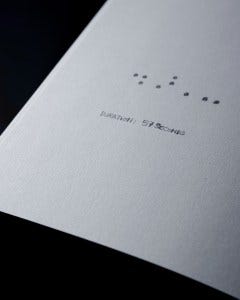
That said, the scores themselves are deliberately ambiguous, at times verging on the surreal, consisting mostly of vertical and horizontal lines, circles, and dots. A productive disconnect emerges, as when score #14 reads “Instruments: None / Performers: None / Duration: 0,” yet is realised here as a single quivering tone lasting 16 seconds.
Diastima engages with Sylvain Chauveau’s graphic scores, yet your interpretations often diverge in subtle ways. How did you navigate the balance between fidelity to the score and personal intuition?
Sylvain Chauveau’s scores do not prescribe—they orient. I have always felt them more as invitations than instructions, as open spaces to enter with care. I have never perceived them as objects to be “faithfully realized,” but rather as fields of tension to move through—places where something can happen only in the moment of listening.
For me, fidelity is not about precision of execution, but about respecting their fragility and openness. It is a way of remaining in a state of listening, of not forcing the material toward a predefined form. Intuition enters precisely at that point where the sign becomes sound: a delicate, almost exposed moment in which you feel you must respond rather than decide. In this sense, speaking of interpretation is perhaps reductive. It is more a matter of assuming a perceptual responsibility, of allowing the sound to emerge without closing it.
The title Diastima points to interval and space. How do you approach silence as an active element within the composition?
In Diastima, silence is a form of active tension, a space that structures listening. Often it is precisely silence that determines the weight of a sound. It is an element that expands time rather than interrupting it. This way of understanding pauses is also linked to my work on aleatoric processes. In an online project I developed, based on a random structure, the pause becomes an unpredictable variable: it is never identical to itself, it can extend, contract, appear unexpectedly. In that context, silence ceases to be a simple interval and becomes a generative element, capable of continually redefining the relationship between events.
In Diastima, this idea is less explicit, but it remains in filigree. Silence is not only what separates two sounds, but what relates them, creating a perceptual continuity that is not linear. What interests me most is that point where it is unclear whether one is still listening to something or has already entered silence: an ambiguous zone in which time seems suspended. The title is also a homage to Gillo Dorfles’ book L’intervallo perduto.
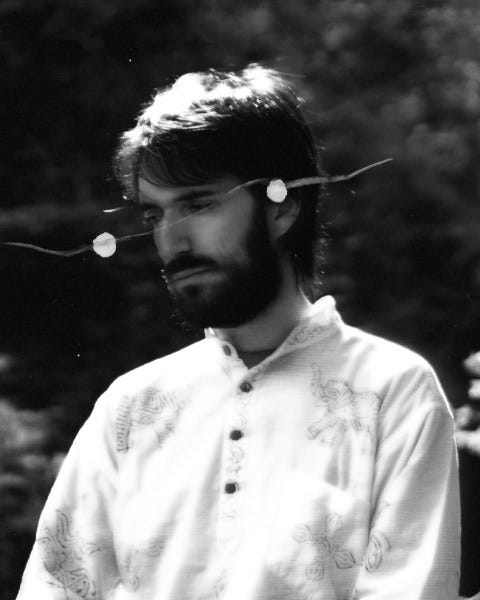
Nicolas Remondino ~ Hìeratico
On Hìeratico, Nicolas Remondino approaches sound as both matter and invocation, shaping an album that exists in a state of charged duality—light and darkness, presence and absence, the sacred and the material. Contrasting tendencies are constantly at play, balancing control and dynamism, precision and chance. And yet, for all its crepuscular tones and liminal elements—suggested from the outset by the album artwork—this is not a whispered work. It develops through clamour, moving across rugged terrain, only at times flowing beneath the surface like an underground river, as in the track “cuerda de pietra.”
Percussion is dismantled and reassembled into something sculptural, almost geological. Rather than functioning as rhythm, drumming becomes a resonant habitat, surrounded by objects that extend its voice into wood, air, and mineral textures. Subtle electronics and environmental traces form a “silent room” around these sounds, gently amplifying their overtones without displacing their physical presence, preserving the intimacy of a drum solo while quietly transforming it. The title itself becomes a guiding principle: not austerity for its own sake, but a form of concentrated listening. “Sei rivoluzionario dell’ascolto” (“You’re a revolutionary of listening”), recites Natalia Rogantini on “muracetra.” “Listening, listening,” reiterates Limpe Fuchs on “blue hymne.” And again Rogantini, on “lode”: “Ascoltavo un immenso spazio” (“I was listening to an immense space”).
There’s a strong sense of ritual and listening in the lyrics, or texts, I should say, with references to water, light, silence, and transformation. Do you see Hìeratico as a kind of sonic rite or passage, and what kind of space were you hoping to create for the listener?
I was deeply inspired by the dimension of silence; I wanted to recreate some of its moments of stillness, while also exploring how rich it can be to listen to, opening up portals within and around us. The idea was precisely to connect with this, to create a space for pause—both intimate and open—to share the listening experience that brings the lyrics to life, to create a continuation of the album’s process, expanding outward from the ears of the listener. To resonate.
You treat percussion not just as rhythm but as texture—evoking stone, wood, wind, and earth. How did you approach transforming the drum kit into something almost elemental or sculptural?
I explore the instrument through the very materials it is made of, taking it apart and reassembling it into a counterfeit of resonances amplified by materials of the same nature, surrounded by evocative objects that help fuel an immersive flow. I seek to turn it into a sculpture of poetry, a source and habitat where one can be surrounded, experiencing the music through timbres and tones to be explored.
RECENT REVIEWS
Reviews are at the heart of ACL. Here are selections from a few of my favorite reviews we posted on the blog in the last few weeks.
Buildings and Food ~ Yutori
Yutori is the Japanese art of slowing down to create room for reflection. Literally translated as “room to breathe” or “spaciousness,” the approach emphasizes the creativity that can arise in moments of calm. The Japanese-Canadian artist Buildings and Food (Jen K. Wilson) has designed the album of the same name as an exercise in awareness and space-making, the track titles serving as prompts for meditation, or at the very least, suggestions for winding down. The listening experience is incredibly peaceful, a gentle way to ease into the day or a short break to relieve mid-day or late-day stress. Wilson’s pentatonic scales honor kankyō ongaku, the “environmental music” popular in Japan in the 80s. While such music was meant to add to one’s appreciation of architecture, Buildings and Food – in deference to her moniker – uses modular synth to imitate the serenity of temple chimes, suggesting peaceful gardens rather than polished high-rises. This being said, Yutori harmonizes with any space in which it is played.
Christina Vantzou ~ The Reintegration of the Ear
The compositions are so subtle that they begin as background music, but they refuse to remain there. Christina Vantzou leads an incredible ensemble of Irene Kurka (voice), John Also Bennett (flutes, synthesizers), Roman Hiele (double bass) and Oliver Coates (cello). Their play is fluid and instinctive, requiring each performer to listen to each other for small cues and inspired turns. Glissandos rise as waves crash against shores; the tides reflect the vagaries of time, and the birds are as much a part of the composition as the voices. When a church bells chimes, the listener is moved from the timeless to the temporal, though this impression is subjective as the peals appear at unusual intervals. The lesson may be that ordinary sounds are heard, but not always perceived. After few minutes, the peals reappear, this time more even, accompanying two types of worship: one religious, as conveyed through cadence and chant, and one natural, heard in the chattering of birds and the barking of a dog. To which does the ear gravitate? Might all listening be holy, hallowing the sources of the sounds?
Deaf Center ~ Through Time / A Second
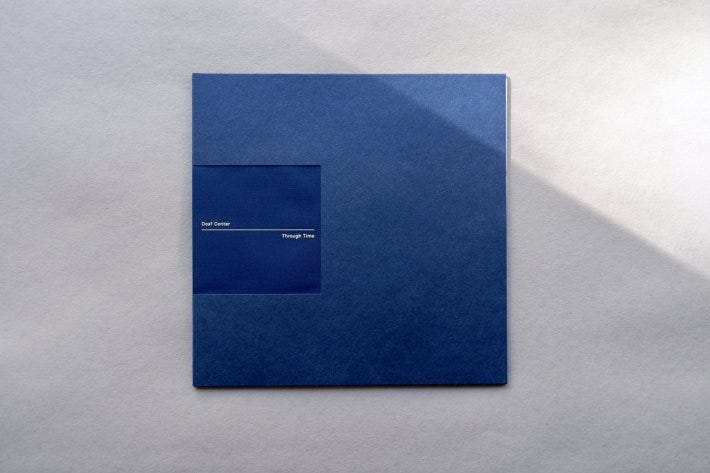
As Sonic Pieces writes, “the subject of time is an ambitious one,” tackled by Deaf Center on Through Time and its December companion piece, “A Second.” Instrumental music lends itself well to the subject, as it has the capacity to warp, suspend or extend one’s experience of time. The spacious compositions of Otto A Totland and Erik K Skodvin create room for such temporal disruptions, as one may sink into these pieces as one does into a comfortable couch. The Bandcamp image above is insufficient to convey the color of the physical release, which we’re calling “the indigo one.” (Long-time readers will remember our nicknaming of every Sonic Pieces release.) Through Time is definitely not a black album, but indigo seems well-matched to the music, suggesting twilight blue, the transition between day and night, a liminal period which is both connected to time and timeless, much like the music on this album.
Johnny Bell ~ Mountain States
When Alabama sings “play me some mountain music,” they express their love for an Appalachian style of banjo-picking, heavily reliant on a narrow canon. Johnny Bell also lives in the mountains, but his range is the Rockies. On Mountain States, Bell seeks to liberate the instrument from traditional associations by showcasing its stylistic and timbral possibilities. While other modern artists incorporate the sound of the banjo, most noticeably Mumford & Sons and The Lumineers, few focus on the banjo as the primary instrument, without the use of vocals. Mountain States cleverly declares that the state can be South Dakota, the mountain can be found in Diego Canyon, and the sound can be whatever the banjoist decides, in Bell’s case the sub-genre of banjo drone. With deference to Alabama, this is the sort of banjo music we want to hear now: not the music of our ancestors, but the unpredictable notes of today.
Kinact ~ Kinshasa in Action
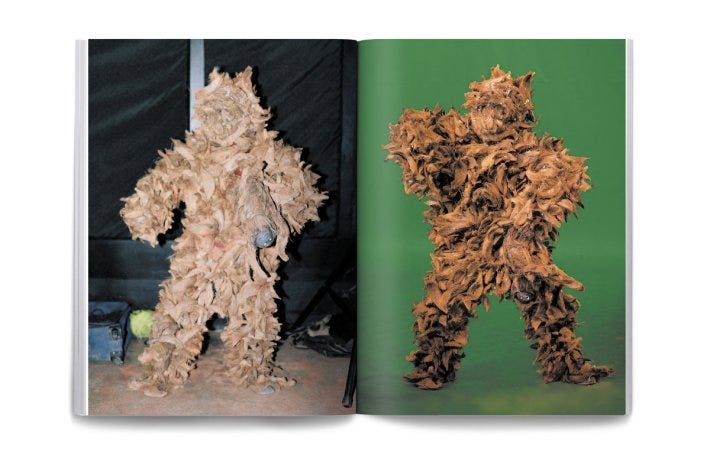
Kinshasa in Action is a unique release that represents something few outside of the Congo have ever seen: a street performance in which trash becomes treasure, outfits become instruments and mythology becomes protest. The 68-page zine (available separately or in a bundle) provides visual documentation, while the LP bursts with energy and creative verve. Wearing costumes “assembled from bottles, wires, tyres, dolls and detritus,” welded to xylophones and drums, the Congolese collective marches through the streets. This is true industrial music, incorporating the sounds of power drills, sheet metal, hammers, engines and saws. Ritual chanting, growling and yelping increases the energy of the festival and the fascination of the attendees. Where else might one find a man made out of cans, a cup creature, a sabre-rattler on a roof, all with something to say about “pollution, gendered violence and postcolonial scars?” In one sense, the ancestors are singing; in another, they are supplanted by new personifications.
kyïvite ~ broadcast
Earlier this year, we covered the first iteration of kyïvite‘s broadcast, which has since inspired two more broadcasts and attracted the attention of the staalplaat label. The Amsterdam imprint has just released all three podcasts as a standalone album, including a physical release on CD. We’re honored to be able to call more attention to this crucial project from radio host Kvitoslava, as the Кияночка series transcends time and borders, focusing on Ukraine’s rich history and heritage with a modern bent that often feels like musique concrète. The past is always speaking to the present; but is the present always listening? More importantly, does the present in one land honor and vow to preserve the past of another? All too often, the answer is no. As our earlier article covered what is now the middle triptych, featuring the Transcarpathian Folk Choir, we jump back in with Episode 2 (broadcast 12/02/26), featuring archival recordings from Filaret Kolessa’s folk expedition. broadcast is a reminder of what has already been lost, what remains only in fragments, and what faces annihilation: a loving tribute and a fierce indictment.
Saamleng ~ Spring Bundle
Happy tenth anniversary to Poland’s Saamleng label, home to a remarkable run of 71 pure field recording releases. While the majority of the albums come from Tomek Mirt and Magda Ter (read our 2022 interview with Mirt here), the label has also hosted over a dozen other artists over its tenure. This season, the Spring Bundle offers a variety of sources, from mangrove to port to temple, a virtual cornucopia of sound. Mirt & Ter have been to the island of Tarutao before, but have never captured the sounds of the mangrove forest before now. An incredible hundred hours of recordings were distilled to only one, akin to Joshua Bonnetta’s The Pines. E. Jason Gibbs, who last appeared here with fish point, returns with Working Waterfront, which is both a spiritual successor to the former album and a fine counterpart to éric la casa’s Zones Portuaires 2. Combining recordings from Portland, Maine and Lisbon, Portugal, Gibbs constructs a study of active ports, a topic which remains in the public’s eye due to tariffs and blockades. For years, Mirt & Ter have been releasing a series of Temple Soundscapes, sixteen to date; Series 01: Phra Maha Chedi Tripob Trimongkol is the first to be offered in physical format. Thailand’s “Stainless Pagoda … is made of chrome tubes and decorated with thousands of small bells.” Nearly a decade of recordings are included here, spanning the years 2018-26, providing a sense of timelessness.
UPCOMING RELEASES
(complete list with Bandcamp links here)
The seasons are changing and the release schedule is bursting into bloom. Spring brings the first massive crop of new music, enough to lift us out of those late-winter doldrums. As the birds return and the earth awakens, the sounds of the great outdoors mirror our musical discoveries. May you find your next favorite album right here!
HWXXNG ~ K-Core (Chinabot, 7 May)
[Ahmed] ~ Play Monk (Otoroku, 8 May)
Anastasia Kristensen ~ Bestarium Sombre (Intercept, 8 May)
Aristide d’Agostino ~ Dernier tour de piste (Collectif Thoz, 8 May)
Blak Saagan ~ Un Sequestro Lungo 10.000 Anni (Maple Death, 8 May)
Buildings and Food ~ Yutori (8 May)
Chelidon Frame ~ Like Train Whistles (Triple Moon, 8 May)
Croz Boyce ~ S/T (Domino, 8 May)
Francis Heery ~ Garry Kasparov vs. Deep Blue (Flaming Pines, 8 May)
Gydja ~ Níu kom ek heima fyr Niflhel neðan (Winter-Light, 8 May)
Henrik Munkeby Nørstebø ~ Faint Light Blackens (Psychic Liberation, 8 May)
Ian Hawgood & David Cordero ~ Shifting Times (Noray, 8 May)
Jake Muir ~ Pareidolia (enmossed, 8 May)
John Hollenbeck ~ Looking for Consonance (Out of Your Head, 8 May)
Johnny Bell ~ Mountain States (Ramble/Centripetal Force, 8 May)
Kreng ~ Wormhole (Miasmah, 8 May)
Living With Tollways ~ Eponymously Titled (Signbearer, 8 May)
Luca Cimarusti ~ Repetition, Resonance (Island House Recordings, 8 May)
Max Cooper ~ Feeling Is Structure (Mesh, 8 May)
Momen ~ Sympathetic Resonance (TAR/MM/UOH, 8 May)
Noah Meites ~ COUNTING (New Focus, 8 May)
Olof Dreijer ~ Loud Bloom (dh2, 8 May)
Sareban ~ Echoes in the Weave (Worlds Within Worlds, 8 May)
Teatre ~ All Constellations Weaving Into One (Amulet of Tears, 8 May)
Unwed Sailor ~ High Remembrance (8 May)
Violeta Vicci & Bruno Bavota ~ Be Human (Bigo & Twigetti, 8 May)
Yoal ~ Gloaming (Lost Tribe Sound, 8 May)
Yvonne Rogers ~ The Button Jar (Pyroclastic, 8 May)
Zwischenklang ~ Forgive Me I’m Back (Iapetus, 10 May)
dbg ~ sap (12 May)
Kartas ~ LADO H (Municipal K7, 14 May)
Alexis Martin Ensemble ~ Les pôles Volume 1 (15 May)
Aspetuck ~ Immersion (A Strangely Isolated Place, 15 May)
Christian Dillingham ~ As It Relates to Now (Shifting Paradigm, 15 May)
culfre ~ Other People’s Pictures (15 May)
Discovery Zone ~ Library Copy Do Not Remove (RVNG Intl., 15 May)
Distant Birds ~ VOL. 01 & 02 (Earshift Music, 15 May)
DJ Saliva ~ URTIGA (Al Gharib, 15 May)
Eluvium ~ Virga III (Temporary Residence, 15 May)
Federico Balducci & nobuka ~ Depth is Not a Place (Difficult Art & Music, 15 May)
Fumction x Nastia Reigel present Devocion ~ Devocion EP (Dekmantel, 15 May)
Ibrahim Alfa Jnr. ~ Infinite Black Inside (FO, 15 May)
Jeff Parker TTA IVtet ~ Happy Today (International Anthem, 15 May)
KADAPAT & Nova Ruth featuring Siko Sedyanto ~ Ocean Cage (Kuboraum Editions, 15 May)
Lawrence English / Werner Dafeldecker ~ Fathom Tides (Hallow Ground, 15 May)
Lea Bertucci ~ The Days Pass Quickly Immersed in the Shadow of Eternity (Cibachrome, 15 May)
Martyna Basta ~ Winged in Collapse (7K, 15 May)
Matthew Wright ~ Cracked Glaze (False Walls, 15 May)
Mei Honeycomb ~ Clairvoyant Dimensions (Meakusma, 15 May)
Parra for Cuva ~ Nacar (15 May)
Phillip Golub ~ Partisan Ship (Berthold, 15 May)
Rafa Ramos Sania ~ A Broadcast of Your Silence (Lost Tribe Sound, 15 May)
R. Schappert ~ LOLOSTST (r-ecords, 15 May)
SHHE ~ THALASSA (One Little Independent, 15 May)
Stardust Multiplier ~ Convergence (Personal Affair, 15 May)
SUSS ~ Counting Sunsets (Northern Spy, 15 May)
Van Sur Les ~ Ingrian Tape (15 May)
Various Artists ~ Perceptions Vol. 7 (Bigo & Twigetti, 15 May)
Vera V Almgren ~ I Det Vassa Ljuset (Istid, 15 May)
V0LAND ~ PLÜSCH (15 May)
Yulseus ~ Nothing Under Heaven (n5MD, 15 May)
HERE ~ Acceptance (Whitelabrecs, 16 May)
Nakamura Hiroyuki ~ Piano Distance (Fluid Audio, 16 May)
Spheruleus ~ The Lost Catalogue (Whitelabrecs, 16 May)
Juan J. Ochoa ~ Something to Remember (Protomaterial, 19 May)
Potliquor ~ All I Know In the City (Amalgam, 19 May)
Blearyhaze ~ double dip (20 May)
Savvas Metaxas ~ Suspended Movement (Granny Records, 20 May)
Arovane & Taylor Deupree ~ Enth (LAAPS, 21 May)
Christof Migone ~ oo (squint press, 21 May)
Aho Ssan ~ The Sun Turned Black (Subtext, 22 May)
BAG ~ This House is a Body (Phantom Limb, 22 May)
Boduf Songs ~ Selected Instrumental Works (Bluesanct, 22 May)
Brunhild Ferrari, Eiko Ishibashi, Jim O’Rourke ~ L’oreille Voleuse (Persistence of Sound, 22 May)
Chris Lippincott ~ Angel in a Jetstream (22 May)
Etienne Nillesen ~ TWEE (Sofa, 22 May)
FLOCKS ~ Lagoon (Karlrecords, 22 May)
Fugue State ~ After Nothing Comes (Switch Hit, 22 May)
gamut inc ~ radiating (Aggregate Editions, 22 May)
Hannah Peel ~ The Endless Dance (Real World, 22 May)
I’A’V ~ Volatile Poem (Discrepant, 22 May)
Ivo Perelman and Damon Smith ~ Duologue: Core of Existence (Squid Note, 22 May)
Joshua Mastel & Alec Goldfarb ~ Firmament (Gold Bolus, 22 May)
Justina Repečkaitė ~ Tapestries (miclithuania, 22 May)
Lua Jungck ~ Chase (~OUS, 22 May)
Magic Tuber Stringband ~ Heavy Water (Thrill Jockey, 22 May)
Peggy Lee, Julien Wilson, Theo Carbo, Dylan Van Der Schyff ~ Waiting Music (Earshift Music, 22 May)
remst8 ~ Coalescence (Bluesanct, 22 May)
Richard Pike ~ Redemption Suite I-IX: For Pianos and Textures (22 May)
Sotolo ~ Chateau (ineffable, 22 May)
Tegh & Adel Poursamadi ~ Bayal بیل. (Injazero, 22 May)
Visible Cloaks ~ Paradessence (RVNG Intl., 22 May)
Zela Margossian Quintet ~ Remedy (Ropeadope, 22 May)
Gigi Masin ~ Movement (Sacred Bones, 26 May)
Jäverling ◇ von Euler ~ Spektrum (Flora & Fauna, 27 May)
Akira Uchida ~ Nusa (IIKKI, 28 May)
Various Artists ~ Moss and Melee I – Old Growth (Lost Tribe Sound, 28 May)
Amelia Ya’el ~ Voices I (Signbearer, 29 May)
Columbia Icefield ~ A Silence Opens (Out of Your Head, 29 May)
David Torn ~ now i imagine a place not the same (Kou, 29 May)
Emi Fe Ensemble ~ Tales of the Realm of Wishes (Iepetus, 29 May)
Federico Perotti ~ Quadro (Feral Note, 29 May)
Friday Night Plans ~ Blue Hour (Modern Obscure Music, 29 May)
Gigi Masin ~ Movement (Sacred Bones, 29 May)
The Hands Free ~ Unturned Cup (New Amsterdam, 29 May)
Hanry ~ What Came From Silence (Pelagic, 29 May)
Kikù Hibino & Merzbow ~ Rococo ∞ Echomatter (Superpang, 29 May)
Kris Toner & Cathlene Pineda ~ Sung (Orenda, 29 May)
Laurence Pike ~ Possible Utopias for Jazz Quintet (Lapsus, 29 May)
Morgan Evans-Weiler & J.P.A. Falzone ~ Grid and Gradient (kuyin, 29 May)
Moses Yoofee Trio ~ CHASING LIGHT (LEITER, 29 May)
Robin Katz ~ Hypnos (Gearbox, 29 May)
Seamus O’Muineachain ~ Island of Flowers (29 May)
Vilhelm Bromander and Fredrik Rasten ~ Astral Twins (Fönstret, 29 May)
Giorgio Fazer ~ Duchy przodków (Ubocze, 30 May)
The Hands Free ~ Upturned Cup (New Amsterdam, 31 May)
Susana Santos Silva, Vasco Trilla ~ Mushin (defkaz, 1 June)
Various Artists ~ Moss and Melee II – Controlled Burn (Lost Tribe Sound, 1 June)
Modern Silent Cinema ~ Passages XXXIII-XLIII (for Piano, Guitar, and Bass) (1 June)
Musica Mosaica ~ Clock In, Clock Out (Futura Resistenza, 2 June)
Alex Dowling ~ Breathers (Little Magic, 5 June)
algorhythms ~ surging descent (5 June)
American Cream Band ~ Twin (Quindi, 5 June)
Ángeles Rojas~ Open the windows and let the spirits in and out (Warm Winters Ltd., 5 June)
Auscultation ~ IV (100% Silk, 5 June)
Beatriz Ferreyra ~ A Distracted God (Room40, 5 June)
Big Space ~ The Pendulum Effect (5 June)
Cinna Peyghamy ~ Music for Tombak & Synth (Other People, 5 June)
Dutch Elm ~ S/T (5 June)
Eric Demuro ~ Simulalcra (Bastard Jazz, 5 June)
Galán | Spieth | Guentner ~ Obreel (Affin, 5 June)
Jim O’Rourke & Jos Smolders ~ Albumin (Moving Furniture, 5 June)
Lifted ~ Movie (Outside Time, 5 June)
Maya Dunietz & Solistenensemble Kaleidoskop ~ The Sound of Difference and Connection (Orthodox, 5 June)
Mike Lorenz ~ I’m Not There (5 June)
Nolan Hildebrand ~ Noise Trip Explosion (Redshift Music, 5 June)
Olivier Alary ~ Vestiges (LINE, 5 June)
Sylvain Chauveau ~ The Complexity of the Simple (FatCat, 5 June)
Teiku ~ Klang (Ginkgo, 5 June)
Tyler Sabbag ~ Novella (5 June)
JOHN 3:16 ~ The Beast (Alrealon Musique, 6 June)
Savina Yannatou, Gonçalo Almeida, and Costis Drygianakis ~ Independent / Interdependent (defkaz, 7 June)
Oren Ambarchi & Will Guthrie ~ Cold Shoulder (Futura Resistenza, 9 June)
Berndt / Schmidt ~ Cloud Machines (Thrill Jockey, 12 June)
BIG BRAVE ~ in grief or in hope (Thrill Jockey, 12 June)
Chaz Underriner ~ Flicker (12 June)
Cloud Circuit ~ Cloud Circuit (Watch That Ends the Night, 12 June)
Debit ~ Potpourri (N.A.A.F.I., 12 June)
Driftwood ~ Maps (Room40, 12 June)
Earth Trax ~ Everlasting Flame (Lapsus, 12 June)
Horse Lords ~ Demand to Be Taken to Heaven Alive! (RVNG Intl., 12 June)
Kalia Vendever ~ Mana (International Anthem, 12 June)
Lucie Antunes ~ Silence (Bell, 12 June)
Micha Acher ~ Henry and the Ghosts Songbook (Alien Transistor, 12 June)
Olaf Rupp ~ Fuzzy Logic (Palilalia, 12 June)
Puce Moment ~ O.R.G. II (odd doo, 12 June)
Robert Aiki Aubrey Lowe ~ Manifestations in the Shadow of an Unknown Land (Kou, 12 June)
Rone ~ Megaptera (InFiné, 12 June)
Starlings ~ Friend, Thank You (Machine Records, 12 June)
Terror/Cactus ~ Colapso (Share It Music, 12 June)
Tujiko Noriko ~ PON (Editions Mego, 12 June)
Ai Yamamoto ~ Seasons (Someone Good, 19 June)
Alex Zhang Hungtai ~ Orion/Mother (American Dreams, 19 June)
Daniël Jolan ~ Sublime Lenteur (Lost Tribe Sound, 19 June)
Forest Factory ~ HOLZWEG (auto.archives, 19 June)
Micah Thomas ~ Lucid (19 June)
Michael F. Hunt ~ Passage of Time: The Music of Michael F. Hunt (Phantom Limb, 19 June)
Ocoeur ~ Greener Grass, Clearer Water (n5MD, 19 June)
Petra Hermanova ~ Lapilli (Original Film Score) (42far, 19 June)
Seabuckthorn ~ Never the Same River (Lost Tribe Sound, 19 June)
Spyros Polychronopoulos + Nikos Veliotis ~ Position (Room40, 19 June)
Steve Rachmad ~ 3-6-9 (Dekmantel, 19 June)
Various Artists ~ Nailbiters Volume 1 (Intrepid Skin, 19 June)
Wild Up, Christopher Rountree, Julius Eastman ~ Julius Eastman, Vol. 5: Gay Guerrilla (New Amsterdam, 19 June)
Bipolar Explorer ~ Last Lights (Slugg, 21 June)
Marla Hlady & Christof Migone ~ On And On And Off (Crónica, 23 June)
Aliya Ultan ~ Looks Far Woman (Kou, 26 June)
Abul Mogard & Rafael Anton Irisarri ~ Where Light Pauses in the Silence of the Sun (Black Knoll, 26 June)
Akiid ~ Skeffu (HAKUNA KULANA, 26 June)
Alden Hellmuth ~ Tether (LEITER, 26 June)
Embryoroom ~ ABDUCTOR (Stock Grazing, 26 June)
Helen Svoboda ~ Headwater (Room40, 26 June)
M. Geddes Gengras ~ Guest List (Hausu Mountain, 26 June)
Onilu ~ Jakuta’s Dance (577 Records, 26 June)
pdqb ~ DER TRANSIENTE ZEUGE (Synaptic Cliffs, 26 June)
Push for Night ~ That Porous Line (Room40, 26 June)
Zacc Harris ~ American Reckoning (Shifting Paradigm, 26 June)
Netherworld ~ The Hermit (Glacial Movements, 29 June)
Batu & Donato Dozzy ~ Exhale (!K7, 30 June)
Rie Mitsutake ~ Petals and Marbles (Someone Good, 3 July)
Various Artists ~ Kuboraum Sound Residency Vol. 2 (Kuboraum, 3 July)
Michael Cloud Duguay ~ Kingdom Come, Kingdom Go (Watch That Ends the Night, 10 July)
Agile Experiments ~ Havana (None More, 17 July)
Stereo Minus One ~ The Acid Tape (Original Soundtrack) (Machine Records, 17 July)
Various Artists ~ veneration for the sacred action (Life Is Beautiful, 17 July)
Hourloupe ~ Last Lost Word (31 July)
i would not have caught the new neurosis had it not been for this. so glad they're working with aaron now. of course now i'm doing a long overdue catch-up on various post-metal bands i've missed over the last...decade or so? thanks for sending me down this rabbithole!
So much great stuff to discover here. Thanks for the excellent reviews!