
Dear Listeners, Joseph yet again for a regular edition of the ACL newsletter. I’m finally on the other side of my deadlines, and just got home after a long weekend in Atlanta (for a baby shower that rightly went viral). I spent much of the fall and winter in Montreal, and have accumulated many new cassettes in that time. So, the next installment of my bi-weekly ACL internet radio show on CAMP—airing this Sunday at 6pm CET (and available on their Mixcloud soon after)—will feature a free form live tape mix.
Speaking of physical media, last Saturday was Record Store Day. RSD never captured what drew me into vinyl; I started collecting records because used vinyl was cheap in the ‘90s. Colored, splatter, limited edition, etc always felt besides the point. I understand why these fetish objects appeal to kids who grew up knowing nothing other than streaming, but I’ve always avoided RSD. Even the positive social aspects largely detract from what the event is meant to support. Like a vernissage / opening at an art gallery, it’s not designed to actually appreciate the art. That said, the chance to cop the repress of Flying Lotus’ 2006 debut LP 1983 was enough to lure me to two different spots in Atlanta over the weekend. I didn’t have any luck, and the first shop was way too packed for my liking, though I did dig the live vinyl-only DJ sets that soundtracked the experience.
The biggest music news in the past fortnight must be the return of Boards of Canada. Like seemingly everyone else, their early records were formative for me, even if I was less drawn into The Campfire Headphase or Tomorrow’s Harvest, and I’m looking forward to revisiting their whole discography in anticipation of the release of Inferno next month. On top of that, with recent releases from Oneohtrix Point Never, Kelela, Squarepusher, Nightmares of Wax, Seefeel, and the recent signing of Fire-Tool, Warp is having a banner year!
I won’t be back in New York until June, but if you’re nearby, make sure to check out some of these great upcoming shows. Yaz Lancaster, the artist behind one of my favorite records of 2025, will be playing Mood Ring on 29 April and Hive Mind Books the next day. Also beginning on 30 April, and running through 3 May, is Bang on a Can’s Long Play festival, taking place at a variety of venues. Beginning with a listening party for Lee “Scratch” Perry & Mouse on Mars upcoming collaboration, the 2026 edition includes performances by Chris Ryan Williams Vibration Trio, Kali Malone with Lucy Railton and Stephen O’Malley, Matthew Shipp, Byron Westbrook, Félicia Atkinson and Christina Vantzou, Sarah Hennies and Tristan Kasten-Krause, and many more. And the following week, on May 7, Alarm Will Sound will celebrate their 25th year with a special performance at Brooklyn venue Roulette Intermedium.
In Substack recommendations, I want to point you Listeners again to Brodie Conley’s latest, “How to solve a problem like trend simulation.” That’s the closest I’ll come to addressing the Goose discourse.
Last week, I brought back my OUT OF THE BOX series, which will continue monthly. Next week, I think it’s time for another off-week Mini-Review Marathon. My Patrick Watson feature should be up on Cult MTL soon, I’ll link to it once it’s up.
For this installment, Gianmarco Del Re stays busy, with another two interviews on top of the latest from Ukrainian Field Notes. And attribued to both Richard Allen and Gianmarco Del Re, I think their review of Natalia Tsupryk’s Vil’na may be the first we’ve had run with two bylines (aside from David and Chris’ *Press A* features, which have always been collaborative). And lastly, if I haven’t already mentioned, the brand new Ukrainian Field Notes book is now available. Happy Listening!
Recommendations
a baker’s dozen of new releases
Ukrainian Field Notes – LIV
This month we speak to alanmortus in Ivano-Frankivsk about how the war changes the perspective on what is important. Horizon Resonances tells us about how the city of Odesa has shaped him, Pororoka talks about her life being split in two and Plaaaato laments having to leave Zaporizhzhia.
Meanwhile, Letovchenko reminisces about growing up in the Luhansk region, Коца address the topic of religion, and Yurii Pikush discusses classical music.
Finally, we hear from NIZHNA about making club music with field recordings and Dmytro Kurovskyi takes us through 35 years of Foa Hoka, one of the most innovative and exuberant bands in Ukraine.
Also, there is a flurry of new releases from 58918012, Dada vs Evil, ken=en, lebben, low communication, Tsatiory, Symonenko, ummsbiaus, Lvcerate, нікіта дорошенко, støïbrok, Rescale Musicbox, NOISOID, Andy Nechaevsky and DEDDOM & НОЙЗ ГАЛИЧИНА.
In our Viewing Room, we have new videos from DEDDOOM & НОЙЗ ГАЛИЧИНА, Apashe & Alina Pash, and Tysk.
For our monthly podcast instead, we discuss rap music with Ilya Kovalenko, editor in chief of Rap.UA who also talks about Kharkhiv and the cultural hub Some People.
Tracklist:
Monomonster – Killa
Alex Pervukhin – صَبْرٌ
DJ Sacred (ft. Re: Drum) – The Gun
FORCEGNG, 4ERDAK – COBRA
Покам, Ласта, KLIM – МАЄМ
Lostlojic, Cybermykola – Шаблячуєрізанину (Lostlojic Remix)
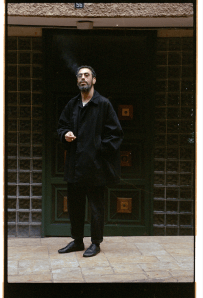
An Interview with Charbel Haber
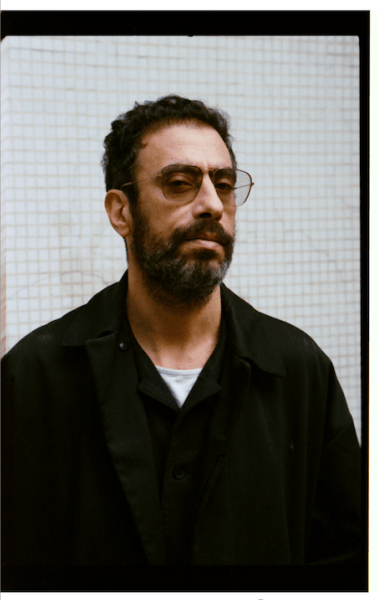
Your new album May a soft sun bless your sky while you wait for the inevitable was recorded in Paris but mixed in Beirut and mastered in Montreal. How did this transnational production process shape the sound and feel of the record? Did working between places influence your sense of space or distance within the music?
The record really emerged from that very specific moment of displacement described there—walking through Paris in 2025, carrying Beirut with me, but also trying to create a necessary distance from it. What struck me was this strange coexistence: the city appearing almost idyllic, luminous, while the awareness of war and destruction remained constant, unresolved.
That’s where the title comes from—May a soft sun bless your sky while you wait for the inevitable. It’s not ironic, but it is contradictory. The “soft sun” is real—it’s the light in Paris, the sensation of walking, of perceiving beauty—but it exists alongside an inevitability that is equally real: death, collapse, even something as extreme as nuclear annihilation. The transnational process—Paris, then working with Fadi Tabbal in Beirut, then Montreal with Harris Newman—extended that feeling. Each place reframed the same material differently, like observing the same system from different coordinates. The music became a space where these contradictions could remain unresolved, coexisting.
The album unfolds like a kind of temporal loop—beginning with “This show starts in the future” and ending with “This show ends in the past.” How did you think about time as a structural or conceptual element while composing the record?
The album’s temporal structure is directly tied to that sense of inevitability. If you’re “waiting” for something like death—or even a larger-scale end—then in a way, it’s already present. The future is folded into the present.
Beginning with “This show starts in the future” and ending with “This show ends in the past” reflects this collapse. I was thinking of time less as a line and more as a recursive loop, or even a feedback system that continuously rewrites itself. But unlike a clean loop, this one degrades—it accumulates noise, like memory does.
There’s also something theatrical about it, which connects to the idea in the text of the world as a “living theater.” The album unfolds like a performance that is already aware of its ending, death is not the final act—it’s embedded in every scene.
You’ve long had a penchant for extended, narrative titles—almost like fragments of prose or poetry. What role do titles play in your work? Do they precede the music, emerge alongside it, or act as a parallel layer of meaning?
The titles function almost like fragments of a script within that theater. They carry a narrative charge, but they don’t resolve into a story. Instead, they open spaces—emotional, conceptual, sometimes even contradictory.
They’re very close to language like Rilke’s—“Let everything happen to you: beauty and terror.” That line was important for me while making the record. The titles operate in that space between beauty and terror, between intimacy and abstraction. They often feel like something you would say to yourself quietly, while being aware of something much larger unfolding beyond you.
So they don’t describe the music—they interfere with it, or reframe it. They create a feedback loop between language and sound, where each alters the perception of the other.
In fact in almost every record of mine there’s a track with a title from or inspired by a writer I admire, in the case of “It Ended Up Being A Great Day Mr Allende”, my solo on Al Maslakh, all four track titles are from Bolaño. In Of Palm Trees And Decomposition it’s the first track, also Bolaño. In A Common Misunderstanding Of The Speed Of Light, well it’s Pedro Páramo a tribute to Juan Rulfo. In May A Soft Sun its track number 4, “Across A Flower Bed Dressed In Sunday Best, Lay The Bodies Of Docile Beasts” a tribute to W.G. Sebald. Finally, the title for track 6 [of the new album] is a reference to Isidore Ducasse’s Les Chants De Maldoror.
Even though the album was recorded in early 2025, many of the titles feel uncannily resonant with the present moment. Do you see your work as responding to specific events, or are you trying to tap into something more cyclical or universal?
Even if the record wasn’t conceived as a direct response to specific events, it’s impossible to separate it from the current geopolitical condition. Especially coming from Lebanon, where cycles of violence and collapse are part of lived reality, there’s a heightened awareness of how fragile systems are.
What interests me is how this awareness becomes normalized—how you continue to live, to perceive beauty, even as destruction feels inevitable. That’s where the “softness” in the record comes from. It’s not escapism—it’s a form of survival.
The titles might feel prophetic or resonant now, but I think that’s because they tap into recurring structures—collapse, repetition, waiting. These are not new conditions; they’re cyclical. The difference now is perhaps the scale, and the growing sense that the endpoint is not abstract anymore.
Sonically, the record leans into ambient and drone territories, but there’s also a strong sense of tension beneath the surface. The tone is mournful and elegiac at the same time and feels liminal. How do you approach building these slow-moving structures—what guides decisions around density, duration, and restraint?
Sonically, I approached the record as a field of slow transformations. The loops I use don’t just repeat—they evolve over time, and their transformations guide almost every compositional decision: density, duration, and restraint emerge from how they behave. The layers build into these almost orchestral textures, but they’re always on the verge of dissolving, never fixed, always impermanent.
There’s a parallel here with theories of consciousness, where perception functions as a continuous feedback loop—constantly updating. Death enters this system not as an event, but as a horizon shaping the music. Everything moves toward it subtly, imperceptibly, and the loops carry that inevitability through each layer.
On this album, you worked again with Fadi Tabbal, an old time collaborator, on the mix. What does that collaboration bring to your music, and how much of the final shape of the record is determined during mixing rather than composition?
Working with Fadi Tabbal is essential because the mix becomes another stage of composition. It’s where the material is re-heard, reconfigured.
There’s a kind of trust there that allows the music to transform. Elements are brought forward or pushed into the background. It’s almost like observing the same organism under different conditions.
In this record, the mixing stage helped articulate that sense of fragility—the balance between presence and disappearance. It’s where the music becomes most aware of its own impermanence.
The artwork—a watercolour of a shot hare—is striking and unsettling. What drew you to that image, and how does it relate to the emotional or conceptual landscape of the album?
The artwork is a watercolor by Ali Cherri, with whom I work closely. During the making of this record, we were in constant dialogue, and I think his practice began to bleed into mine in a very natural way.
Ali’s work often deals with bodies, ruins, and violence. The shot hare reflects that: it’s not just an image of death, but of a suspended state, something caught between presence and disappearance. The softness of the watercolor contrasts with the violence of the subject, which felt very aligned with the album’s title and its tension between tenderness and inevitability.
That way of thinking—of layering, of revealing traces rather than constructing narratives—influenced how I approached the music. The image and the sound exist in the same space: both holding onto something that is already gone, but not entirely absent.
Across your work—whether in music, text, or visual media—there’s a recurring engagement with decay, temporality, and fragmentation. Do you see these as aesthetic concerns, or as reflections of lived experience? On this topic, I was also struck by your reference to Pedro Páramo in A Common Misunderstanding of the Speed of Light with its constant transition between realms/dimensions that encompass a nonlinear chronology.
The themes of decay, fragmentation, and nonlinear time are deeply rooted in lived experience, but they also resonate with broader ideas—philosophical, literary, even scientific.
The reference to Pedro Páramo is important because it presents a world where the dead are not separate from the living, where time is porous. That feels very close to how memory operates, especially in Lebanon, where histories overlap and never fully resolve.
At the same time, there’s an affinity with certain scientific models—where reality is not linear, but composed of overlapping states, like in quantum theory. I’m not applying these ideas directly, but they echo the way I experience time and memory—as something recursive, constantly feeding back into itself.
Death, in that sense, is not an endpoint but a transformation within that system.
In 2025 you collaborated with Sary Moussa and Nicolas Jaar on Crashing waves dance to the rhythm set by the broadcast journalist revealing the tragedies of the day. How did that collaboration differ from your solo practice?
Working with Sary Moussa and Nicolas Jaar introduced a different dynamic—less introspective, more relational.
Collaboration creates interference. Each person brings their own internal logic, and the process becomes about how these logics intersect or disrupt each other. It’s less controlled, more unpredictable.
That unpredictability can be very generative. It produces structures that feel more alive, more open. In contrast, my solo work tends to be more closed, more recursive—like a system folding in on itself.
You’ve contributed to the Land fundraising compilations supporting displaced communities in Lebanon. How do you see the role of such collective projects in moments of crisis, especially coming so soon after the latest round of bombings and when the international attention is divided on several different fronts?
Projects like “Land” feel especially important in moments where destruction is both immediate and diffuse. They create a space for collective attention, for shared presence.
In a context where narratives are constantly fragmented or erased, these compilations act as a form of memory. They don’t resolve anything, but they insist on continuity—they keep certain realities visible, even if only temporarily.
There’s also something about collectivity that counters the isolation implied in the title—the idea of waiting alone. These projects create a sense of being together in that waiting.
Lebanon has a strong musical diaspora, and you’re now based in Paris. How do you see the relationship between artists working abroad and those still on the ground? Is there a shared space, or does distance create a different kind of perspective?
Living in Paris while remaining connected to Lebanon creates a kind of double perception. You’re physically removed, but emotionally and historically still entangled.
Paris allowed me to experience a certain softness—to walk, to observe, to let the music emerge in a different way. But that softness is always layered over something else. It’s never neutral.
The diaspora becomes a network of these layered experiences—different distances from the same realities. That distance doesn’t erase anything; it reframes it.
In moments like this, what role can music and sound play for you? Do you see it more as documentation, solidarity, resistance—or something else entirely?
For me, engaging in the practice music and sound is a way of holding contradictions without resolving them. It can contain beauty and terror at the same time, like in the Rilke quote.
It’s documentation, a kind of resonance rather than a statement.
Looking back at projects like A Common Misunderstanding of the Speed of Light, where text, image, and sound intertwine, do you feel your practice is moving further toward multimedia forms, or returning to something more reduced and purely sonic?
The movement between sound, text, and image reflects the complexity of these concerns. None of these elements are sufficient on their own.
My practice always centers on sound, but it sometimes moves fluidly between text, image, and sound, depending on what the work calls for. For me, these other elements aren’t separate—they’re part of the same conversation, ways of exploring ideas that can’t be fully expressed in one medium alone.
Even when I focus on sound, the music carries traces of text and image within it, and when I incorporate them more directly, it’s never about shifting focus—it’s about expanding the space in which the sound lives. The process is personal and intuitive: I follow where the material leads, but sound remains my anchor, the element I return to again and again. (Gianmarco Del Re)
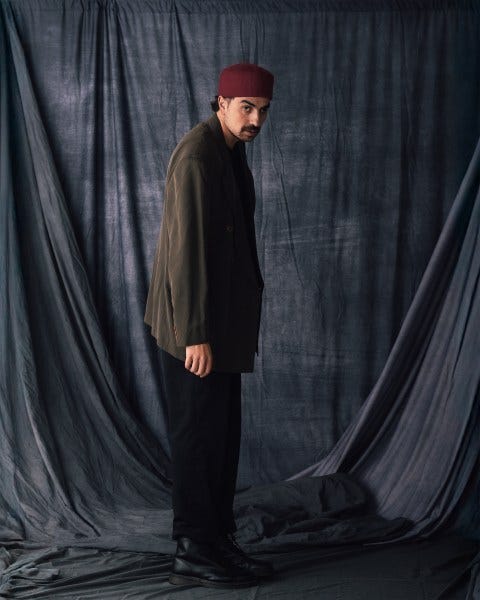
An Interview with Taroug
Chott feels like a return to your roots—both personal and geographical. What led you to explore your Tunisian background more directly on this album?
When I came of legal age, I was advised to be careful about traveling to Tunisia because of my dual citizenship and the possibility of compulsory military service. So for a long time, there was a certain distance.
I finally visited Tunisia and my family again in 2022. I was 33 at the time and that trip really shifted something in me. It made me want to explore that part of my identity more consciously.
You can already hear fragments of that journey on my previous album Darts & Kites, but when I started working on Chott, it unfolded much more naturally. After sketching a few half-finished ideas, I realized this was becoming the core of the whole project, so I decided to fully dedicate the album to my roots.
The whole process turned into a form of self-therapy and became a way of reconnecting and understanding where I come from.
You translate landscapes—heat, wind, mirage—into sound across tracks like “Saraab” and “Sirocco.” How do you approach turning physical environments into musical textures?
I usually love working with field recordings — for me, it’s one of the most powerful tools to bring a sense of place, environment, and emotion into a track. It creates a kind of physical space and something familiar around the music.
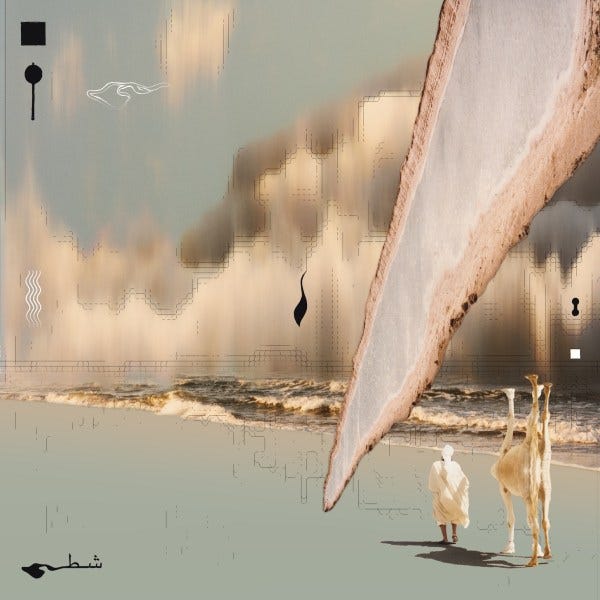
Interestingly, with these tracks, that feeling emerged without using any field recordings in that way. With Saraab, I had this very clear image in mind: an exhausted caravan of dromedaries moving slowly through the heat, with that shimmering mirage in the distance. I wanted to translate that sense of weight, slowness, and almost physical exhaustion into the music. When I first played it to a few people, their immediate reaction was that it could fit into the soundtrack of Dune, which I found quite interesting.
“Sirocco”, on the other hand, feels much more internal. It’s less about a concrete image and more about a sensation. Something that pulls and pushes at the same time, like heat that almost feels alive. The repetition in the lyrics reflects that: a constant movement, almost like breathing. It’s not so much describing a landscape, but being inside it.
On pieces like “1995” and the title track, you incorporate family voices and memories. How did working with such intimate material shape the emotional core of the record?
There are basically two pillars that give the album its emotional depth. On one side the composition and sound design, on the other side the use of very personal fragments. When I work on something this personal it felt important to preserve certain memories, moments and voices.
With “1995” it was more about bringing back childhood memories. Kind of filling in these missing diary entries I never wrote. Memories start to blur when getting older and I just wanted to hold onto some of it before it disappears.
On the title track “Chott” you hear my father reading a poem. I really wanted his voice on the record. And I think for him too, that recording session was something special.
On “Najet” you hear voice memos from my aunt Najet, singing this old lullaby from my grandmother. For me it wasn’t even only about the memory itself, but more about how the raw intensity and energy of the track reminded me of the impact she had on me when I was younger. That’s also why I named the track after her — it just felt right, like the music already had her in it somehow.
There’s a strong interplay between organic and electronic elements—cicadas, palm trees, voice, and synthesis. What draws you to transforming natural sound into rhythm and structure?
I grew up playing drums, and there’s something very primitive and direct about hitting something and making it resonate. It’s much more tangible than anything happening inside a computer.
Of course I also use digital tools, but it’s always been important to me that the music feels organic, imperfect, alive. I record a lot of random things with a field recorder, and I just enjoy taking those sounds and shaping them into something musical. I like the idea of building rhythms out of organic textures to create something that maybe feels familiar, but at the same time a bit hard to place. I also prefer working with analog synths and actually performing parts, instead of drawing perfect automation curves.
Compared to your earlier work, Chott feels more personal and grounded. Do you see it as a shift in your practice, or part of a longer evolution?
I’ve definitely grown over the past few years. My skills in production, mixing and songwriting have improved. My earlier work was often a collection of tracks from different phases, sometimes spread out over years. With Chott, I really took a few months to fully focus on the writing process and dive into it. I think you can hear that it’s much more cohesive.
Back then I was still searching a lot more. Now I feel like I have a clearer idea of what I want to express and how I want to present myself. So I’d say it’s a natural progression, but who knows how I’ll feel about it in five years… (Gianmarco Del Re)
RECENT REVIEWS
Reviews are at the heart of ACL. Here are selections from a few of my favorite reviews we posted on the blog in the last few weeks.
Canes Of Karabakh ~ S/T
There is a deliberate restraint that feels ethical as much as aesthetic in Canes of Karabakh. The Polish trio of Stanisław Matys (duduk), Olgierd Dokalski (flugelhorn, SFX), and Paweł Bartnik (electronics) approach the Armenian duduk not as repertoire to be mined but as a site of tension: between access and loss, affordability and dispossession, breath and circuitry. The doubling of reed prices following the Nagorno-Karabakh conflict becomes, in their telling, not an aside but a structural element in the production process of the whole album—an economic tremor that ripples through tone itself, making the reeds increasingly unaffordable to locals. Ultimately, this record feels less like a collection of composed pieces than an exploration of circumstances—of how we listen, how we inherit, and how we are implicated. The trio’s achievement lies in recognising that sometimes the most radical gesture is not to elaborate, but to withhold—to hold a note and acknowledge its provenance.
Charbel Haber ~ May a soft sun bless your sky while you wait for the inevitable
There is a quiet contradiction at the heart of May a soft sun bless your sky while you wait for the inevitable, the latest work by Charbel Haber. It is an album that breathes in softness while exhaling inevitability—holding beauty and catastrophe in the same fragile space without attempting to reconcile them. Structurally, the record unfolds as a temporal loop. It opens with “This show starts in the future” and closes with “This show ends in the past,” collapsing linear time into something recursive and unstable. The result is an album that feels perpetually in-between: not beginning, not ending, but circling. This circularity is mirrored in the sound. The compositions are built from long-form loops that evolve gradually, hovering around six minutes, where change is subtle but constant.
Meitei ~ AGATE
Is there more than mere semantics to the difference between remodeled and remixed? A remix takes the components of an original track, breaks them down and puts them back in a different order. A remodel may also include new components. AGATE is a set of “material refined through repeated performance.” The more Meitei performed pieces from his Kofū trilogy, the more he refined their sound, a process akin to the formation of agate. Three pieces survive the transition from Kofū; one crosses over from Kofū II; and two are remodeled from Kofū III, only six out of thirty-four tracks, plus a new piece that launches the set. The final product extends the discussion on whether there is ever a definitive version of a track; for Meitei, the music evolves with the performer. Kofū was originally considered the final piece of a trilogy, after which it became the start of a new trilogy. AGATE is only the latest of Meitei’s productions to look back while moving forward. As a reflection of place and time, the new album represents the reevaluation not only of history, but of an artist’s life and output.
Monoconda ~ Shadow Shades
Some artists move forward by subtraction; others by return. On Shadow Shades, Monoconda does both. Stripping away the layered architectures of his recent work, he returns to the guitar—the first instrument he ever played—not as nostalgia, but as a recalibration. What emerges is neither acoustic intimacy nor electronic abstraction, but something suspended between the two: a raw, overdriven signal searching for form. There is indeed a sense that this music is shaped as much by external conditions as by internal states. These are not compositions that seek balance so much as they inhabit imbalance — what he calls a “perilous” mental space, defined by difficult choices and incomplete answers. In this sense, Shadow Shades is less a counterpart to previous work, such as Overwhelming Growth (2025), than a continuation of a process — one that privileges intuition over intention, and experience over explanation. It asks not to be understood, but to be inhabited.
Natalia Tsupryk ~ Vil’na
Over the past few years, we’ve come to know Natalia Tsupryk as the composer of some of Ukraine’s most poignant music. Her first post-invasion piece, 2022’s “Kyiv,” contained the sound of air sirens recorded on Ukraine’s Independence Day (August 24), which has been at the center of conversations on the triggering effect of air sirens in music. Remarkably, until now the composer had not released an album. Vil’na fills that gap, billed as her “most personal works about Ukraine.” It’s extremely hard to write about war while immersed in war. But by writing consistently since the start of the invasion, Tsupryk has gained the beginnings of perspective, and by choosing these pieces to represent her experience and the experience of her people, she has created one of the most definitive Ukrainian albums to emerge since the war began, joining Henaili’s Kyiv Eternal, 2025’s Blackout Tape and a small but growing shortlist. Vil’na is an incomplete elegy whose pain runs even deeper because the end is still unwritten.
Normal Community High School Experimental Ensemble ~ A Moment of Yet
We love the name of the Normal Community High School Experimental Ensemble, but even more, we love the fact that it actually exists. There’s nothing normal about this ensemble, save for the fact that it comes from Normal, Illinois. The 2000-strong high school offers a wide variety of incredibly awesome activities (Film and Animation Club, Mindful Iron), but the crown jewel is their Experimental Ensemble, which already has four albums under its belt, listing as few as eight players (ironically on the set Budget Cuts) and as many as twelve. A Moment of Yet was “composed and recorded throughout January and February of 2026 in an unconventional classroom at NCHS,” and two months later is being released – amazingly – on vinyl. Extra credit goes to the art team of Stefan and Andrea, as the cover art displays the collage-like creativity of the ensemble. In short, the music sounds like the art looks: carefully placed, yet not aligned, colorful, but not uniform. The deeper one goes into the album, the more experimental it gets, and yet it remains accessible. We were highly amused to see Black Flag Bonsai Club describe the ensemble as “rad,” because we thought that term was dead. Is the ensemble lit? Gas? Straight fire? Should we clock the album? Does it smack? NCHSEE definitely ate that; it hits different, and they should flex. Will any of these words mean anything when their next album is released? It doesn’t matter, because a rose by any other name would still smell as sweet. Let them cook.
Old Amica ~ Bländverk
A cruel quirk of translation turns out to be a clever trick on Bländverk, as the Swedish title implies bland work while the actual English translation is illusion. Old Amica‘s album is many things ~ quiet, intimate, reflective ~ but it is certainly not bland. As it turns out, the album was composed “during the gentle hours before midnight,” the two high school friends communicating from Stockholm to Geneva and back again, suffusing their piano pieces with harmonium, tape loops and subtle field recordings, all in support of the ivory tones. All is stilla nu as the album wraps back around to its beginning; midnight is here, and a new day, unheralded by the sleeping populace, has begun.
Taroug ~ Chott
Deeply rooted in place rather than merely referencing it, Chott, the latest work from Taroug, seems to emerge directly from the landscape. Named after the vast salt lake of Chott El Djerid in southern Tunisia, the record unfolds as both a return and a reconstruction—memory filtered through distance, then reassembled through sound. If Taroug’s earlier work often felt like a search—an exploration of systems, patterns, and possibilities—Chott marks a shift toward something more grounded, more cohesive. It is less concerned with discovery than with understanding. The result is an album that does not simply revisit the past, but reshapes it—allowing memory, landscape, and identity to coexist in a state of constant, delicate transformation. What lingers is not a single image or idea, but a sensation: of heat, of distance, of something just out of reach. Like a mirage, it disappears as you approach it—yet remains, unmistakably, real.
UPCOMING RELEASES
(complete list with Bandcamp links here)
The seasons are changing and the release schedule is bursting into bloom. Spring brings the first massive crop of new music, enough to lift us out of those late-winter doldrums. As the birds return and the earth awakens, the sounds of the great outdoors mirror our musical discoveries. May you find your next favorite album right here!
Adam Schatz ~ Civil Engineering Vol. 1 (Jealous Butcher, 24 April)
Ah! Kosmos & Hainbach ~ Gentle Hum (FUU, 24 April)
Anenon ~ Dream Temperature (Tonal Union, 24 April)
Angelo M. Farro ~ Saaret (three:four records, 24 April)
Ann DuHamel ~ Prayers for a Feverish Planet: New Music About Climate Change, Vol. 1 (New Focus, 24 April)
Ayman Fanous ~ Brooklyn Stories 1-5 (Infrequent Seams, 24 April)
bela ~ Korean Love Sonnets (Subtext, 24 April)
Celer ~ Poulaine (Room40, 24 April)
Fiona Brice ~ Think Loops (Bigo & Twigetti, 24 April)
Joe Fujinoki ~ Glass Torso (enmossed, 24 April)
Late Bush ~ Hoarses (vlek, 24 April)
Mahatmos ~ Aurora Spectralis (Superonda, 24 April)
Matteo Stella ~ Radeche Fonne (24 April)
Mesmer ~ Terrain Vague II (arbitrary, 24 April)
Mochyn Daer ~ Riverloom (24 April)
OOIOO/Lightning Bolt ~ The Horizon Spirals/The Horizon Viral (Thrill Jockey, 24 April)
Razen ~ Stained Glass Starling (VIERNULVIER, 24 April)
Setting ~ S/T (Thrill Jockey, 24 April)
SydeBoob Duo ~ Au Naturel (New Focus, 24 April)
Trace Monument ~ Hollow Land (Shadow World, 24 April)
Tacoma Park ~ Baltimore (Centripetal Force, 24 April)
Tobias Lanz ~ Volumes Variations (Discreet Archive, 24 April)
TROUM ~ EmphasYs (Cyclic Law, 24 April)
Vargkvint ~ Jorden kallar (piano & coffee records, 24 April)
Lasus ~ PSALM028: Conjure (Phantom Limb, 25 April)
Ruben ~ Chambers (25 April)
Heimito Künst ~ Vol. 3 (Dissipatio, 26 April)
Andy Nechaevsky ~ Secret Life of Button Boxes: Red Box (Right Brain, 28 April)
Near Minerals ~ The Talking Castle (Difficult Art & Music, 28 April)
haana lee ~ deconstructed (29 April)
Ramilda ~ Cracked (Scrawl, 29 April)
Heli Hartikainen ~ Interbody (30 April)
Phantom Horse ~ Primal Forms (Umor Rex, 30 April)
Amp ~ Isotropic Beacons (Ampbase, 1 May)
Ard Bit & Radboud Mens ~ Mara Silen (1 May)
Codex ~ Tokyo Station (Uplink Transmissions, 1 May)
Concrete Fantasies ~ MISERERE (Drowned by Locals, 1 May)
Corrado Maria De Santis ~ Thresholds of Light (Lost Tribe Sound, 1 May)
Dario Calderone ~ The Infinite Garden (Moving Furniture, 1 May)
Deaf Center ~ Through Time (Sonic Pieces, 1 May)
Devin Sarno ~ Flowers on the Ocean (Histamine Tapes, 1 May)
Gabriella Smart ~ Parasymbiosis (Room40, 1 May)
Glissando 70 ~ Bones of Dundasa (Constellation, 1 May)
It Was Her Idea ~ Daughter of War (PNL, 1 May)
Jason Kruk ~ Beyond the Veil (1 May)
Jolanda Moletta ~ Oceanine (Beacon Sound, 1 May)
Kavalcade ~ SIGNAL (Machine, 1 May)
Large Unit: Small Units ~ “What Just Happened?” (PNL, 1 May)
Large Unit with Hakira Sukata ~ Hohai Bushi (PNL, 1 May)
LISA ~ Yamaha Dog (Collapsing Drums, 1 May)
Masker ~ Peril (Oudwijn, 1 May)
Paal Nilsen-Love Circus + The Ex Guitars ~ Calls! (PNL, 1 May)
pdqb ~ Direct Hits (Synaptic Cliffs, 1 May)
Philamelian, Dov Waterman, Tomas Nordmark ~ 3 Pieces from an Old Statue (TimbreWorks, 1 May)
Russell Haswell ~ Let It Go (Editions Mego, 1 May)
SAD PROM ~ SP004 (1 May)
Seefeel ~ Sol.Hz (Warp, 1 May)
SloGlo ~ In Another Language (Flood Music, 1 May)
Solar Seas ~ kraken (Somewherecold, 1 May)
Taylor Brook and Vicki Ray ~ Nox (1 May)
Trem 77 ~ Reflective (1 May)
Yu Su ~ Foundry (Short Span, 1 May)
ZÖJ ~ May the Devil’s Ear Be Deaf (Parenthèses, 1 May)
Mark Cain ~ Threads (Parenthèses, 2 May)
Neuro… No Neuro ~ MemLoss (Audiobulb, 2 May)
Pedro Vian meets Ustad Nawab Khan and Naved Nawab Khan ~ The Bubble of Love प्यार का बुलबुला (Modern Obscure Music, 2 May)
HWXXNG ~ K-Core (Chinabot, 7 May)
[Ahmed] ~ Play Monk (Otoroku, 8 May)
Anastasia Kristensen ~ Bestarium Sombre (Intercept, 8 May)
Blak Saagan ~ Un Sequestro Lungo 10.000 Anni (Maple Death, 8 May)
Buildings and Food ~ Yutori (8 May)
Croz Boyce ~ S/T (Domino, 8 May)
Francis Heery ~ Garry Kasparov vs. Deep Blue (Flaming Pines, 8 May)
Henrik Munkeby Nørstebø ~ Faint Light Blackens (Psychic Liberation, 8 May)
Jake Muir ~ Pareidolia (enmossed, 8 May)
John Hollenbeck ~ Looking for Consonance (Out of Your Head, 8 May)
Johnny Bell ~ Mountain States (Ramble/Centripetal Force, 8 May)
Kreng ~ Wormhole (Miasmah, 8 May)
Living With Tollways ~ Eponymously Titled (Signbearer, 8 May)
Luca Cimarusti ~ Repetition, Resonance (Island House Recordings, 8 May)
Max Cooper ~ Feeling Is Structure (Mesh, 8 May)
Momen ~ Sympathetic Resonance (TAR/MM/UOH, 8 May)
Olof Dreijer ~ Loud Bloom (dh2, 8 May)
Sareban ~ Echoes in the Weave (Worlds Within Worlds, 8 May)
Teatre ~ All Constellations Weaving Into One (Amulet of Tears, 8 May)
Unwed Sailor ~ High Remembrance (8 May)
Violeta Vicci & Bruno Bavota ~ Be Human (Bigo & Twigetti, 8 May)
Yoal ~ Gloaming (Lost Tribe Sound, 8 May)
Yvonne Rogers ~ The Button Jar (Pyroclastic, 8 May)
Kartas ~ LADO H (Municipal K7, 14 May)
Aspetuck ~ Immersion (A Strangely Isolated Place, 15 May)
Christian Dillingham ~ As It Relates to Now (Shifting Paradigm, 15 May)
Discovery Zone ~ Library Copy Do Not Remove (RVNG Intl., 15 May)
Distant Birds ~ VOL. 01 & 02 (Earshift Music, 15 May)
DJ Saliva ~ URTIGA (Al Gharib, 15 May)
Eluvium ~ Virga III (Temporary Residence, 15 May)
Federico Balducci & nobuka ~ Depth is Not a Place (Difficult Art & Music, 15 May)
Fumction x Nastia Reigel present Devocion ~ Devocion EP (Dekmantel, 15 May)
Ibrahim Alfa Jnr. ~ Infinite Black Inside (FO, 15 May)
Jeff Parker TTA IVtet ~ Happy Today (International Anthem, 15 May)
KADAPAT & Nova Ruth featuring Siko Sedyanto ~ Ocean Cage (Kuboraum Editions, 15 May)
Lawrence English / Werner Dafeldecker ~ Fathom Tides (Hallow Ground, 15 May)
Lea Bertucci ~ The Days Pass Quickly Immersed in the Shadow of Eternity (Cibachrome, 15 May)
Martyna Basta ~ Winged in Collapse (7K, 15 May)
Matthew Wright ~ Cracked Glaze (False Walls, 15 May)
Mei Honeycomb ~ Clairvoyant Dimensions (Meakusma, 15 May)
Phillip Golub ~ Partisan Ship (Berthold, 15 May)
Rafa Ramos Sania ~ A Broadcast of Your Silence (Lost Tribe Sound, 15 May)
R. Schappert ~ LOLOSTST (r-ecords, 15 May)
SHHE ~ THALASSA (One Little Independent, 15 May)
SUSS ~ Counting Sunsets (Northern Spy, 15 May)
Van Sur Les ~ Ingrian Tape (15 May)
Various Artists ~ Perceptions Vol. 7 (Bigo & Twigetti, 15 May)
Vera V Almgren ~ I Det Vassa Ljuset (Istid, 15 May)
V0LAND ~ PLÜSCH (15 May)
Yulseus ~ Nothing Under Heaven (n5MD, 15 May)
Juan J. Ochoa ~ Something to Remember (Protomaterial, 19 May)
Potliquor ~ All I Know In the City (Amalgam, 19 May)
Savvas Metaxas ~ Suspended Movement (Granny Records, 20 May)
Christof Migone ~ oo (squint press, 21 May)
Aho Ssan ~ The Sun Turned Black (Subtext, 22 May)
BAG ~ This House is a Body (Phantom Limb, 22 May)
Brunhild Ferrari, Eiko Ishibashi, Jim O’Rourke ~ L’oreille Voleuse (Persistence of Sound, 22 May)
Chris Lippincott ~ Angel in a Jetstream (22 May)
FLOCKS ~ Lagoon (Karlrecords, 22 May)
Fugue State ~ After Nothing Comes (Switch Hit, 22 May)
Hannah Peel ~ The Endless Dance (Real World, 22 May)
Ivo Perelman and Damon Smith ~ Duologue: Core of Existence (Squid Note, 22 May)
Joshua Mastel & Alec Goldfarb ~ Firmament (Gold Bolus, 22 May)
Justina Repečkaitė ~ Tapestries (miclithuania, 22 May)
Magic Tuber Stringband ~ Heavy Water (Thrill Jockey, 22 May)
Peggy Lee, Julien Wilson, Theo Carbo, Dylan Van Der Schyff ~ Waiting Music (Earshift Music, 22 May)
Richard Pike ~ Redemption Suite I-IX: For Pianos and Textures (22 May)
Tegh & Adel Poursamadi ~ Bayal بیل. (Injazero, 22 May)
Zela Margossian Quintet ~ Remedy (Ropeadope, 22 May)
Gigi Masin ~ Movement (Sacred Bones, 26 May)
Akira Uchida ~ Nusa (IIKKI, 28 May)
Various Artists ~ Moss and Melee I – Old Growth (Lost Tribe Sound, 28 May)
Amelia Ya’el ~ Voices I (Signbearer, 29 May)
Columbia Icefield ~ A Silence Opens (Out of Your Head, 29 May)
David Torn ~ now i imagine a place not the same (Kou, 29 May)
Friday Night Plans ~ Blue Hour (Modern Obscure Music, 29 May)
Hanry ~ What Came From Silence (Pelagic, 29 May)
Kikù Hibino & Merzbow ~ Rococo ∞ Echomatter (Superpang, 29 May)
Kris Toner & Cathlene Pineda ~ Sung (Orenda, 29 May)
Laurence Pike ~ Possible Utopias for Jazz Quintet (Lapsus, 29 May)
Robin Katz ~ Hypnos (Gearbox, 29 May)
Seamus O’Muineachain ~ Island of Flowers (29 May)
Vilhelm Bromander and Fredrik Rasten ~ Astral Twins (Fönstret, 29 May)
The Hands Free ~ Upturned Cup (New Amsterdam, 31 May)
Susana Santos Silva, Vasco Trilla ~ Mushin (defkaz, 1 June)
Various Artists ~ Moss and Melee II – Controlled Burn (Lost Tribe Sound, 1 June)
Modern Silent Cinema ~ Passages XXXIII-XLIII (for Piano, Guitar, and Bass) (1 June)
Musica Mosaica ~ Clock In, Clock Out (Futura Resistenza, 2 June)
algorhythms ~ surging descent (5 June)
American Cream Band ~ Twin (Quindi, 5 June)
Ángeles Rojas~ Open the windows and let the spirits in and out (Warm Winters Ltd., 5 June)
Auscultation ~ IV (100% Silk, 5 June)
Beatriz Ferreyra ~ A Distracted God (Room40, 5 June)
Cinna Peyghamy ~ Music for Tombak & Synth (Other People, 5 June)
Eric Demuro ~ Simulalcra (Bastard Jazz, 5 June)
Galán | Spieth | Guentner ~ Obreel (Affin, 5 June)
Maya Dunietz & Solistenensemble Kaleidoskop ~ The Sound of Difference and Connection (Orthodox, 5 June)
Mike Lorenz ~ I’m Not There (5 June)
Nolan Hildebrand ~ Noise Trip Explosion (Redshift Music, 5 June)
Teiku ~ Klang (Ginkgo, 5 June)
Tyler Sabbag ~ Novella (5 June)
JOHN 3:16 ~ The Beast (Alrealon Musique, 6 June)
Savina Yannatou, Gonçalo Almeida, and Costis Drygianakis ~ Independent / Interdependent (defkaz, 7 June)
Berndt / Schmidt ~ Cloud Machines (Thrill Jockey, 12 June)
Chaz Underriner ~ Flicker (12 June)
Debit ~ Potpourri (N.A.A.F.I., 12 June)
Driftwood ~ Maps (Room40, 12 June)
Horse Lords ~ Demand to Be Taken to Heaven Alive! (RVNG Intl., 12 June)
Lucie Antunes ~ Silence (Bell, 12 June)
Micha Acher ~ Henry and the Ghosts Songbook (Alien Transistor, 12 June)
Puce Moment ~ O.R.G. II (odd doo, 12 June)
Rone ~ Megaptera (InFiné, 12 June)
Starlings ~ Friend, Thank You (Machine Records, 12 June)
Tujiko Noriko ~ PON (Editions Mego, 12 June)
Ai Yamamoto ~ Seasons (Someone Good, 19 June)
Micah Thomas ~ Lucid (19 June)
Ocoeur ~ Greener Grass, Clearer Water (n5MD, 19 June)
Spyros Polychronopoulos + Nikos Veliotis ~ Position (Room40, 19 June)
Wild Up, Christopher Rountree, Julius Eastman ~ Julius Eastman, Vol. 5: Gay Guerrilla (New Amsterdam, 19 June)
Abul Mogard & Rafael Anton Irisarri ~ Where Light Pauses in the Silence of the Sun (Black Knoll, 26 June)
Helen Svoboda ~ Headwater (Room40, 26 June)
Zacc Harris ~ American Reckoning (Shifting Paradigm, 26 June)
Thank you as always for the long list of recommendations, loving the Charbel Haber album! (And sharing the skepticism for RSD)
will be coming back to this over the weekend to sift thru recs, but i am SO loving this xylitol album