
Dear Listeners, it’s Joseph again with a regular newsletter, a nice break after all the intensity of my Big Ears coverage. Speaking of which, thanks to the new paid subs who have joined since my coverage began! Your support means so much, and literally makes it possible for me to do things like trek to Big Ears. My Patrick Watson feature for Cult MTL will be up soon, and my podcast featuring interviews with Hania Rani, Booker Stardrum, Chuck Johnson, Mary Lattimore, and Gwenifer Raymond will be up in May. Until then, we’ll be back to normal for a bit, with regular bi-weekly editions and the return of alternating Out of the Box and From the Archive features on off weeks.
Over at the bi-weekly ACL internet radio show on CAMP, airing this Sunday at 6pm CET (and available on their Mixcloud soon after), I’ll be sharing my latest mix inspired by records recently reviewed on the blog.
I’ve got a couple important deadlines at the end of this work week, so I’m going to keep it short with my preamble, but luckily Gianmarco Del Re has been busy. His next Ukrainian Field Notes should be up soon, but in the meanwhile he’s brining us Iranian Voices, as well as two review-interviews. Find those below. Happy Listening!
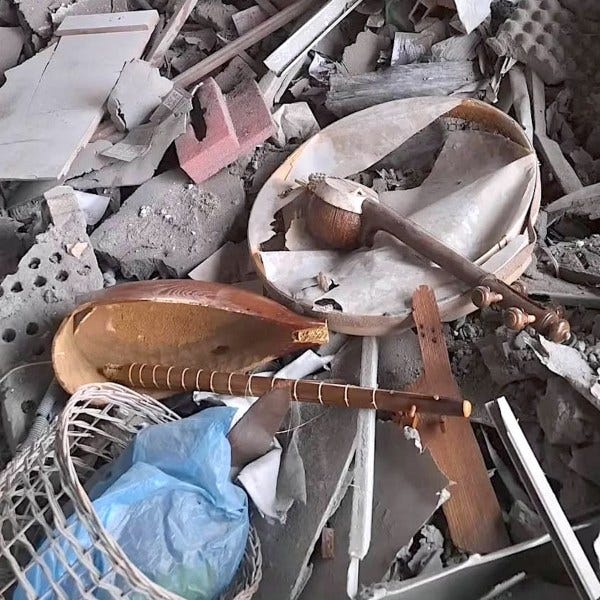
IRANIAN VOICES
Iranian Voices aims to offer a snapshot of the Iranian electronic and experimental music scene, examining current events through the lens of Iranian musicians, with the hope that this will be the first installment.
Over the years, I have conducted a number of interviews with Iranian artists, including Sote, 9T Antiope, and Pouya Esahei for Fluid Radio. Following the latest crackdown on protests by the Iranian regime, I reached out to a number of musicians, many of them based in the diaspora. The war and the subsequent internet blackout made communication more difficult and, at times, more guarded. These interviews bring together some of the voices I was able to gather.
I began with introductory and personalised questions about each artist’s work, before moving to shared questions about the scene and responses to recent events. The interviews with Mona Matbou Riahi and Pouya Pour-Amin were conducted prior to the war, while Arash Ghasemi’s responses were received afterwards.
Mona Matbou Riahi
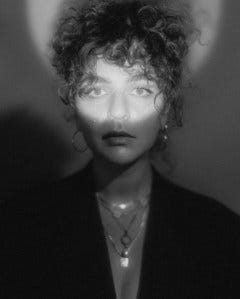
I am a clarinetist, improviser, and composer. My journey began in Iran at the age of eight when I started playing the recorder. Immediately, music felt like something that gave me joy; it felt so easy and natural. Later, I attended the Tehran Music Conservatory, where I began my formal training in classical clarinet.
Everything I experienced shaped me. Iran remains a massive part of me; it is ‘under my body,’ always so close. Music connects me to all the feelings that I learned to suppress in order to survive. I feel it is a valve to liberation.
How has your journey from the Tehran Conservatory of Music to the University of Music and Performing Arts Vienna shaped your approach to improvisation and electronic experimentation—and in what ways does your work with ECM Records reflect your idea of music as a “wild natural playground” where freedom and discovery are central?
Moving from the Tehran Conservatory of Music to the University of Music and Performing Arts Vienna (MDW) allowed me to discover my love for experimental music and free improvisation. My interest in electronic music came later, sparked by my connection to club culture. I see the dancefloor as a form of resistance, and that energy is what drew me toward the electronic scene.
I believe all of these elements are deeply connected; I don’t think in terms of ‘genres’ that doesn’t make sense to me. My vision is about being fluid with all of those experiences and maintaining imagination. It is a continuous process of learning, playing, searching, making mistakes, observing, and staying in motion.
You use your training as a foundation, but you must be willing to let go of it to truly ‘play.’ It’s about being present, trusting your own voice, and letting the music lead toward that moment of authentic, free discovery.
Working with ECM Records and Manfred Eicher has shaped my perspective; his unique way of listening, authenticity, and knowledge create that ‘natural playground’ where you can actually exist within a recording.
Pouya Pour-Amin
I’m a composer and also work in theatre and performance art. I was born and raised in Iran. My musical background is in Western classical music, and I began composing by writing for string orchestra and ensembles.
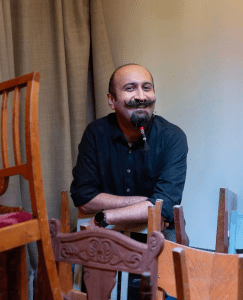
One of the main reasons I moved toward electronic music was simply the lack of possibility and budget to work with an orchestra. Electronic music became both a practical solution and a creative expansion for me.
As for my musical voice, I believe it has been shaped — and is still being shaped — by many different influences: from medieval European composers to contemporary American maestros, from Iranian traditional and folk music to black metal, from literature to the society I grew up in. The experience of despotism and Islamic dictatorship, and now immigration, have also deeply influenced my artistic language. And that process is still ongoing.
Back in 2019 you released the album Prison Episodes on Flaming Pines. You are about to revisit this album for a dance and visual technology performance. What is your approach going to be and what has changed for you in the intervening years?
Simply put, nothing has changed. Imprisonment because of your beliefs is a historical and global crisis. Out of 195 countries, in more than 140 you can find people in prison simply because of their beliefs or non-violent activism.
I still believe that the very concept of a political prisoner should not exist at all.
What has changed for me is the urgency and clarity with which I want to address it. This time, through the performance, I will speak more directly. To achieve that clarity, I will expand the work beyond music and use theatre, dance, and visual technology as integral elements of the piece.
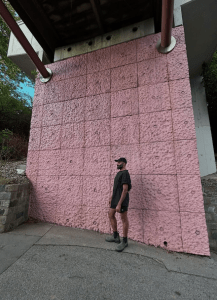
Arash Ghasemi
Arash Ghasemi is an Iranian musician, composer, and vocalist. Together with Simo Hakalisto he released the albums I and II under the moniker Gnäw. In 2026 he released 11 as KAILAS a Prague-based trio formed with Eva Porating and Daria Samo.
Your solo album Ahvaz (2025) feels deeply rooted in memory and place, evoking landscapes, voices, and fragments of Iranian cultural history. How did working alone on this record differ from the open-ended musical dialogue you share with Simo Hakalisto in Gnäw? Did the process change how you approached the guitar and the narrative quality of the music?
These tracks are my sonar notes—signals perceived from near and far, shaped into conscious form in the past few years. Gnäw resides more closer to the subconscious.
Improvisation seems central to your work, particularly in Gnäw where you’ve described the music as “photographs” of moments of energy and mind-travel. When creating Ahvaz, did you approach composition in a similar spirit of spontaneous discovery, or was the album shaped more deliberately around specific memories, images, and emotional states?
Spontaneity and playfulness live here too—wandering and more focused around the less familiar corners of my comfort instrument, the electric guitar. Both technique and sound palette experiment.
In Gnäw, Iranian instruments and musical sensibilities meet Finnish experimental traditions and modular synthesis, creating what you’ve described as a kind of “borderless drone chessboard.” Do you see your solo work as continuing that cross-cultural dialogue in a different way, perhaps between the past and present, or between traditional sounds and more psychedelic or blues-inflected guitar language?
Many cross-cultural echoes appear here, yet unlike Gnäw the tracks keep more visible edges—more contained, more conservative in structure and harmony. I hear traces of the past years throughout, their elements cast into these pieces. Side A drifts toward the abstract; Side B settles more firmly into a grid.
Across both Ahvaz and the Gnäw albums I and II there’s a strong sense of landscape—deserts, distant horizons, or abstract sonic terrains. How much do physical environments and lived geographies—from Tehran to Prague, or even Finland through your collaboration with Simo—shape the way you imagine and build your music?
My mood restlessly, shaped and impacted by the surroundings, habitats, people, the lived experiences, and any felt element—at times overwhelming, at times tender. Perhaps the quiet price of feeling the far ends of the spectrum.
On current events
How would you describe the current landscape of electronic and experimental music in Iran, and in what ways has it evolved or shifted in the past few years—especially in response to social and political pressures?
Mona Matbou Riahi: I am not the right person to answer this question fully, as I have lived abroad for almost 18 years. Even though I travel there every year, those visits are too short to truly capture the complexity of the current landscape. However, what I do know is that there are so many artists and brave souls working and making art under incredibly hard conditions and facing serious consequences. I am in awe of them. They are so progressive in their way of being; you can see it through their art in any form.
Pouya Pour-Amin: From my point of view, many experimental music artists from Iran are now scattered around the world. Those who still live in the country often collaborate with international labels outside Iran or present their work in underground events.
I should say that I can’t speak on behalf of my colleagues, and I don’t have complete information about artists across the entire country — not even in my own city, Tehran. So what I’m sharing here is only based on my limited perspective.
In the past few years, the collapse of the economy and the increasing repression have affected everything. Independent art and music are among the most vulnerable professions in such conditions. When survival becomes the main concern, experimental and non-commercial art suffers the most.
Iranian society is experiencing one of the deepest periods of disappointment and desperation in recent history. You can imagine that artists respond to this in very different ways. Some move toward darker and more introspective sounds, others become more aggressive, more confrontational.
Music, in this context, becomes a form of reaction — sometimes resistance, sometimes mourning, sometimes pure survival.
Arash Ghasemi: Sadly, the course of my life has kept me distant from the scene in Iran. In the past twenty years I have returned home only three times, and each visit too brief to truly explore the experimental landscape. It’s a quiet regret—I’m certain beautiful things are happening there, and I hope one day to discover them.
For Iranian artists working in the diaspora, how has distance from Iran shaped your response to the recent events? Do you feel a different kind of responsibility, freedom, or pressure when addressing what is happening back home through your music?
Mona Matbou Riahi: Being part of the diaspora, you often feel as though your body is here, but your heart and soul are in Iran; it is a life of parallel realities. During recent events, it has felt like walking through a nightmare, you are here, yet you are there. You feel lost and numb, trying to live a ‘normal’ life while knowing that it is impossible; you are moving through a constant state of uncertainty.
I feel a deep responsibility in every step and breath I take, and at the same time, I feel so helpless. We must reflect the times, but I don’t see this as a ‘theme’ to simply make music out of; it is something much deeper that affects everything I do. All of the images and videos accompany me through my days and nights. These people were not just numbers; they were someone’s daughter or son, a mother or father, a brother or sister, a lover, a friend. Each one was a human being with a soul. I feel this loss so deeply. To me, they are not strangers; they are my family.
Pouya Pour-Amin: In general, I feel that being outside Iran allows me to speak more directly and freely, without the constant fear of detention. That is a very new experience for me — and honestly, a very pleasant one.
You can hear this more clearly in my recent release, Tabula Lacrimarum, created in collaboration with Barbad Golshiri. The work directly confronts certain traditions within Islam and challenges the theocratic concept of Allah. It’s something I simply could not have done so openly before.
But regarding the recent massacres in Iran, I haven’t even had a minute to think about an artistic reaction. My main concern right now is the people who are detained. The number of arrests is unbelievable, and every day the regime arrests more. Their conditions are awful, and their lives are in serious danger.
These days, I’m working with a collective of artists and activists to identify detainees from the art community, publish their names, and, in whatever way we can, try to be their voice. We are also documenting those from the art community who were killed brutally during the protests.
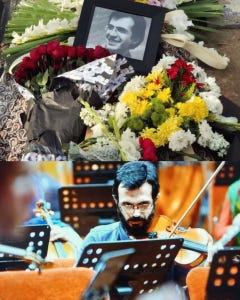
Sadly, one of them was my old colleague and friend, Pouya Faragardi, a violin player.
Arash Ghasemi: I try to speak about Iran with care. Living in a safer, more privileged part of the world, it feels unfair to be very opinionated about those who live under far greater pressures. I do my best not to fall into geopolitical narratives; what often goes missing there are the people themselves. I simply hope that the brave people of Iran can experience happiness and feel life as fully as possible.
From your perspective and to the best of your knowledge, how have the protests, violence, and repression affected communities of artists, venues, and underground networks in Iran? Are there new forms of collaboration, resistance, or expression emerging despite the dangers or is this happening only within the diaspora?
Pouya Pour-Amin: Usually, during periods of uprising, we see a noticeable increase in artistic activity, especially in music and visual arts. Many works are created and shared during protests. Even after repression by the regime, underground events often continue to grow, and art becomes a space for resistance.
But this time feels different. The scale of the violence and the massacre — with tens of thousands killed — has changed the atmosphere entirely. The repression has been more severe, and so the reaction has also been different.
Right now, for many people, the priority is the removal of this Islamic fascist regime. In that context, I haven’t seen the same level of artistic activity as in previous uprisings. Survival and political change feel more urgent than cultural production at the moment.
Arash Ghasemi: Sadly, this is nothing new. For nearly (at least) half a century, the people of Iran have endured some of the harshest chapters of modern history. Yet their creativity has never been silenced. Again and again, through music, cinema, poetry, and visual art, Iranian artists—especially those working inside Iran—have revealed some of the most genuine and resilient expressions of the human spirit.
What kind of international solidarity or support do you think would be most meaningful for Iranian artists and cultural communities at this moment—whether artistic platforms, exhibitions, residencies, or political advocacy?
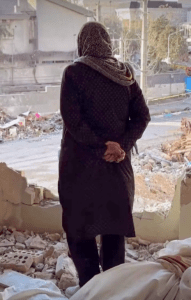
Mona Matbou Riahi: It is not only about artists; the Iranian people as a whole need to be heard. My message to the international community is: do not stop talking about Iran. Inform yourselves deeply, and do not rely solely on mainstream media for your understanding.
At the same time, providing platforms for Iranian artists right now is extremely important, but not as a way of consuming their bodies, their trauma, or their country’s suffering. Artistic platforms, exhibitions, residencies, and institutions should create space for Iranian voices with care, respect, and long-term commitment.
What we need most is genuine solidarity grounded in empathy and action. We need the world to recognize our humanity, not just our headlines. Silence allows violence to continue. This is about justice, freedom, and human dignity. It goes beyond borders.
Pouya Pour-Amin: Honestly, it’s difficult to answer this question. The situation in Iran is horrible, as it is in many other parts of the world. We are living in a chaotic and deeply unstable era. In that context, any kind of genuine support is meaningful and essential.
From my own experience, I was very fortunate to receive a residency in Norway through Safemuse. They have supported me in every possible way since I arrived. Without their help, I wouldn’t have been able to accomplish what I have in my first year here.
I performed at several festivals, recorded a new album, created a musical storytelling performance and presented it multiple times. Now we are working on a large-scale production of Prison Episodes, which will premiere in October 2026 at CODA – Oslo International Dance Festival. None of this would have been possible without their support.
So naturally, I wish the same kind of sustained, practical, and long-term support for any artist who finds themselves in the situation I was once in.
Arash Ghasemi: We need to listen more to those who live under oppression, rather than defaulting to performative activism. Artistic platforms can become powerful spaces to resist propaganda—especially in times that demand deeper listening, critical thought, and a move beyond black-and-white thinking. (Gianmarco Del Re)
Interview with Radwan Ghazi Moumneh and Frédéric D. Oberland

Q: You are both no strangers to collaborations and have worked together in the past, but this is the first time you’ve made a full album together. What drew you to this duo format, and how did the dynamic between the two of you reshape your usual way of working?
RGM: This idea had been brewing for a while. We had chatted casually about a light attempt at a composition residency, and a few years back. We are such close friends and spend a considerable amount of time a year together being and reflecting, so it seemed like a natural step.
It most definitely was a very new way of working for me, which was quite a relief, as I normally am all alone in my creation and have no one challenging or pushing me on my ideas. It made me really have a lot of fun giving someone else the steering wheel in terms of direction when I felt at a loss. This has by far been the most “pleasure” I’ve ever had making a record.
FDO: The simple desire to combine our deep friendship with a shared musical project was an underlying dream that slowly took shape. The ease with which we carried out our previous collaborations—whether with Oiseaux-Tempête, where Radwan was a recurring guest and sometimes one of the producers, or when he invited Oiseaux-Tempête to participate in one of the tracks on Jerusalem In My Heart’s latest album—opened up a new realm of possibilities.
We share the same values with Radwan, the same curiosity, and common visions; with the deliberate hiatus of our respective collective projects, the idea of forming a duo together and taking our time with it became an obvious and inspirational choice. Working with Radwan is like cooking a brand-new dish with multiple hands and minds operating in tandem, and a lot of heart. Our duo is an open framework where many ideas can come together.
Q: Radwan, I had the pleasure of meeting you back in 2016 in London at Cafe OTO when you performed as Jerusalem In My Heart with Charles-André Coderre. When we spoke, you described your process as often beginning with voice and political sentiment before the music takes shape. Has that approach evolved over time, and how did it integrate with Oberland’s more modular and textural framework?
RGM: It actually didn’t at all. All but one track from our original session was kept, and we had started it as very much an instrumental “jam”. Once we decided that we needed to focus our work a little more, thematic ideas, as per usual started piling up in my head and I followed a “typical” writing process where ideas precede anything. Not that the lyrics were set in stone but the ideas definitely were. Frédéric is always able to jump on my wavelength with so much ease, and he was proposing many ideas that supported what was being put on the table.
Q: Eternal Life No End has a strong incantatory, almost ritualistic quality—particularly on tracks like “Squeal of Swine”. Was this sense of invocation or “shamanic” intent something you consciously pursued, or did it emerge naturally through the collaboration?
RGM: Shamanic aesthetics aren’t ones that I am drawn to, but evoking imagery that represents the sentiments I am carrying (and have been since 2023) was very much part of the concept of the record. There is so much anger inside of me at this very moment and this was such an important moment to let it come out.
FDO: Whether consciously or not, I think the incantatory quality of our music still comes through in many of our tracks, whether in our respective past projects or in this first collaborative work. There’s definitely something here that envelops us and transcends us, something that radiates or shines through beyond ourselves. To a certain extent, I almost felt that our recording sessions created a kind of hypnosis that allowed us to bring out buried truths. I also see in it the need, on our own small scale in the midst of this dystopian and utterly chaotic world, to build a shelter, and to offer it.
Q: Could you talk us through the instrumentation on the album? How did you arrive at certain key choices—like introducing the Buchla at the start of “Dagger Eyes” or closing “Walked and Walked” with the clarineau—and how did you approach blending these elements with the buzuk and rababa? You both also use drum machines throughout—how did you think about rhythm and its role within the overall structure?
FDO: Since both Radwan and I are multi-instrumentalists—or at the very least, have dabbled in a wide range of instruments—there were plenty of ingredients on the table and plenty of possibilities to start with. Our first session was an opportunity to figure out how to blend our very distinct sensibilities, to determine how to build a shared, open and solid architecture that would allow either of us to take the lead, play a solo, or ride the wave with emotion. The idea was certainly to experiment, but absolutely not to create an experimental album; rather, to craft hybrid pieces that would highlight rhythms and melodies, and could almost function as songs, whether instrumental or sung. The merge of analog electronics, percussion played by synthesizers, and acoustic instruments (strings, perc and wind instruments) often recorded live in one or two takes at most, was the key to crafting this record.
Sometimes we could even write certain tracks or arrangements together, without ego, listening to the recorded material and what was happening in the studio, in a very intuitive way. There is a deep trust between us in what the other hears, perceives, and feels. In that sense, we guided one another. It was a pleasure to encourage Radwan to fully embrace his voice on many tracks, just as he inspired me to play certain saxophone and clarineau parts with more delicacy.
Q: The record moves between very dense, almost oppressive textures and moments of stillness or suspension. How important is silence—or the suggestion of it—as a compositional element for you both?
FDO: That’s right. Silence is both a bond / a binder between us, like a sauce, and a hidden member of our duo. Listening to each other, but also the note, the beat that isn’t necessarily played but suggested in its absence, is just as important as what’s currently audible. It’s something that guided not only our composition and recording process, but also, it seems to me, Radwan’s mixing, or Jesse Osborne-Lanthier’s mastering.
Q: There’s a recurring sense of absence and negation in titles like “A Silence With No Ceiling”, “A Shadow With No Silhouette”, and “A Dream That Never Arrived”. What kind of emotional or political space were you trying to articulate through these ideas?
RGM: Absence and negation is very well put. It’s so exactly that. These are sentiments that are ever present in my life, and I feel they very much are also in the very fucked up world we are in today.

Q: The lyrics are full of inversion—morality without morals, heaven as hell, shadows without form. Are you trying to describe a world that has lost its internal logic, or are these contradictions meant to open up a different kind of spiritual or poetic truth?
RGM: This very much ties into the previous question. We are in a world today where we have accepted and embraced the idea that we can be “okay” with a whole population being starved, humiliated and decimated, reduced to a dehumanized “animal”, all in the name of some abstract absurd and inverted “morality”.
We also simultaneously have accepted that the grey decrepit men in suits who run this world are pedophiles, and are open and proud of it, and groom children and sacrifice these kids’ childhood. We have accepted that there is a nation state that we all have, whether we want to or not, accepted as a “superior” people and thus allowed them to create a political and financial system that holds said suits hostage to their disgusting greed. There is no logic to this world. We live in a very fucked place.
Q: The reference to the Buraq introduces a very specific spiritual image, but it’s placed in a context where transcendence seems inverted or corrupted. How do you think about the role of religious or mythological imagery in this album?
RGM: I use this imagery only to connect certain themes I’m singing about. Honestly, a lot of this imagery is more of an aesthetic than a deeper meaning. I consider myself simultaneously very spiritual and a complete atheist.
Q: There’s a strong sense of endless movement without arrival, especially in The Serpent. Is this a reflection of political paralysis, or something more existential—about desire, belief, and disillusionment?
FDO: In this text, Radwan speaks of a dream: a figure who walks endlessly, traversing the world and encountering snakes of different colors that smile at him and open various doors to his unconscious, and to our current lives. Each time, the dream suddenly resumes; the wind carries him elsewhere, and the aimless and psychedelic walk begins anew.
The words, like music in its spiraling motion, which might never end, like a hurricane that would endlessly swallow us up and spit us out, function here as a metaphor. Seeing it as a disillusionment is one side of the coin or the glass; seeing it also as perhaps not a dream at all—that it is up to each of us who has the chance to try to break free from what binds us into another, to testify, to live, to struggle, to help.
Q: The press materials describe the album as being shaped by outrage and lamentation in response to the current political moment in the SWANA region. How did you navigate translating something so overwhelming into sound without it becoming abstract or distanced? And given how events have since escalated, does the album now feel complete to you, or does it point toward further work?
RGM: I’m not sure that “complete” is ever something I experience, be it an artistic state or artistic work. Everything is always in flux and ever evolving for myself. All my work, literally 100% of it, always has been shaped by the “outrage and lamentation” to what is going on at home. I am of course sensitive to the fact that it’s only been 3 years that a lot more people are starting to understand what the SWANA region has endured at the hands of the occupying entities of israel and the united states for approx. 80 years, but this has been in my life, all my life, of course.
Q: Can you talk a bit about the lyrics more broadly—what they are addressing, and how they function within the music?
RGM: The lyrics are written very much in the same manner that I always have written lyrics when working on music. It comes from a deep and personal place, that is a reflection of what is happening around us, and how I am filtering it all. I love reading or hearing lyrics and being simply pointed down a path, one that I need to forge myself to arrive at an understanding. The album title, the song titles and the lyrics are a very ‘prickly’ criticism of the utter shit we have endured over the last little while.

Q: Radwan, you have often spoken about the relationship between tradition and transformation in your work—taking elements of Arabic musical heritage and “messing with them,” as you described to me back in 2016. How did that idea evolve in this collaboration?
RGM: The natural evolution of the process here is one of time. I have always had such a deep connection to the idea of “ruining” things or cannibalizing them and denaturing them. It’s a process that really appeals to me. So for me, where Frédéric and I took this record was a place of trying to marry his aesthetics with mine, and finding a bastardized middle ground that appeals to us both.
FDO: It doesn’t seem to me that finding this common path together was all that difficult. It is empirical, and lies far beyond, or, more simply, outside, rigid frameworks or traditions. Our backgrounds are different, but we exist within the same reality. We exchange ideas, we listen, we resist as we can. I believe in our shared need to create new territories of imagination and to infuse them with desire and meaning. It is much more than an impulse to escape; it is about being able to find solace in them.
Q: Finally, the album seems to exist between states—ritual and document, mourning and resistance, presence and erasure. Do you see it as a form of testimony, a kind of exorcism, or something else entirely?
RGM: I have to say that from my perspective it is a document, resistance and presence. No part of me will ever allow erasure. Cultural imperialism is a very true and real weapon, and I use the word “weapon” to its fullest meaning. This to me is a document, one of millions that are birthed every second of our lives. Our resistance isn’t one of brute force nor capitalist machine war. Our resistance is simply existence. We exist therefore we resist. Imperialism defines victory as the power to erase a people and rewrite the story of their existence. That is actively what Israel, the USA and Europe are trying to do in Palestine, Lebanon and Syria. This humble work here is but a stark reminder of all these notions, and their inevitable and assured failure. It’s all spelled out in the arabic title of the album.
ليلة ظلماء ملعونة، كحياة طالبيها
A dark cursed night, just like the lives of those who ask for this night.
(Gianmarco Del Re)
Interview with Julia Sabra and Fadi Tabbal from Tunefork Studios
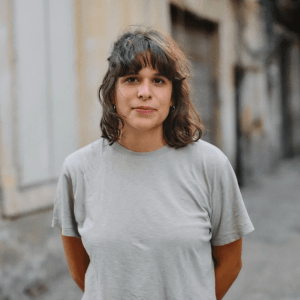
To begin, could you introduce Tunefork Studios—its origins, your collective structure, and the role it has played in shaping Lebanon’s experimental and alternative music scenes since 2006?
Tunefork Studios is a specialized sound and music workspace that has contributed to shaping the Lebanese art scene since 2006. Founded by Fadi Tabbal, the studio has gradually grown to also include a small team of sound professionals and enthusiasts: Joy Moughanni, Julia Sabra, Anthony Sahyoun and Marwan Tohme. Tunefork Studios provides a range of services such as studio and on-site recording, music production, mixing, live sound and technical direction, sound design, composition and consultancies.
The team’s goal is to push sound and music boundaries in all art forms and to help the art and sound community grow. Over the years, it has grown into a pillar of the artistic community and become an incubator for creative thinking and artistic expression. Tunefork has also led several initiatives to help those in need during the country’s worst times; from setting up the Beirut Musicians Fund in August 2020 to help musicians/engineers recover their destroyed gear after the deadly port blast, to the initiative with the Beirut Synth Center in September 2024 to help provide basic needs to the displaced, to curating two compilations of unreleased tracks in March 2026 to raise funds for those displaced by Israeli attacks on Lebanon.
Tunefork has helped shape a community of musicians and artists committed to support the Lebanese art scene across its multiple sectors. The collective established itself as a launching pad and a home for some of today’s most prominent musicians such as Mashrou’ Leila, Scrambled Eggs, Mayssa Jallad, Postcards, Ghassan Sahhab, Sanam, Kinematik, Youmna Saba and Sharif Sehnaoui…
We have worked on local and regional films with Cyril Aris, Mohammad Abdouni, Raed and Rania Rafei, Maher Abi Samra, George Barbari, Mai Masri, and Chadi Aoun. We have collaborated with artists such as Tania el Khouri, Petra Serhal, Rawane Nassif, Rima Najdi, Mounira el Kadiri, Lamia Joreige, and Ali Chahrour on sound installations, theater and dance performances. We have also worked with cultural centers and museums such as the Sursock Museum, Beit Beirut, Beirut Art Center, Ashkal Alwan and Metropolis.
Our goal is to push sound and music boundaries in all art forms and to help the art and sound community grow, while teaching new generations about sound art and music.
You’re speaking to us at a time of renewed war and displacement in Lebanon. How would you describe the situation on the ground right now, both personally and as a collective working within the cultural sphere?
Julia: It’s been barely 2 years since the last war in 2024. And even during the “ceasefire”, Israel was still bombarding the South and occupying border villages, and people were still displaced. We haven’t had time to rest or rebuild. The initiatives working on the ground also tell us there’s less mobilization of volunteers and less donations being made this time around, despite the fact that displacement is way higher – over 1.5 million people displaced (and these are just the officially “registered” ones), with Israel ordering the displacement of people from the entire South of the country, and the entire southern suburbs of Beirut.
In moments like this, what role can music and sound play? Do you see it primarily as documentation, solidarity, a form of resistance—or something else entirely?
Fadi: I don’t know if there’s really a role for music to play. The first focus is survival. The solidarity of the musicians here is more an all hand on deck but not through music. The sonic documentation I think comes as an aftermath of the situation.
The Land series has quickly become a powerful fundraising initiative. Could you tell us how the project first came together with Volume 1 back in December 2024, and what your expectations were at that stage?
Julia: Our team, along with the guys from Beirut Synth Center, were looking for ways to gather more funds for the displaced in the last war, and thought about reaching out to our community of artists to give us tracks for a compilation. LAND 01 was born – and it was limited to electronic/ambient/experimental tracks, I think we were just trying to set rules internally so that we could limit ourselves and get it done quickly. We were very touched by the generous response from the international community music, and the compilation alone raised around $4,000. This is what encouraged us to do it again, aiming to double this amount and widen the scope of artists and genres.
Volumes 2 and 3 were assembled through an open call with a very short turnaround—just about a week for submissions. What was that process like in practice, and how did artists respond to such urgency?
Fadi: Local musicians are prolific and very dedicated. Some people recorded tracks especially for this, within one week, while others used songs that they never released. As for the subject, we are always in a state of war, sometimes more extreme than others. So the music is within the same broad theme.
Listening across Land 2 and Land 3, there’s a remarkable diversity of approaches—from intimate recordings to highly experimental pieces. How did you curate the compilations while maintaining coherence?
Fadi: We did not really curate, as we wanted to get it out as soon as possible to be able to distribute the funds to those who need them. So we asked friends, frequent collaborators, musicians who played at Beirut Synth Center or recorded at Tunefork – anyone from the community we could think of, both established and up-and-coming artists – and we got a huge amount of contributors. It’s wonderful to see all of the musicians come together so fast. We received so many tracks that we decided to divide them into two compilations, broadly as song- based tracks (Land 02) vs more abstract musical pieces (Land 03).
There’s also a strong mix of local and international contributors, including figures like Julia Holter and Mazen Kerbaj. How important was it for you to position the project both locally and globally?
Julia: I think it was more about seeing who would be up for this within our network. Having international names, from the diaspora and beyond, definitely helps since we are trying to get funds that don’t exist locally. Julia Holter also happens to be a quarter Lebanese and we’ve been in contact since the last war, she was part of the Land 01 compilation.
You chose to direct funds to Beit Aam and other grassroots initiatives. Could you tell us more about your relationship with Beit Aam and why supporting local, community-based structures felt essential?
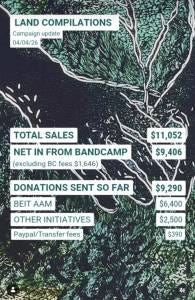
Fadi: Unlike many western countries, Lebanon does not have many governmental institutions that can help in these situations, for a lot of reasons like the recurrent wars and aggression or the internal corruption. We have to rely on ourselves and the community. Beit Aam is one of the many initiatives run by people we know and trust working day and night to provide needs for the displaced. They also have a wide network of volunteers across all of Lebanon, not just in Beirut. They seemed like the obvious choice.
Tunefork has long been a key node in Beirut’s experimental and electronic music ecosystem. How would you describe the current state of that scene under present conditions?
Fadi: The goal is to focus on the immediate priorities, which is to try to help the displaced as much as possible while trying to keep the morale up. So pushing the musicians to keep composing and performing is part of that.
Lebanon has a strong musical diaspora, with artists like Mazen Kerbaj now based in cities like Berlin. How do you see the relationship between those working abroad and those still on the ground?
Julia: The connection is always there – we’re always helping each other. Lebanon is a small country with few resources except for the dedication of its people. We rely on our friends to help with our fundraising and to spread the awarness of the danger we are going through while we work on the ground.
Do projects like Land help bridge that gap—creating a shared space between local and diasporic artists?
Fadi: I don’t think there is a gap to be bridged. Lebanese musicians in Lebanon and abroad are always connected one way or the other. We are all constantly trying to help each other. We are linked by our generational trauma and the love we have for each other and our home.
Several tracks on Land 3—like Abed Kobeissy & Sary Moussa’s a simple song about weather and murder or Mazen Kerbaj’s sharply titled piece—carry a direct or symbolic engagement with violence and political reality. How do you think artists are processing the current moment sonically?
Fadi: Every artist deals with the situation differently. Some focus on love, others on escape and some on anger like the ones you named.
Given the speed and urgency of these compilations, how did the production side work—especially mastering, coordination, and assembling such a large body of material in a short time?
Julia: Over the years through Tunefork and other collectives, we have built a very tight community of musicians and artists. The coordination and assembling was done internally by Tunefork’s team. The artwork was done within a week by our artist friend Carla Aouad, and the design by our friend and frequent collaborator Josette Khalil. Mastering was also done by a close collaborator in Germany, Stefan Echeir (Lopazz – mixmastering.de). And like everyone they responded quickly, and did everything pro bono, which we are so grateful for.
Looking ahead, do you see the Land series as something that will continue evolving, or was it conceived as a response to a specific moment?
Fadi: Land was conceived in 2024, the last time Lebanon was attacked by Israel. Like these two volumes, it was done very quickly as a response to an immediate crisis. We are hoping that we would not have to have future volumes… Of course sharing music from the region will always be part of our goal, but hopefully not only during wars.
Finally, what would you want listeners outside Lebanon to understand—both about the situation on the ground and about the music coming out of it?
Fadi: More than 1.5 million people have been displaced because of the Israeli aggression on Lebanon. Around 1500 people have been killed and more than 4000 are injured. Israel threatened to occupy the south of Lebanon indefinitely (it amounts to around approximately 20% of the whole country). Infrastructure is constantly being destroyed. And I don’t think there is a way to explain the psychological toll this is doing to the whole country.
The music will always be there, as artists need to create to process what is happening or escape it. Through all the hardships the Lebanese have faced in the last few years, there has been no shortage of releases and musical projects. (Gianmarco Del Re)
RECENT REVIEWS
Reviews are at the heart of ACL. Here are selections from a few of my favorite reviews we posted on the blog in the last few weeks.
Ancient Methods ~ Society of the Spectacle
After playing the LP, I went back to read the book. Guy Debord’s 1967 treatise of the same name is a masterpiece of philosophical prophecy, seeming to predict everything from Facebook to fake news, celebrity culture to A.I., and most importantly, the widespread acceptance of the spectacle as reality. Ancient Methods noted the prescient nature of the prose, and chose to compose his own spectacle, an industrial album built around snippets and quotes from the original work, simultaneously underlining its principles and personifying its warnings. As today is April Fools’ Day, it’s convenient that the cover art depicts a court jester: the only person who could tell the truth without being executed (though some still met that fate, which was often a literal roasting). Society of the Spectacle‘s final strength is that it refuses to have a happy ending. After quoting Debord’s words on “impoverishment, enslavement and negation of real life,” Ancient Methods offers no hope, no words of encouragement, simply reflecting the truth, like a court jester. “The spectacle is the opposite of dialogue,” intones a female narrator in “Conclusio.” The burgeoning drone in the background seems to scream, this can’t be the end. Then we remember that Debord didn’t intend his words to serve as prophecy; he was simply reflecting what he saw in 1967. The end had already occurred.
Hollie Kenniff ~ For Those Who Stay
Despite the fact that it includes the track “Winter, Don’t Let Go,” For Those Who Stay is very much an album of spring. More specifically, it’s about the emergence into spring after a long winter, which has been chronicled month by month, track by track by Hollie Kenniff, The first two singles appeared in December, the second two in January (including the winter track), followed by one in February, one in early March, and finally the full eleven track album the first week of spring. We have been anxiously awaiting this set (ironically, one track is titled, “The World Can Wait”), whose tracks are now presented in a different order, telling a complete story, although we also appreciated the chapter-by-chapter reveal. Whatever the trauma: fire, argument, societal upheaval, we cannot dwell there forever, not when inner peace beckons and renewal awaits.
Jilk ~ Tetsuo II
Jilk’s Jon Worsley recalls seeing Shinya Tsukamoto’s Tetsuo II (1992) when he was “way too young;” the experience left an indelible, and perhaps slightly scarring impression. The film, groundbreaking for its time, includes graphic scenes of torture and body horror, centering around a man who is transformed into a cyborg, piece by lonely piece. Chu Ishikawa’s original industrial score is a perfect match for the period: percussive, bombastic and unrelenting. But time and perspective led Jilk in a slightly different direction. The new Tetsuo II is equally dramatic but slightly more subtle, filled with piano, guitar and sampled breaks. Worsley attempts to capture the film’s underlying sadness, the tragedy at its core, rather than the action itself. At 39 minutes, it’s approximately half the length of the original 68-minutes OST, so it’s impossible to synch, although one may link the titles to the scenes. More importantly, Tetsuo II is an ode to the experience of watching – and remembering – the film.
Mikael Lind ~ Norðaustur
Iceland is home to some of the most unique pairings of sound and visual art, and Norðaustur (Northwest) is a fine addition to the canon. The album began as an installation in a big fish oil tank in Raufarhöfn, where Sigga Björg‘s moving images were projected on the walls, “accompanied by synthesizers and effects that responded to their movements.” Mikael Lind later brought this music into the studio, where the album was born, an expansion on the original material. This is a perfect reminder for the small population of Raufarhöfn, where the weather continues to dance around the freezing mark, with a daily possibility of snow. The long night will soon be replaced by seemingly everlasting days. One thing becomes another: wolf to bale, installation to album, winter to spring.
~Nois ~ What Is ~Nois
An abundance of tildes occupies our title space as ~Nois returns with What Is ~Nois, the follow-up to Kinds of ~Nois. The playfulness of the album title translates to the music, while the implied question, “What is noise?” is a challenge to the listener. What is noise? In music, the answer is subjective. Some listeners call rap, metal and improvised jazz noise, while others embrace these genres. In like fashion, some feel comfortable with the sounds of a city, while others call it cacophony. Is ~Nois noise? Even within the boundaries of What Is ~Nois, the variety of tracks may lead to differing opinions. Even the question “What is ~Nois?” is difficult to answer. On the surface, the ensemble is an American saxophone quartet. But there are sometime more than four saxophones, while other instruments make happy appearances as well. Four composers bring four different approaches, leading us to propose that ~Nois is an experimental saxophone ensemble with a chamber music flair. To this listener, ~Nois is not noise, but noice – the exaggerated pronunciation of “nice” as a superlative. No matter what genre they tackle, ~Nois exudes this searing joy. If this is noise, it’s a joyful noise.
Radwan Ghazi Moumneh & Frédéric D. Oberland ~ Eternal Life No End | ليلة ظلماء ملعونة، كحياة طالبيها
Some albums foreground process, as if the journey were more important than the destination. Eternal Life No End unfolds as something closer to a ritual—an extended act of listening that feels less composed than summoned. Built from modular synthesis, buzuk, rababa, drum machines, and voice, the record operates in a liminal space between invocation and erosion, where sound becomes both carrier and residue. Throughout, the voice remains central. Moumneh’s delivery is neither purely musical nor purely textual; it operates as a conduit, carrying political outrage, spiritual ambiguity, and poetic fragmentation simultaneously. The lyrics do not explain the music—they haunt it. In this sense, Eternal Life No End resists categorisation as either document or abstraction. It is both, and neither. A record shaped by the present, yet unwilling to stabilise it into a single narrative. A ritual without resolution. A space where mourning and resistance become indistinguishable. What lingers is not a message, but a condition: an awareness of something unfolding, endlessly, without closure.
Stine Janvin / Morten Joh ~ Or Gare – funeral procession music from Ryfylke, Norway
Recalling the ancient custom of “Liksong” (“corpse song”), Or Gare – funeral procession music from Ryfylke, Norway is reverent, spooky and enthralling, an imagined score to a single, haunted procession. The otherworldly vocals uncouple listeners from the present, immersing them in an imagined past; while the often gossamer-thin music lends the project the feel of an alternate reality, perhaps even a procession on another planet. But of course this isn’t another planet, it’s Norway ~ although it’s a side of Norway that few of us have ever heard. The funeral procession begins with the gorgeous “Leaving Home – O Verden, Hav da Gode Nat!”, Stine Janvin singing over Morten Joh‘s drone while Lucy Railton wraps the words in a cello shroud. Doubt is replaced not by belief, but by beauty, conveyed by chime-like vibraphone and hints of brass, as if to say, go now, and rejoin the world.
VA ~ Land 3 (أرض ٠٣) by Tunefork Studios / Beirut Synth Center
Curated by Tunefork Studios and Beirut Synth Center, the third volume in the Land series raises funds for those displaced by Israeli attacks on Lebanon in March 2026, with proceeds directed to Beit Aam and other grassroots initiatives. If Land 2 leaned toward songcraft and voice, Land 3 returns to something more unstable, more diffuse: a terrain of textures, fragments, and unresolved gestures. But like its predecessors, it functions as more than a compilation—it is a sonic cross-section of a scene responding in real time to crisis. As with many large-scale VA compilations, Land 3 resists easy cohesion. Its strength lies precisely in that refusal. It documents a scene not as a unified aesthetic movement, but as a constellation of responses—some direct, some oblique, all shaped by the same underlying conditions. What emerges is not a singular narrative, but a field of listening in which tradition, experimentation, and urgency coexist. In that sense, Land 3 is less an album than a snapshot of a moment: fractured, uneven, and deeply alive.
Yoichi Kamimura ~ Waterforest
We last heard from Yoichi Kamimura with ryūhyō, one of our favorite field recording albums of 2025. This year’s Waterforest is closely related; in fact, some of the sounds stem from the same sessions, in which the artist recorded the sounds of Shiretoko’s drift ice. And yet there is much more to be found here, part of a sound and sight installation that incorporates water sounds from around the world, from Swiss springs to the Amazon rainforest and from Icelandic glaciers to Kyoto’s canals. The listening experience is incredibly beautiful, while it also carries a subtle, yet powerful message. Waterforest is a reflection, but also a plea to widen one’s horizons. When listening to disparate sounds together, one may intuit the connection between glacier and glade, signifying the unity of all things. Even the notes of the wind chime are part of a harmonious whole.
UPCOMING RELEASES
(complete list with Bandcamp links here)
The seasons are changing and the release schedule is bursting into bloom. Spring brings the first massive crop of new music, enough to lift us out of those late-winter doldrums. As the birds return and the earth awakens, the sounds of the great outdoors mirror our musical discoveries. May you find your next favorite album right here!
John Sweenie ~ Mysticism for Individuals (9 April)
Alex Zhang Hungtai ~ Dras (Shelter Press, 10 April)
Blue Hour ~ Selva (Blue Hour Music, 10 April)
Caleb Wheeler Curtis ~ Ritual (Chill Tone, 10 April)
Chessie + Contriva ~ Black Jacket (Watusi, 10 April)
El Ten Eleven ~ Nowhere Faster (Joyful Noise, 10 April)
Ensemble de Feedback Libre ~ 3.1416 (Label – formes ondes, 10 April)
Felicia Atkinson & Christina Vantzou ~ Reflections Vol. 3: Water Poems (RVNG Intl., 10 April)
Flore Laurentienne ~ Volume III (Secret City, 10 April)
Juha Mäki-Patola ~ Momentary Movements of Landscapes (FatCat, 10 April)
Lei Liang: Six Seasons: Instrumentation Lab (New Focus, 10 April)
Mélanie Frisoli ~ Trilogie sinueuse (Label – formes ondes, 10 April)
Nick Fraser ~ Areas (10 April)
~Nois ~ What Is ~Nois (New Amsterdam, 10 April)
Ogle & Mugwood ~ Eskypism (Subexotic, 10 April)
Oskar Bond ~ Sista Morgonen (10 April)
Prymek & Sagę ~ Shelter (AKP, 10 April)
Rosa Pistola ~ Incorregible (Eck Echo, 10 April)
Thomas Stone ~ The Shunned Path (Cloudchamber, 10 April)
Tony Woollard ~ The Moon on the Istrian Riviera, Pt. 1 (Bigo & Twigetti, 10 April)
upsammy & Valentina Magaletti ~ Seismo (PAN, 10 April)
We Stood Like Kings ~ Pinocchio (Kapitän Platte, 10 April)
Zachary Mezzo ~ Home Movies (10 April)
comdex ~ A Wave of Alarm (14 April)
Om Unit ~ Oracles (Local Action, 14 April)
City of Dawn ~ Silent Portrait (Past Inside the Present, 15 April)
Robert R. Thurman ~ Cicadas: Broods XIX and XIII (15 April)
Passenger Pigeon ~ Another New Low (16 April)
Aarp ~ Kadıköy (InFiné Éditions, 17 April)
Analog Tara ~ Life of the Mother (Imprec, 17 April)
Annea Lockwood ~ World Rhythms (Room40, 17 April)
Ard Bit ~ Juxtaposed (Dronarivm, 17 April)
Bhajan Bhoy ~ Live at Guess Who? (Wormer Bros./Feeding Tube, 17 April)
Camilo Ángeles ~ Flautas Ahogadas para Jacobo Grinberg (Dinzu Artefacts, 17 April)
Carlo Costa ~ Ashes (Dinzu Artefacts, 17 April)
Conic Rose ~ wedding (17 April)
Domiziano Maselli ~ Garden of Kira (Torto Editions, 17 April)
Drew Wesely ~ Silence Is a Sharpened Blade (Dinzu Artefacts, 17 April)
Eulipion Corps ~ Beyond Kurama (Wormhole World, 17 April)
Holodec ~ TRU FOLK (Phantom Limb, 17 April)
James Igenfritz & Thomas Buckner ~ Automatic Thinking (Infrequent Seams, 17 April)
Jonas Cambien ~ Man Eating Tree (Sonic Transmissions, 17 April)
Joseph Branciforte & Jozef Demoulin ~ ITERAE (greyfade, 17 April)
Kink Gong ~ The Lisu (Discrepant, 17 April)
Laura Cocks ~ A Pearl in the Jaw (Dinzu Artefacts, 17 April)
Lester St. Louis ~ The End Site (Dinzu Artefacts, 17 April)
Marta Sanchez ~ For the Space You Left (Out of Your Head, 17 April)
Meitei ~ AGATE / 瑪瑙 (Kitchen, 17 April)
Michael Jones ~ The Promise of Escape (New Focus, 17 April)
Mike Lazarev ~ Gradiscence (bigo & twigetti, 17 April)
Normal Community High School Experimental Ensemble ~ A Moment of Yet (Black Flag Bonsai Club, 17 April)
Radio Hito ~ L’uso e gli attributi del cuore (Maple Death, 17 April)
rand ~ Peripherie Live at OSD (17 April)
Rene Wise ~ Johnson’s Theme (Dekmantel, 17 April)
Simon Goff ~ Sparks (Grand Chess, 17 April)
Veiled Existence ~ All the Quiet Hurts (Difficult Art & Music, 17 April)
Old Amica ~ Bländverk (Whitelabrecs, 18 April)
Toàn ~ Solitarium (Whitelabrecs, 18 April)
The Heartwood Institute ~ Plague Dogs (Folk Police Recordings, 20 April)
Dionée ~ Mille-feuilles (Tour de Bras, 22 April)
Sapphire Goss ~ Light Sensitive Materials (Fr33zehead, 23 April)
Adam Schatz ~ Civil Engineering Vol. 1 (Jealous Butcher, 24 April)
Ah! Kosmos & Hainbach ~ Gentle Hum (FUU, 24 April)
Anenon ~ Dream Temperature (Tonal Union, 24 April)
Ann DuHamel ~ Prayers for a Feverish Planet: New Music About Climate Change, Vol. 1 (New Focus, 24 April)
Ayman Fanous ~ Brooklyn Stories 1-5 (Infrequent Seams, 24 April)
bela ~ Korean Love Sonnets (Subtext, 24 April)
Celer ~ Poulaine (Room40, 24 April)
Fiona Brice ~ Think Loops (Bigo & Twigetti, 24 April)
Joe Fujinoki ~ Glass Torso (enmossed, 24 April)
Late Bush ~ Hoarses (vlek, 24 April)
Mahatmos ~ Aurora Spectralis (Superonda, 24 April)
Mochyn Daer ~ Riverloom (24 April)
OOIOO/Lightning Bolt ~ The Horizon Spirals/The Horizon Viral (Thrill Jockey, 24 April)
Setting ~ S/T (Thrill Jockey, 24 April)
SydeBoob Duo ~ Au Naturel (New Focus, 24 April)
Tacoma Park ~ Baltimore (Centripetal Force, 24 April)
TROUM ~ EmphasYs (Cyclic Law, 24 April)
Lasus ~ PSALM028: Conjure (Phantom Limb, 25 April)
Ruben ~ Chambers (25 April)
Heimito Künst ~ Vol. 3 (Dissipatio, 26 April)
Andy Nechaevsky ~ Secret Life of Button Boxes: Red Box (Right Brain, 28 April)
Near Minerals ~ The Talking Castle (Difficult Art & Music, 28 April)
haana lee ~ deconstructed (29 April)
Ramilda ~ Cracked (Scrawl, 29 April)
Heli Hartikainen ~ Interbody (30 April)
Amp ~ Isotropic Beacons (Ampbase, 1 May)
Corrado Maria De Santis ~ Thresholds of Light (Lost Tribe Sound, 1 May)
Dario Calderone ~ The Infinite Garden (Moving Furniture, 1 May)
Deaf Center ~ Through Time (Sonic Pieces, 1 May)
Devin Sarno ~ Flowers on the Ocean (Histamine Tapes, 1 May)
Gabriella Smart ~ Parasymbiosis (Room40, 1 May)
Glissando 70 ~ Bones of Dundasa (Constellation, 1 May)
Jolanda Moletta ~ Oceanine (Beacon Sound, 1 May)
Kavalcade ~ SIGNAL (Machine, 1 May)
LISA ~ Yamaha Dog (Collapsing Drums, 1 May)
Masker ~ Peril (Oudwijn, 1 May)
pdqb ~ Direct Hits (Synaptic Cliffs, 1 May)
Russell Haswell ~ Let It Go (Editions Mego, 1 May)
SloGlo ~ In Another Language (Flood Music, 1 May)
Solar Seas ~ kraken (Somewherecold, 1 May)
Trem 77 ~ Reflective (1 May)
Yu Su ~ Foundry (Short Span, 1 May)
ZÖJ ~ May the Devil’s Ear Be Deaf (Parenthèses, 1 May)
Mark Cain ~ Threads (Parenthèses, 2 May)
Neuro… No Neuro ~ MemLoss (Audiobulb, 2 May)
Pedro Vian meets Ustad Nawab Khan and Naved Nawab Khan ~ The Bubble of Love प्यार का बुलबुला (Modern Obscure Music, 2 May)
HWXXNG ~ K-Core (Chinabot, 7 May)
Anastasia Kristensen ~ Bestarium Sombre (Intercept, 8 May)
Blak Saagan ~ Un Sequestro Lungo 10.000 Anni (Maple Death, 8 May)
Buildings and Food ~ Utori (8 May)
Choz Boyce ~ S/T (Domino, 8 May)
Francis Heery ~ Garry Kasparov vs. Deep Blue (Flaming Pines, 8 May)
Jake Muir ~ Pareidolia (enmossed, 8 May)
John Hollenbeck ~ Looking for Consonance (Out of Your Head, 8 May)
Johnny Bell ~ Mountain States (Ramble/Centripetal Force, 8 May)
Kreng ~ Wormhole (Miasmah, 8 May)
Living With Tollways ~ Eponymously Titled (Signbearer, 8 May)
Max Cooper ~ Feeling Is Structure (Mesh, 8 May)
Momen ~ Sympathetic Resonance (TAR/MM/UOH, 8 May)
Olof Dreijer ~ Loud Bloom (dh2, 8 May)
Sareban ~ Echoes in the Weave (Worlds Within Worlds, 8 May)
Teatre ~ All Constellations Weaving Into One (Amulet of Tears, 8 May)
Unwed Sailor ~ High Remembrance (8 May)
Violeta Vicci & Bruno Bavota ~ Be Human (Bigo & Twigetti, 8 May)
Yoal ~ Gloaming (Lost Tribe Sound, 8 May)
Christian Dillingham ~ As It Relates to Now (Shifting Paradigm, 15 May)
Distant Birds ~ VOL. 01 & 02 (Earshift Music, 15 May)
Fumction x Nastia Reigel present Devocion ~ Devocion EP (Dekmantel, 15 May)
Jeff Parker TTA IVtet ~ Happy Today (International Anthem, 15 May)
KADAPAT & Nova Ruth featuring Siko Sedyanto ~ Ocean Cage (Kuboraum Editions, 15 May)
Lawrence English / Werner Dafeldecker ~ Fathom Tides (Hallow Ground, 15 May)
Lea Bertucci ~ The Days Pass Quickly Immersed in the Shadow of Eternity (Cibachrome, 15 May)
Martyna Basta ~ Winged in Collapse (7K, 15 May)
Matthew Wright ~ Cracked Glaze (False Walls, 15 May)
Mei Honeycomb ~ Clairvoyant Dimensions (Meakusma, 15 May)
Phillip Golub ~ Partisan Ship (Berthold, 15 May)
Rafa Ramos Sania ~ A Broadcast of Your Silence (Lost Tribe Sound, 15 May)
SHHE ~ THALASSA (One Little Independent, 15 May)
SUSS ~ Counting Sunsets (Northern Spy, 15 May)
Van Sur Les ~ Ingrian Tape (15 May)
Various Artists ~ Perceptions Vol. 7 (Bigo & Twigetti, 15 May)
Yulseus ~ Nothing Under Heaven (n5MD, 15 May)
Aho Ssan ~ The Sun Turned Black (Subtext, 22 May)
Brunhild Ferrari, Eiko Ishibashi, Jim O’Rourke ~ L’oreille Voleuse (Persistence of Sound, 22 May)
Chris Lippincott ~ Angel in a Jetstream (22 May)
FLOCKS ~ Lagoon (Karlrecords, 22 May)
Fugue State ~ After Nothing Comes (Switch Hit, 22 May)
Hannah Peel ~ The Endless Dance (Real World, 22 May)
Ivo Perelman and Damon Smith ~ Duologue: Core of Existence (Squid Note, 22 May)
Justina Repečkaitė ~ Tapestries (miclithuania, 22 May)
Magic Tuber Stringband ~ Heavy Water (Thrill Jockey, 22 May)
Peggy Lee, Julien Wilson, Theo Carbo, Dylan Van Der Schyff ~ Waiting Music (Earshift Music, 22 May)
Richard Pike ~ Redemption Suite I-IX: For Pianos and Textures (22 May)
Gigi Masin ~ Movement (Sacred Bones, 26 May)
Akira Uchida ~ Nusa (IIKKI, 28 May)
Various Artists ~ Moss and Melee I – Old Growth (Lost Tribe Sound, 28 May)
Amelia Ya’el ~ Voices I (Signbearer, 29 May)
David Torn ~ now i imagine a place not the same (Kou, 29 May)
Hanry ~ What Came From Silence (Pelagic, 29 May)
Kikù Hibino & Merzbow ~ Rococo ∞ Echomatter (Superpang, 29 May)
Laurence Pike ~ Possible Utopias for Jazz Quintet (Lapsus, 29 May)
Seamus O’Muineachain ~ Island of Flowers (29 May)
The Hands Free ~ Upturned Cup (New Amsterdam, 31 May)
Susana Santos Silva, Vasco Trilla ~ Mushin (defkaz, 1 June)
Various Artists ~ Moss and Melee II – Controlled Burn (Lost Tribe Sound, 1 June)
Modern Silent Cinema ~ Passages XXXIII-XLIII (for Piano, Guitar, and Bass) (1 June)
American Cream Band ~ Twin (Quindi, 5 June)
Beatriz Ferreyra ~ A Distracted God (Room40, 5 June)
Galán | Spieth | Guentner ~ Obreel (Affin, 5 June)
Teiku ~ Klang (Ginkgo, 5 June)
JOHN 3:16 ~ The Beast (Alrealon Musique, 6 June)
Savina Yannatou, Gonçalo Almeida, and Costis Drygianakis ~ Independent / Interdependent (defkaz, 7 June)
Chaz Underriner ~ Flicker (12 June)
Horse Lords ~ Demand to Be Taken to Heaven Alive! (RVNG Intl., 12 June)
Starlings ~ Friend, Thank You (Machine Records, 12 June)
Tujiko Noriko ~ PON (Editions Mego, 12 June)
Helen Svoboda ~ Headwater (Room40, 26 June)
Zacc Harris ~ American Reckoning (Shifting Paradigm, 26 June)